

Why Natural Materials Outdoor Design Creates Timeless Beauty
Natural materials outdoor design creates timeless beauty by using authentic stone, premium timber, and living plants that weather well, perform in real climates, and look better with age. In practical terms, it means choosing materials whose texture, color, and structure come from nature, not a factory finish that can chip, fade, or feel dated.
Quick Guide: What you will learn in this article
- Which natural materials hold up best outdoors and why
- Where stone, timber, and planting design each do the most work
- How permeable surfaces and native planting support stormwater and biodiversity
- How to source responsibly and detail projects for long service life
In our work designing and building outdoor structures, we see the same pattern: the spaces people use most are the ones that feel grounded and comfortable. Natural materials do that by adding tactile warmth (wood), long-term durability (stone), and seasonal change (plants).
This shift also aligns with sustainability. Many homeowners are investing more in outdoor living, and interest in sustainable landscaping has grown sharply in recent years. When projects are detailed correctly, natural stone and premium timbers can last for decades or longer, developing a patina that adds character instead of signaling failure.
Natural materials also support better site performance. Permeable installations can reduce runoff and help recharge soils, and plant-forward layouts align with biophilic design principles that improve well-being through everyday contact with nature. For an overview of biophilia and why humans respond positively to natural forms and materials, see Biophilia hypothesis.
We are Wright Timberframe in Murray, UT, and we specialize in handcrafted pergolas, pavilions, and trellises built from premium timbers and traditional joinery. We focus on structural integrity, careful detailing, and material choices that look right on day one and still look right after years of Utah sun, wind, and freeze-thaw.
The Core Benefits of Natural Materials Outdoor Design
Choosing natural materials outdoor design pays off in durability, comfort, and long-term value. Instead of selecting products for a single season of visual impact, we design for service life, repairability, and a finish that improves with time.
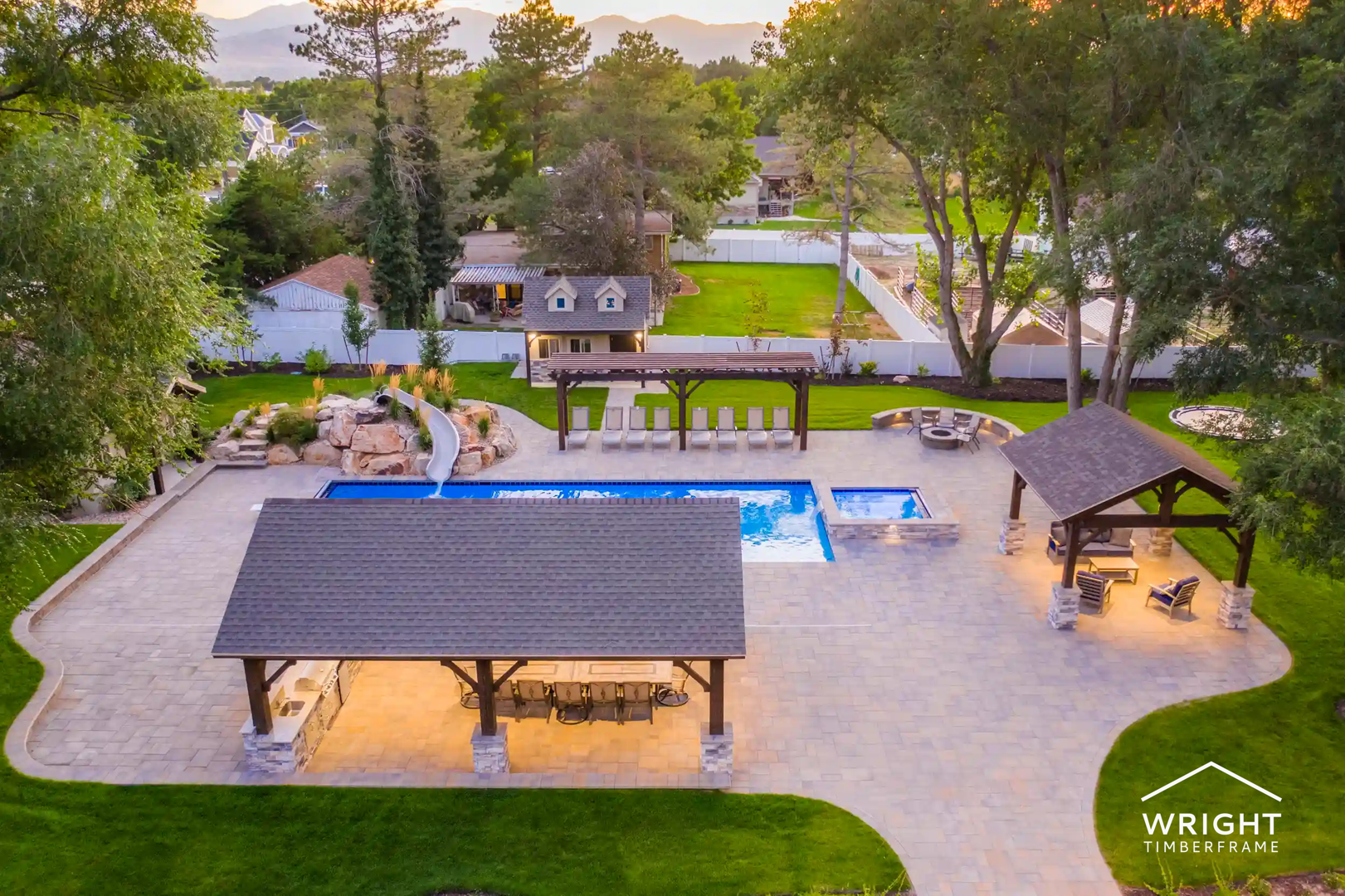
1) Longevity you can plan around
Natural stone has a track record measured in generations. Premium woods, properly detailed and protected, can also provide long service life in exterior structures.
That longevity matters because replacement is the most wasteful form of maintenance. When a patio, wall, or overhead structure is built with enduring materials, you can focus on small upkeep tasks instead of full tear-outs.
2) Patina instead of deterioration
Natural materials change. They do not stay “factory perfect,” and that is the point.
- Stone weathers, but its color typically remains integral, not surface-applied.
- Timber gains depth and character, especially when protected from standing water and detailed to shed moisture.
3) Better site performance with permeable options
With the right base and joints, many stone and gravel systems can be permeable. That helps:
- Reduce runoff during storm events
- Decrease puddling and ice patches in winter
- Support healthier soils around planting beds
If you want a general reference on how hardscapes can be designed to infiltrate water, see Permeable paving.
4) A more comfortable outdoor room
Material choice affects how a space feels.
- Wood is naturally warmer to the touch than metal in shoulder seasons.
- Many stones handle heat well, and some remain comfortable underfoot when chosen and installed appropriately.
- Layered plantings soften edges, add scent, and provide shade and wind buffering over time.
5) Higher perceived quality and property value
Natural materials signal craftsmanship. A well-built stone terrace paired with a timber structure reads as permanent infrastructure, not temporary decor.
When we build overhead structures, we design them to fit the way people actually use their yards, with appropriate spans, headroom, and seating layouts. For covered gathering spaces, our Timber Frame Pavilion page shows how we approach durable outdoor rooms.
Designing with Natural Materials Outdoor Design Elements
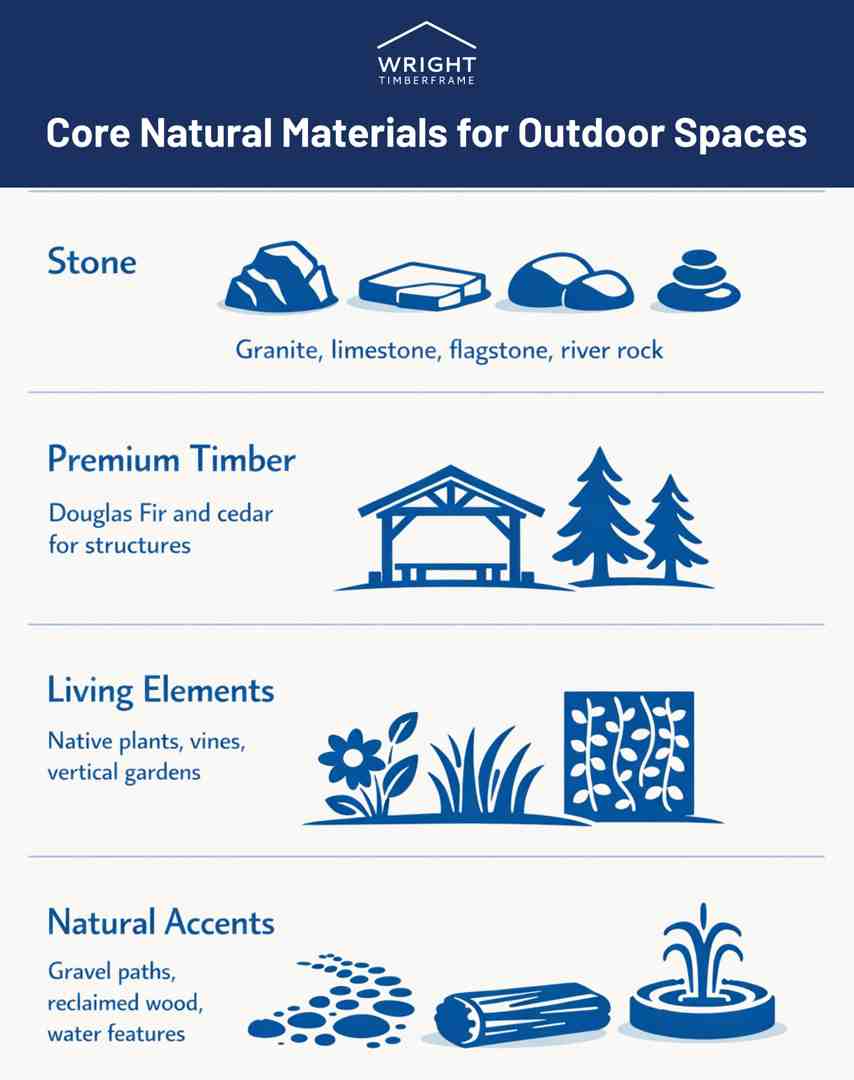
Great natural materials outdoor design starts with matching each material to the job it does best. We typically think in three layers: the ground plane (paths and patios), the structure (shade and shelter), and the living layer (plants that tie everything together).
Natural Stone Applications
Natural stone brings mass, texture, and weather resistance. We also like it because small variations in color and grain make a space feel authentic.
- Patios and walkways: Flagstone, bluestone, and travertine are common choices for outdoor circulation. Flagstone creates an organic layout that works well with groundcovers between joints. For permeable paths, pea gravel or crushed stone can be a strong option when edging and base prep are done correctly.
- Retaining walls: Boulders and stacked stone can stabilize grades while looking like they belong to the site. Wall design should account for drainage, base depth, and frost movement.
- Outdoor kitchens and dining areas: Stone can handle temperature swings and provides a durable work surface. Selecting the right stone and finish is important for stain resistance and maintenance.
- Fire pits and fireplaces: Many natural stones perform well around heat, but the full assembly matters. Fire-rated liners, appropriate clearances, and stable footings are key.
Timber Structures: The Heart of Outdoor Living
For overhead structures, timber creates warmth and visual order. In Utah, we pay close attention to snow load, sun exposure, and detailing that keeps end grain and connection points from trapping water.
- Pergolas: Our custom Douglas Fir Outdoor pergolas define an outdoor room and provide filtered shade. We often plan layouts that make it easy to add climbing plants, string lighting, or shade fabric later.
- Pavilions: A pavilion provides full cover for dining, outdoor kitchens, or lounge seating. We like to coordinate post placement with furniture plans so the structure supports how the space is used.
- Trellises: Trellises add vertical structure for vines and can create privacy without blocking airflow.
When we combine stone and timber, we aim for cohesion. That usually means repeating colors and textures across the site, then letting plants soften transitions.
A few design details we routinely consider:
- Slip resistance: Textured stone or a honed finish can improve traction on walkways. For pool decks or shaded areas that stay damp, finish choice matters.
- Color temperature: Warm-toned stone pairs naturally with Douglas Fir and cedar; cool grays can read more modern but still natural.
- Jointing and edges: Wider joints can accept groundcovers; tighter joints feel more formal. Edges should be intentional so gravel stays contained and mowing stays simple.
To illustrate long-term value, here is a quick comparison:
| Feature | Natural Stone (e.g., Granite, Flagstone) | Synthetic Pavers (e.g., Concrete, Plastic) |
|---|---|---|
| Durability | Decades to centuries | 10-25 years |
| Aging | Develops unique patina, improves with age | Fades, cracks, degrades over time |
| Aesthetics | Organic, timeless, unique variations | Uniform, can look artificial, dated |
| Permeability | Can be permeable with proper installation | Often impermeable, contributes to runoff |
| Maintenance | Minimal, occasional cleaning | May require sealing, repairs, replacement |
| Environmental Impact | Lower embodied energy, recyclable | Higher embodied energy, landfill waste |
Sustainable Sourcing and Biophilic Principles
Our approach to natural materials outdoor design includes how materials are sourced and how the finished space supports daily well-being. Sustainability is not a single product choice. It is the combination of appropriate materials, durable detailing, and designs that work with local conditions.
Reclaimed wood and responsible forestry
Reclaimed wood can add history and character while reducing demand for newly harvested lumber. When we use new timbers, we prefer suppliers who can speak to responsible forestry practices and supply chain transparency.
Build details that make timber last
Sustainability includes longevity. Traditional joinery and careful water-shedding details help exterior structures stay tight and strong over time.
If you are curious how classic connections are laid out and why they matter, our page on Traditional Timber Frame Joinery is a good overview.
Biophilic design in outdoor spaces
Biophilic principles show up in simple, repeatable moves:
- Framing views with posts and beams
- Using climbing plants to blend structure with landscape
- Layering planting textures for seasonal change
- Adding sound and movement with water or grasses
Permeable surfaces and stormwater
Permeable stone, gravel, and other infiltrating surfaces help manage runoff. We often coordinate patio slopes, drain paths, and planting bed elevations so water moves away from structures and into soils where it can be used by plants.
Native flora and biodiversity
Native and climate-adapted plants typically need less water and support local habitat. In Murray and across the Wasatch Front, that often means selecting plants that handle hot summers, cold snaps, and variable precipitation.
By combining durable stonework, thoughtfully detailed timber, and plantings that thrive locally, we create outdoor spaces that feel natural, function well, and stay beautiful as they age.
Frequently Asked Questions about Natural Materials Outdoor Design
We often get questions about natural materials outdoor design, especially with Murray, UT weather swings. Here are a few practical, locally relevant answers.
What natural materials hold up best through Utah freeze-thaw cycles?
Dense stones like granite and many limestones do well. For structures, Douglas Fir and cedar perform well when detailed to shed water and avoid ground contact.
How do we keep stone walkways safer in winter?
Choose textured finishes, plan proper slope and drainage, and avoid low spots where meltwater refreezes. Use de-icing products labeled safe for natural stone.
What is the lowest-maintenance way to use wood outdoors?
Use rot-resistant species, keep posts off soil, add drip edges, and design joints that do not trap water. Periodic cleaning and re-coating extends life.
How does biophilic design help outdoor spaces feel more relaxing?
Natural textures, greenery, and framed views reduce mental fatigue and support calm focus. Simple plant layering and natural materials usually make the biggest difference.
Is natural stone a greener patio choice than concrete?
Often yes, especially when installed with permeable joints or gravel bases. Stone can last longer and is easier to reuse, which reduces replacement waste.
Natural Materials Outdoor Design for Your Home
Natural materials outdoor design is a long-term approach to building outdoor spaces that stay relevant, comfortable, and durable. By pairing authentic stone, premium timbers, and climate-appropriate planting, we can create landscapes that manage weather well, develop a natural patina, and feel connected to their surroundings.
At Wright Timberframe in Murray, UT, we build handcrafted pergolas, pavilions, and trellises using traditional joinery and premium timbers like Douglas Fir and cedar. We also ship pre-cut kits nationwide, which helps homeowners and contractors bring timber framing into projects far beyond Utah.
If you are planning a new outdoor room or upgrading an existing yard, explore More info about our timber frame structures to see material options, structure types, and how we approach lasting craftsmanship.

