

The right fire pit transforms a covered pavilion from a nice backyard feature into the place everyone wants to be. This guide walks through 10 distinct fire pit styles, how to match each one to your pavilion’s finish, smart layout positioning, seating pairings, and honest budget ranges so you can plan with confidence.
10 Fire Pit Ideas for a Backyard Pavilion Worth Gathering Around
Fire pit ideas for backyard pavilions are everywhere online, but most skip the detail that actually matters: not every fire feature works safely or aesthetically under a solid roof. When you pair a covered timber frame pavilion with the right fire element, the result is an outdoor room that gets used year-round, not just in peak summer.
The difference between a fire pit that looks great and one that actually works comes down to fuel type, clearance, ventilation, and how the design speaks to your structure’s wood tone and beam profile. Here are ten styles worth knowing, organized from most to least rustic.
1. Sunken Wood-Burning Fire Pit
Cut into the patio slab or excavated into the ground, a sunken pit creates a natural gathering bowl. The below-grade position keeps embers lower and gives the space a campfire intimacy you can’t replicate above ground. Best used in open-sided pavilions with high clearance.
Budget: $1,500 – $4,000 installed
2. Raised Stone Surround Pit
Stacked flagstone or natural fieldstone built to counter height creates a commanding centerpiece. The mass of the stone radiates heat long after the fire dies down. Pairs best with a Dark Walnut or Charred Hickory pavilion stain where the organic textures echo each other.
Budget: $2,000 – $6,000 installed
3. Round Concrete Fire Bowl
A cast concrete bowl on a pedestal base brings an architectural, modern edge to a timber frame setting. The contrast between raw concrete and warm Douglas fir beams is intentional and sharp. Works in pavilions with open sides, gas conversion is recommended for covered use.
Budget: $800 – $2,500
4. Rectangular Gas Fire Table
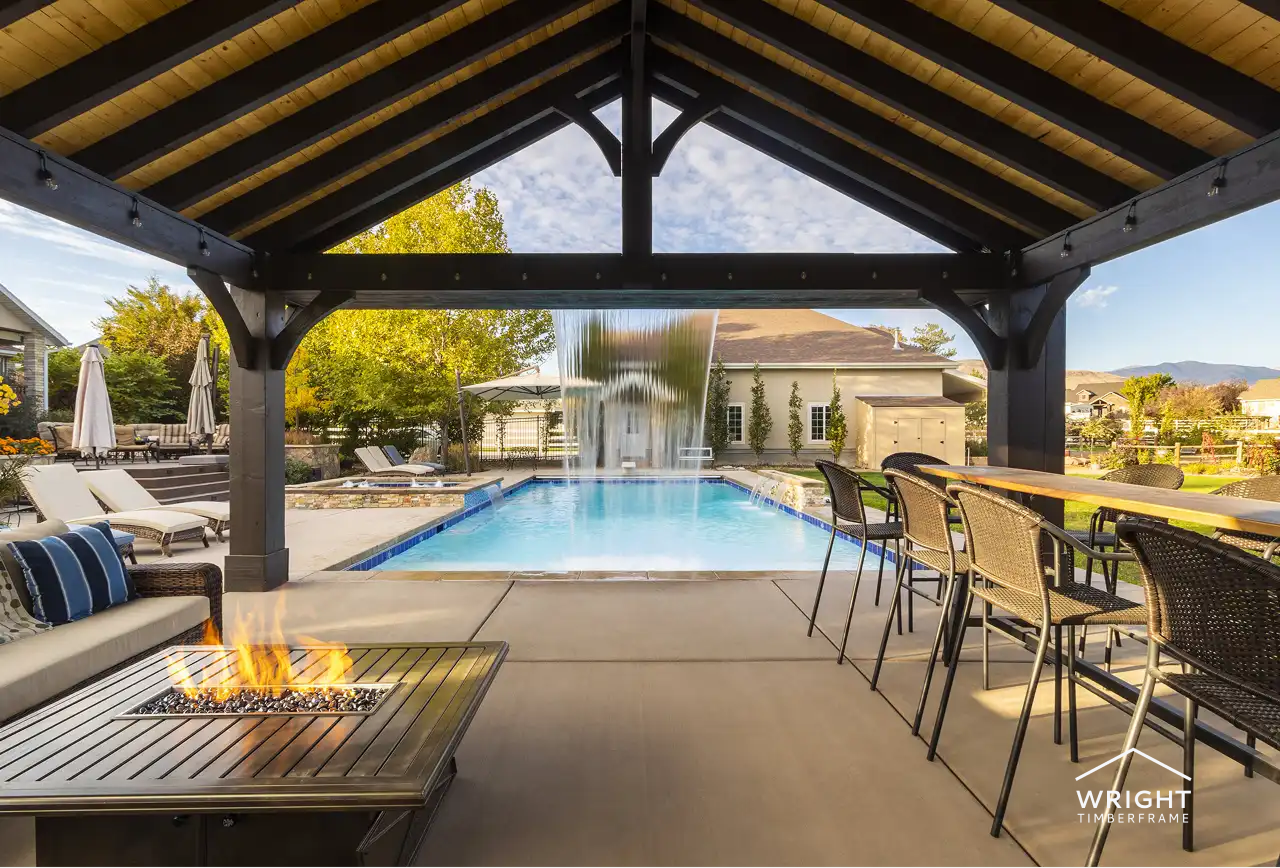
A gas fire table with a powder-coated steel or concrete top is the most practical option for a fully covered pavilion. No smoke, adjustable flame, glass beads or lava rock fill the pan. This style suits pavilions with a cleaner finish like Stone Dust or Alpine White.
Budget: $1,200 – $4,500
5. Linear Gas Fire Trough
A long, narrow flame channel running the center of a dining table or along a bench creates a modern, almost architectural fire feature. The linear form suits rectangular pavilion layouts and keeps sightlines clean across the table. CSA-certified linear burners are widely available.
Budget: $1,800 – $5,000
6. Corten Steel Fire Bowl
Weathering steel develops a rust patina that looks intentional and rich next to cedar or fir beams. Corten bowls are heavy-duty, handle high heat, and age in place. The burnt-orange tones read beautifully against Canyon Brown or Cedarwood Chestnut pavilion stains.
Budget: $600 – $2,200
7. Chiminea
A cast-iron or clay chiminea is a lower-commitment option that works well at the edge or corner of the pavilion. The chimney draws smoke up and away, which makes it more forgiving in partially enclosed spaces. Best for smaller pavilions where a built-in pit would overwhelm the footprint.
Budget: $200 – $900
8. Propane Fire Pit Table with Insert
The tabletop-with-fire-insert format combines function and ambiance. Many models include a lid that converts the burner into a flat dining surface when not in use. CSA-approved propane tables are safe under a covered structure with adequate cross-ventilation on at least two sides.
Budget: $900 – $3,000
9. Wood-Burning Fireplace Wall
For pavilions built against a home’s exterior wall, an outdoor fireplace becomes the architectural anchor. A stacked stone or stucco surround with a proper chimney creates a true outdoor room. This is the most involved build, but it adds lasting property value.
Budget: $6,000 – $18,000+
10. Smokeless Fire Pit with Steel Insert
Brands like Solo Stove popularized the double-wall airflow design that burns wood significantly cleaner. For pavilion use, a smokeless pit on a non-combustible surface gives the real-fire experience with far less overhead smoke. A worthwhile upgrade for anyone wanting wood flame without the haze.
Budget: $400 – $1,800
Matching Your Fire Pit Style to Your Pavilion Stain
Wright Timberframe offers pavilions in a wide range of Behr stain finishes, from Frosted Timber and Alpine White on the lighter end to Dark Walnut, Charred Hickory, and Espresso Timber on the deeper end. The fire pit material you choose should either complement or intentionally contrast the wood tone.
| Pavilion Stain | Best Fire Pit Pairings | Why It Works |
|---|---|---|
| Dark Walnut / Charred Hickory | Raised stone, Corten steel bowl | Rustic textures and warm tones reinforce the depth of the stain |
| Alpine White / Frosted Timber | Concrete fire bowl, linear gas trough | Cool, neutral fire features contrast cleanly against white beams |
| Natural Cedar / Western Cedar | Corten bowl, sunken wood-burning pit | Natural materials feel cohesive and grounded in the landscape |
| Espresso Timber / Mocha Canyon | Rectangular gas table, fireplace wall | Rich, formal tones suit a more refined fire feature format |
| Stone Dust / Slate Gray | Gas fire table, propane insert table | Cool gray beams pair best with metal-framed, contemporary fire tables |
Layout: Where to Position the Fire Pit in Your Pavilion
Placement has as much impact on the experience as the fire pit style itself. Three positions work best under a timber frame pavilion designed around a fire feature, and each creates a different social dynamic.
Center Placement
A fire pit centered in the pavilion creates 360-degree seating with equal warmth on all sides. This is the most social layout and works well for round or square pavilion footprints. Allow at least 3 feet of clearance from seating to the pit edge on all sides.
Corner Placement
Pushing the fire feature into one corner of the pavilion opens up the remaining floor plan for a dining table, outdoor kitchen, or lounge zone. Corner placement works well with chimineas and fire bowls. It also positions the fire feature closest to natural ventilation at the open edges of the structure.
Edge or Wall Placement
A linear gas trough or outdoor fireplace built into one perimeter wall turns that wall into a focal point. Seating faces inward toward the fire. This layout reads more like an outdoor living room and suits longer, rectangular pavilions attached to the home.
“The best fire pit placement isn’t the one that looks best in photos. It’s the one your family gravitates toward on a cold October evening.”
Pairing Seating Styles with Your Fire Feature
The fire pit you choose should inform your seating selection just as much as the pavilion layout. Here is a practical breakdown:
- Sunken or raised stone pit: Low Adirondack chairs, teak lounge chairs, or upholstered outdoor sectionals work well. The lower the fire source, the lower your seating can sit.
- Gas fire table or propane insert table: Mix-and-match dining chairs, upholstered club chairs, or a combination of chairs and a bench. The table surface anchors the seating arrangement.
- Linear gas trough: A dining table with matching chairs on both sides. This format is built for meals with the fire as the table centerpiece.
- Chiminea: Folding camp chairs, wooden rockers, or casual outdoor seating. The relaxed energy of a chiminea calls for informal furniture.
- Fireplace wall: A sofa-style outdoor sectional with a coffee table, designed to face the fireplace. Treat it the same way you would an interior living room.

Budget Ranges at a Glance
| Fire Pit Type | Fuel | Approx. Cost | Covered Pavilion Safe? |
|---|---|---|---|
| Chiminea | Wood | $200 – $900 | Edge/corner with open sides |
| Smokeless fire pit | Wood | $400 – $1,800 | Yes, with ventilation |
| Corten steel bowl | Wood | $600 – $2,200 | Open-sided pavilions only |
| Propane fire table | Propane | $900 – $3,000 | Yes, CSA-approved |
| Rectangular gas table | Gas | $1,200 – $4,500 | Yes |
| Sunken wood pit | Wood | $1,500 – $4,000 | High-clearance, open only |
| Linear gas trough | Gas | $1,800 – $5,000 | Yes |
| Raised stone surround | Wood or Gas | $2,000 – $6,000 | Gas version yes |
| Outdoor fireplace wall | Wood or Gas | $6,000 – $18,000+ | With proper chimney |
For the full picture on what goes into pairing a fire feature with a covered timber structure, the Hearth, Patio and Barbecue Association (HPBA) publishes detailed installation and clearance guidance that is worth reading before you finalize your design. The National Fire Protection Association (NFPA) also provides outdoor fire feature codes that apply in most jurisdictions across the U.S.
Quick Tips Before You Start Planning
- Check your local municipality’s outdoor fire ordinance before selecting a wood-burning fire feature. Many urban and suburban areas have restrictions or permit requirements.
- If you’re converting from propane to natural gas (or vice versa), verify the burner is rated for both. Not all fire tables are dual-fuel compatible.
- For a Douglas fir pavilion, keep the fire feature at least 10 feet below the structural timbers. The Wright Timberframe pergola and pavilion team can advise on clearance during the design phase.
- Choose a non-combustible pad material under any fire feature: concrete, brick, flagstone, or porcelain tile. Composite decking is not safe directly under a fire bowl.
- If you want to add a fire feature after your pavilion is already built, pavilion kit customers can often retrofit a gas fire table without structural modifications.
Frequently Asked Questions about Fire Pit Ideas for Backyard Pavilion
Can you put a wood-burning fire pit under a covered pavilion?
Yes, but with important conditions. The pavilion must be fully open on at least two sides, roof clearance should be a minimum of 10 feet above the flame, and a spark screen or ember guard is required. Many homeowners choose gas fire features for covered use because they eliminate smoke and reduce ember risk entirely.
What is the safest fire pit type under a timber frame pavilion?
CSA-certified propane or natural gas fire tables and troughs are the safest option under a solid-roofed timber pavilion. They produce no embers, allow precise flame control, and can be shut off instantly. Always verify the product’s clearance specifications match your pavilion dimensions.
Does a fire pit add value to a backyard pavilion?
A well-designed fire feature significantly extends the usable season of an outdoor pavilion and increases its perceived value during a home sale. Covered outdoor living spaces with fire features consistently rank among the top backyard upgrades that buyers find appealing.
How do I choose between a gas fire table and a wood-burning fire pit?
For a covered or semi-covered pavilion, a gas fire table is the more practical choice: no smoke, no embers, no hauling wood. For an open-sided structure where the ambiance of a real wood fire is the priority, a smokeless wood-burning pit or raised stone surround is a compelling option. Many homeowners include both: a gas table under the roof and a stone pit on an adjacent open patio.
What size fire pit works best for a 12×16 pavilion?
A fire table or bowl between 36 and 48 inches in diameter or length fits comfortably in a 12×16 footprint, leaving enough clearance for seating on all sides. For center placement, allow a minimum 3-foot radius from the pit edge to the first row of chairs. A linear trough placed along one short wall can run up to 60 inches in a pavilion this size without feeling overwhelming.
Can a Wright Timberframe pavilion be designed to include a fire pit from the start?
Yes. Wright Timberframe designs custom timber pavilions with fire features in mind from the planning stage. If you know you want a center sunken pit, a fireplace wall, or a gas table, the team can incorporate the appropriate clearances, non-combustible flooring zones, and gas line access into the original design rather than retrofitting later.
Choosing the Right Fire Pit Ideas for Your Backyard Pavilion
The right fire pit ideas for a backyard pavilion come down to three things working together: the fuel type that matches your safety requirements, the material and form that suits your pavilion’s stain and beam character, and the placement that shapes how your family and guests actually use the space.
A gas fire table under a Dark Walnut pavilion with deep lounge seating on all four sides is a different experience from a raised stone pit at the edge of an open-sided cedar pavilion. Both are excellent. Neither is wrong. What matters is that the combination is intentional.
Wright Timberframe has spent over a decade building custom timber pavilions across Utah, and the team has helped homeowners plan fire features from the first design conversation. Whether you’re starting from scratch or adding a fire element to an existing structure, the earlier you bring the fire pit into the plan, the better the result.


