

What Is an Outdoor Kitchen Pergola and Why It Matters
An outdoor kitchen pergola is a timber-framed overhead structure designed to create a defined, organized, and comfortable environment for outdoor culinary activities. We build and design these structures to manage three practical needs simultaneously: sun control, safe clearances around heat-producing appliances, and a layout that makes outdoor cooking feel as efficient as an indoor kitchen.
Unlike solid roof structures, the open-rafter design of a pergola allows for immediate heat dissipation, making it the ideal companion for high-heat appliances like grills and pizza ovens.
Key Takeaways:
- Purpose: An outdoor kitchen pergola provides essential shade, defines the cooking zone, and ensures natural ventilation for heat and smoke.
- Material Choice: We recommend Douglas Fir for structural integrity and Western Red Cedar for natural decay resistance in Utah’s climate.
- Safety First: Proper clearances between cooking appliances and timber rafters are non-negotiable to prevent heat damage.
- Layout Efficiency: Designing around a work triangle (prep, cook, clean) ensures the space is as functional as an indoor kitchen.
- Investment Value: A well-built timber structure can significantly increase home value while providing a durable space for decades.
In this expert guide, we will explore the technical and aesthetic considerations that go into a professional timber build. We cover how pergolas handle heat and smoke, which timber species perform best under the stress of Utah’s seasonal shifts, and the utility planning required for a seamless installation.
As local timber experts, we rely on proven structural principles and traditional mortise and tenon joinery to create outdoor rooms that stay stable through moisture and temperature swings. The sections below explain the design choices that matter most so you can plan confidently before you commit to appliances, utilities, or a final footprint.
Planning and Designing an Outdoor Kitchen Pergola That Works
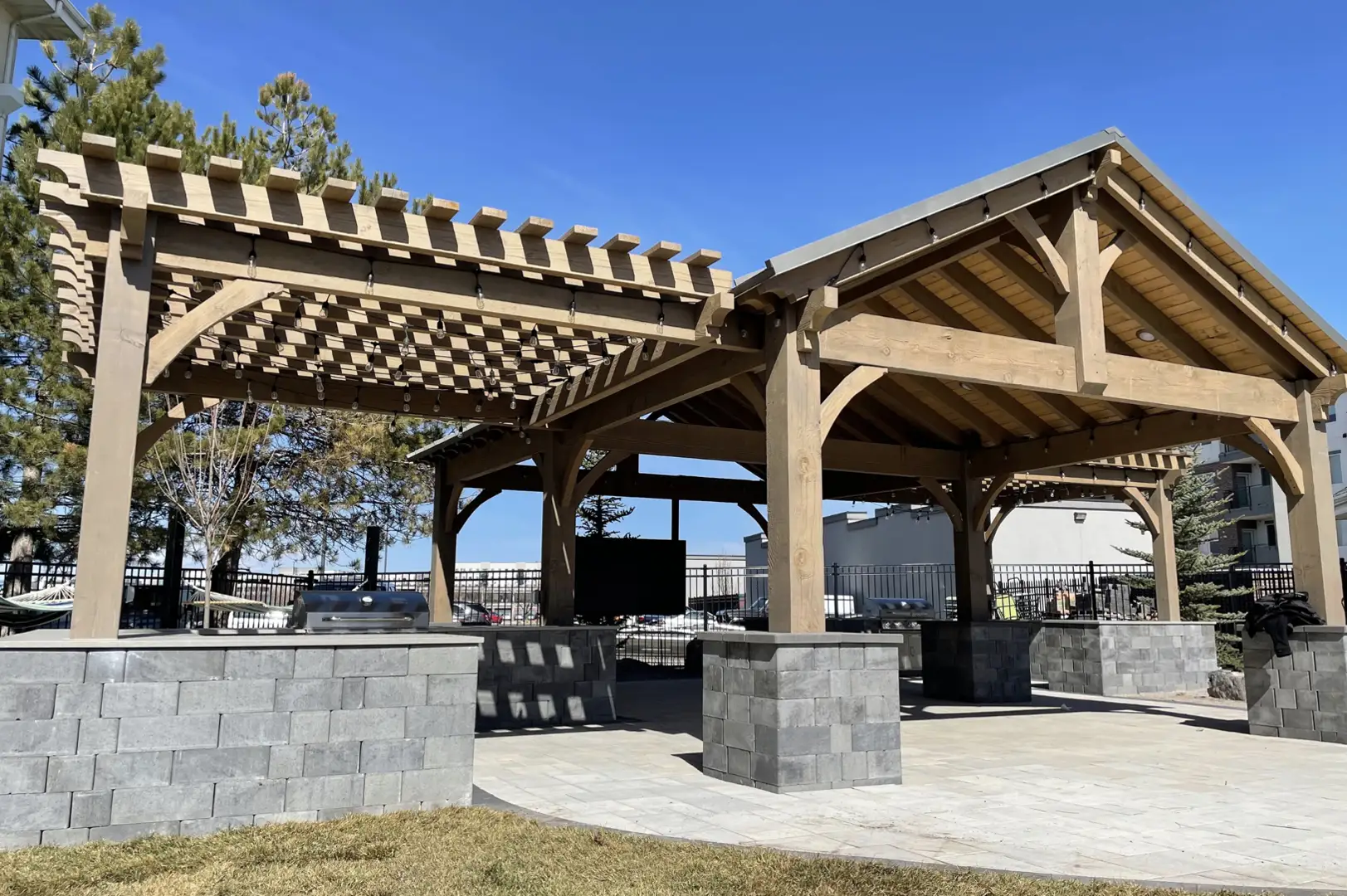
A high-performing outdoor kitchen pergola starts with how you cook, not just how the structure looks. We begin by mapping heat sources, prevailing wind, and sun angles, then we design the timber frame around safe clearances and comfortable work zones.
A well-executed outdoor kitchen can be a strong home investment, with some projects cited as returning a 55 to 200% ROI. Our focus, though, is function first: a space that is safer, cooler, and easier to use week after week.
For deeper detail on layout coordination, we also share a dedicated guide on how to integrate outdoor kitchens with pergolas.
Start With Heat, Smoke, and Clearances
Outdoor cooking concentrates heat in one zone. Timber is durable, but we still design for separation, airflow, and protection. When we evaluate a site, we look at the “heat plume,” which is the column of hot air and smoke that rises from a grill. If the pergola rafters are too low or too tightly spaced, this heat can become trapped, potentially damaging the wood finish or creating an uncomfortable environment for the chef.
What we plan before finalizing beam heights:
- Heat plume direction: Grills and pizza ovens push heat upward and forward. We ensure the height of the structure allows for rapid cooling.
- Vent path: Open rafters help, but wind can trap smoke if the pergola is oriented poorly. We look at local wind patterns to ensure smoke clears the dining area.
- Non-combustible protection: When needed, we specify heat shields or a vent hood system. This is especially important for built-in grills with high BTU outputs.
The USDA Forest Service summarizes wood as a combustible material with predictable ignition behavior under sustained heat exposure, which is why clearance planning matters in any wood structure near high temperatures. We typically recommend a minimum clearance of 36 to 48 inches from the cooking surface to the lowest timber element, though appliance manufacturer specifications always take precedence.
Orient the Rafters for Usable Shade
We look at the sun path across your yard and align rafters to block the harshest hours. In Utah summers, late-afternoon sun is often the comfort killer. By tilting or spacing the rafters strategically, we can create a “cooling effect” that reduces the temperature on your granite countertops and stainless steel appliances by as much as 15 to 20 degrees.
Practical shade strategies we use:
- Rafter Orientation: We often rotate the rafter direction to be perpendicular to the afternoon sun, maximizing the shadow cast over the prep area.
- Density and Depth: Increasing the depth of the rafters (using 2x8s instead of 2x6s, for example) or decreasing the spacing between them provides more shade without sacrificing the open-air feel.
- Louvered Options: For those who want total control, we can discuss how different timber thicknesses affect the percentage of shade provided throughout the day.
Choose a Layout That Matches How You Host
_compressed.webp?alt=media&token=026852ce-d77c-4142-b3c4-37f6e274caed "Outdoor Kitchen Pergola Layout Ideas") ,
,
A pergola defines the room, but the kitchen layout controls efficiency. We design around a clear work sequence: storage, prep, cook, serve. This is often referred to as the “Work Triangle.” In an outdoor setting, this triangle must also account for the flow of guests who may be moving between the pool, the fire pit, and the dining table.
Common outdoor kitchen shapes we build:
- L-shape: This is the most popular for pergolas because it creates a natural corner for the structure’s posts. It allows for efficient prep-to-grill movement and easy guest interaction at a bar-height counter.
- U-shape: This provides the maximum amount of counter space and is best for frequent entertaining. It creates a “cockpit” for the chef, keeping guests on the outside of the work zone.
- Straight run + island: This works well on narrower patios. The pergola can cover the main cooking run while the island remains open for sunbathing or flexible seating.
Clearance rules of thumb we use:
- Plan at least 36 to 42 inches for walkways around active cooking zones to allow two people to pass comfortably.
- Keep guest seating at least 4 feet away from the grill to avoid smoke and heat discomfort.
- Provide a landing zone of at least 18 inches on both sides of the grill for hot trays, tools, and plates.
Timber Selection: Strength, Stability, and Weathering
Species choice affects span capability, checking behavior, and long-term maintenance. We primarily work with Douglas Fir and Western Red Cedar because they balance strength and outdoor durability. In Utah, our wood must survive 100-degree summers and sub-zero winters with heavy snow loads.
| Feature | Douglas Fir | Western Red Cedar |
|---|---|---|
| Structural strength | High; great for longer spans and heavy snow | Moderate; lighter and stable |
| Decay resistance | Good when detailed and finished well | Naturally high due to organic oils |
| Movement and checking | Can check (small cracks) as it seasons; normal | Often more dimensionally stable |
| Best use | Primary posts and large structural beams | Accents, rafters, and trim elements |
When we design a timber frame pergola, Douglas Fir often carries the main loads so we can keep the space open and unobstructed by extra posts. Cedar is a strong option when the priority is natural rot resistance and a lighter visual feel. Both species require a high-quality UV-protective stain to maintain their color and structural integrity over time.
Joinery Matters More Than Most People Expect
We use mortise and tenon joinery because it performs well as wood expands and contracts across seasons. That movement is normal outdoors, especially with Utah’s extreme temperature swings. Traditional joinery involves carving a “hole” (mortise) in one timber and a “tongue” (tenon) on the other, then securing them with wooden pegs.
Why traditional joinery helps in an outdoor kitchen pergola:
- Mechanical Strength: It creates a connection that does not rely solely on metal fasteners, which can rust or loosen over time.
- Rigidity: It supports long-term stability under wind loads and the weight of accessories like heavy heaters or fans.
- Aesthetics: It keeps hardware visually minimal, allowing the beauty of the timber to remain the focal point of the kitchen.
If you are comparing options, our custom pergolas page outlines how we approach sizing, details, and site-specific engineering considerations to ensure your structure lasts for generations.
Engineering for Utah Weather: Snow and Wind
One aspect homeowners often overlook is the engineering required for a structure that may hold several tons of snow in the winter. Even though a pergola has an open roof, the rafters themselves catch snow. We calculate the “tributary load” for every beam to ensure that the structure will not sag or fail during a heavy Salt Lake Valley or Park City winter. We also ensure the anchoring system is robust enough to handle high wind gusts that can create uplift on the rafters.
Plan Utilities Early (and Keep Them Clean)
Outdoor kitchens usually need power, gas, and sometimes water and drainage. We prefer to plan these routes before the concrete pad or pavers are finalized. This allows us to hide conduits inside the timber posts or underground, maintaining the clean look of the timber frame.
Utility planning checkpoints:
- Electric: Plan for outlets for lighting, rotisserie motors, and small appliances. We also recommend dedicated circuits for outdoor refrigerators.
- Gas: Ensure safe pipe routing with accessible shutoff valves. We keep gas lines away from high-heat pinch points.
- Water and Waste: If you include a sink, plan for winterization. In Utah, lines must be sloped for easy draining to prevent freezing and bursting in January.
Details That Make the Space Usable After Sunset
A pergola can feel like a complete outdoor room with a few smart add-ons. We recommend choosing these early so posts and beams can be prepared for wiring and mounting during the fabrication process.
Popular, practical upgrades:
- Task Lighting: Bright, focused lights over the grill and prep counters are essential for evening cooking.
- Ambient Lighting: Dimmable LED strips or Edison bulbs can create a relaxed atmosphere for dining.
- Infrared Heaters: These extend your outdoor cooking season into the spring and fall by warming objects rather than the air.
- Ceiling Fans: These are excellent for both cooling the chef and keeping flies away from the food prep area.
The goal is a space that works for real cooking and real gatherings, not just a good photo. By integrating these elements into the initial design, we avoid the “cluttered” look of after-market additions.
Frequently Asked Questions about Outdoor Kitchen Pergola
Do I need a building permit for an outdoor kitchen pergola in Utah?
In most Utah jurisdictions, a permit is required if the structure exceeds a certain square footage (often 120 to 200 square feet) or if it is attached to the house. Additionally, any electrical or plumbing work will require specific trade permits. We always recommend checking with your local building department to ensure compliance with safety codes.
How much clearance should we leave between a grill and pergola rafters?
While appliance manuals provide the baseline, we typically design for at least 3 feet of clearance from the top of the grill to the bottom of the rafters. If you are using a high-output grill or a smoker, we may suggest a higher roofline or a non-combustible heat shield to protect the timber finish from long-term heat exposure.
What timber holds up best in Utah weather for an outdoor kitchen pergola?
Douglas Fir is our top choice for structural components due to its incredible strength-to-weight ratio and ability to handle heavy snow loads. Western Red Cedar is excellent for its natural resistance to rot and insects. For the best results, we often use a combination of both, finished with a high-quality UV-rated oil stain.
How do we maintain the wood on an outdoor kitchen pergola?
Maintenance is straightforward but necessary. We recommend an annual cleaning with a soft brush and mild soap to remove dust and pollen. Every 2 to 3 years, depending on the sun exposure of your yard, you should apply a fresh coat of UV-protective stain to prevent the wood from silvering and to maintain its water-repellent properties.
Can we put a pizza oven under an outdoor kitchen pergola?
Yes, pizza ovens are a fantastic addition to a timber pergola. However, because they reach extremely high temperatures, they require a dedicated chimney pipe that extends through or past the rafters. We must also ensure the oven is placed on a non-combustible base, such as stone or concrete, with ample clearance from the timber posts.
Can a pergola support a ceiling fan or heavy heaters?
Absolutely, provided the structure is engineered for it. When we design your pergola, we calculate the weight of these accessories and ensure the beams are sized correctly. We can also pre-drill or notch the timbers to hide the wiring for a clean, professional look.
Investing in Your Outdoor Kitchen Pergola
A well-designed outdoor kitchen pergola is less about decoration and more about performance. It provides shade where you stand, ventilation where heat rises, and a layout that keeps cooking smooth and social. When we design with timber behavior, traditional joinery, and site-specific conditions in mind, the result is an outdoor room that feels natural to use and holds up through years of Utah weather.
By focusing on the technical details of clearances, material selection, and utility integration, we ensure that your investment provides value for decades to come. Contact us today to start your project.

