
Garden Trellis Structures: Stronger, Smarter Growth
Garden trellis structures are vertical frameworks designed to support climbing plants, optimize garden space, and improve plant health by increasing airflow and reducing ground-based pest exposure. We believe these structures are the backbone of any productive landscape, offering both functional utility and architectural beauty to your outdoor living areas. By training plants to grow upward, we help homeowners maximize their square footage while creating stunning visual focal points.
Key Takeaways
- Space Optimization: Vertical gardening allows for higher plant density in small footprints.
- Disease Prevention: Improved airflow reduces fungal pathogens and moisture-related rot.
- Structural Longevity: Traditional timber joinery offers superior durability compared to mechanical fasteners.
- Material Stability: Wood provides a temperature-neutral environment for sensitive climbing vines.
- Increased Yields: Better sunlight exposure leads to more efficient photosynthesis and fruit production.
Garden trellis structures are vertical frameworks designed to support climbing plants, optimize garden space, and improve plant health by increasing airflow and reducing ground-based pest exposure. We believe these structures are the backbone of any productive landscape, offering both functional utility and architectural beauty to your outdoor living areas. By training plants to grow upward, we help homeowners maximize their square footage while creating stunning visual focal points.
In this guide, we will explore the primary benefits of vertical gardening for vegetables and flowers, material selection for long-term durability in harsh climates, and traditional timber joinery techniques that ensure structural integrity. We will also cover plant-specific trellis requirements for optimal yields and maintenance tips to preserve your timber investment for decades.
Our team at Wright Timberframe has spent over a decade designing and building custom timber structures. We specialize in garden trellis structures crafted with traditional mortise and tenon joinery from sustainable Douglas Fir. We aim to provide you with the knowledge needed to choose, build, and maintain the right trellis for your unique space.
Essential Benefits of Garden Trellis Structures
Garden trellis structures serve as the backbone of a productive and organized landscape. By inviting plants to grow upward, we unlock a world of vertical space that is often overlooked in traditional gardening. This simple shift in direction provides several essential benefits that improve both the health of your plants and the beauty of your backyard.
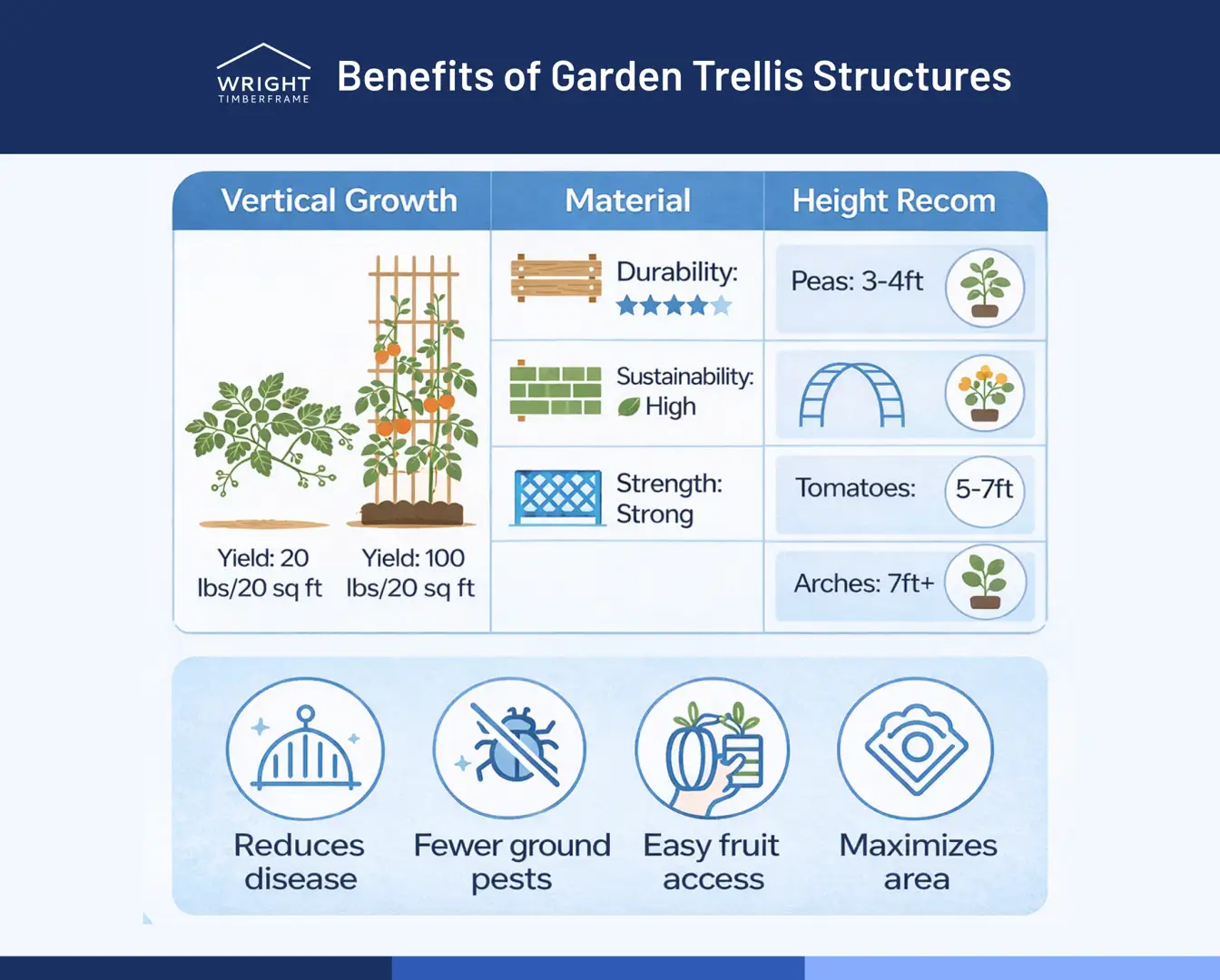
One of the most immediate advantages is space maximization. In a small Utah backyard, every square foot counts. Using a trellis allows you to plant cucumbers just 6 inches apart, which is a massive improvement over the sprawling space they require on the ground. This density does not just save space: it allows for a more diverse garden in a smaller area.
Beyond space, vertical gardening significantly improves air circulation around the foliage. When leaves are lifted off the damp soil, they dry faster after rain or watering, which helps prevent common fungal diseases and rot. This elevation also keeps the fruit away from ground-dwelling pests, ensuring your harvest stays clean and intact.
The Science of Vertical Growth and Airflow
We often see gardens struggling with powdery mildew or fruit rot because plants are left to sprawl. When we lift these plants onto a trellis, we create a chimney effect where air moves freely through the leaves. This constant movement of air prevents moisture from sitting on the leaf surface, which is the primary cause of many fungal infections. In high-humidity environments, this can be the difference between a successful harvest and a total crop loss.
Furthermore, vertical growth ensures that every leaf has better access to sunlight. In a crowded ground garden, lower leaves are often shaded out, leading to reduced photosynthesis and lower yields. By spreading the canopy across a vertical plane, we ensure the plant operates at peak efficiency. This increased light interception triggers the plant to produce more flowers and, subsequently, more fruit. We have observed that trellised plants often reach maturity faster because they are not competing with their own shadows.
Choosing Materials for Garden Trellis Structures
Selecting the right material is the most important decision you will make for the longevity of your structure. At Wright Timberframe, we prioritize The Ultimate Guide to Choosing Timber Trellises because natural wood offers a temperature-stable environment for plants. Unlike metal, which can become scorching hot in the Utah sun or freezing cold in the winter, wood maintains a natural temperature that helps plants flourish. Metal trellises can actually burn tender vine tendrils during mid-summer heat waves, whereas timber remains cool to the touch.
For vegetable gardens, we highly recommend using Western Red Cedar or Douglas Fir. These species offer natural rot resistance without the need for the harsh chemicals found in pressure-treated lumber. Cedar, in particular, is worth the investment for its durability and beautiful aging process. Douglas Fir provides exceptional structural strength, making it ideal for larger installations like pergolas or heavy-duty squash arches.
Other materials like bamboo are popular for their strength and straightness, making them ideal for quick, lightweight structures like bean teepees. However, if you are looking for a permanent addition to your landscape, timber is the gold standard. While PVC and plastic are low-maintenance, they often lack the structural integrity needed to support heavy vines like wisteria or large squash.
According to the UMN Extension, choosing a material that matches the weight of your mature plants is key to avoiding structural failure mid-season. We always advise our clients to build for the weight of the plant at its peak harvest, not its seedling stage.
Structural Integrity Through Mortise and Tenon Joinery
We believe that a trellis should be as permanent as the home it accompanies. This is why we utilize traditional mortise and tenon joinery in our builds. This method involves carving a hole (the mortise) into one timber and a projecting tongue (the tenon) on another, creating a joint that is incredibly strong and aesthetically pleasing. This ancient technique has been used for centuries in cathedral and barn building because it distributes weight across the wood fibers rather than relying on a single metal point of failure.
Unlike screws or nails that can rust and pull out over time, timber joinery relies on the strength of the wood itself. As the wood naturally expands and contracts with the seasons, these joints remain secure. This is especially important for heavy perennial vines like grapes or wisteria, which can weigh hundreds of pounds at maturity. A mechanical fastener can shear under the lateral pressure of a windstorm, but a mortise and tenon joint is designed to lock tighter as pressure is applied.
Top DIY Designs for Every Garden Style
There are countless ways to design a trellis, ranging from simple rustic builds to sophisticated architectural statements. The best design for you depends on what you are growing and the aesthetic of your outdoor space. We recommend considering the wind patterns and sun exposure of your site before finalizing a design.
A-frame panels are a favorite for many because they are incredibly stable and can be folded flat for storage during the winter. These are perfect for cucumbers or peas. If you want something more whimsical, a bean teepee made from bamboo stakes and twine creates a delightful retreat for children while providing ample climbing space for pole beans. These temporary structures are excellent for annual crops that require rotation each year.
For those looking to add elegance, an obelisk or tuteur provides a tall, four-sided tapering monument that ends in a pyramid shape. These look stunning at the corners of raised beds and provide a formal structure even in the winter months. If you have a larger space, arched tunnels or squash arches create an enchanting walkway where gourds and melons can hang from above.
The Many Functions of Trellises from Privacy Screens to Vertical Gardens shows how these structures can be used to define garden rooms or provide privacy along a property line. We often use these larger structures to create transitions between different areas of a landscape.
Maximizing Yields with Garden Trellis Structures
If your goal is a high-output edible garden, garden trellis structures are your best friend. Indeterminate tomatoes, which keep growing all season long, can easily reach heights of 7 feet or more. By using a sturdy vertical support rather than a flimsy store-bought cage, you can achieve yields of over 100 lbs of fruit in a tiny 20-square-foot area. This is achieved by pruning the plants to a single or double leader, allowing the plant to focus its energy on fruit production rather than excessive foliage.
Vertical training also works wonders for vining squash and small melons. For heavier fruits, you can use cloth slings tied loosely to the trellis to support the weight as they grow. This prevents the vines from snapping and keeps the fruit from resting on the dirt, which prevents the “yellow spot” often found on ground-grown melons. We find that harvesting from a trellis is also much easier on the back, as the fruit is presented at eye level.
Using companion planting alongside your trellis can further boost your success. For example, planting nasturtiums at the base of your trellis can help deter pests from your main crops. By keeping your plants organized and upright, you ensure that every leaf gets the sunlight it needs to produce a bountiful harvest. We also recommend planting low-growing, shade-tolerant herbs like parsley or cilantro at the base of the trellis, where they can benefit from the dappled shade provided by the climbing vines above.
Frequently Asked Questions about Garden Trellis Structures
What is the best wood for a trellis in the Utah climate?
We recommend Western Red Cedar or Douglas Fir for Utah gardens. These woods handle our extreme temperature swings and low humidity better than most. They also possess natural tannins that resist rot and insect damage without requiring chemical treatments. Douglas Fir is particularly valued for its high strength-to-weight ratio, which is essential for heavy vine loads.
How deep should I set the posts for a heavy timber trellis?
For a permanent structure, we suggest setting posts at least 24 inches deep. In areas with high winds, using a gravel base for drainage and compacting the soil or using concrete footings ensures the trellis remains upright when fully loaded with heavy vines. If the trellis is over 6 feet tall, we often recommend going 30 to 36 inches deep to account for the leverage of wind against the foliage.
Can I grow heavy vegetables like pumpkins on a trellis?
Yes, you can grow smaller pumpkin varieties and winter squash vertically. We recommend using a heavy-duty timber frame and supporting the individual fruits with mesh or fabric slings. This prevents the weight of the pumpkin from pulling the vine off the structure. Varieties like ‘Small Sugar’ or ‘Jack Be Little’ are perfect for this application.
How do I maintain my timber trellis over the years?
We suggest an annual inspection for any signs of weathering. Applying a high-quality UV-protective oil or stain every 2 to 3 years will preserve the wood’s color and structural integrity. This simple maintenance routine can help your trellis last for decades. We also recommend clearing away dead plant material at the end of each season to prevent pests from overwintering in the crevices of the wood.
Will a trellis damage my home’s siding?
If you are installing a wall-mounted trellis, we recommend leaving a gap of at least 2 to 4 inches between the trellis and the wall. This allows for airflow and prevents moisture from being trapped against your siding. We prefer free-standing structures for this reason, as they provide the best protection for your home’s exterior while still offering the benefits of vertical growth.
Elevating Your Landscape with Garden Trellis Structures
Investing in high-quality garden trellis structures is one of the most effective ways to transform your backyard into a productive and beautiful paradise. Whether you are building a simple A-frame for your vegetables or installing a custom timber-framed masterpiece to serve as a privacy screen, the benefits of vertical gardening are undeniable. We have seen firsthand how these structures change the way people interact with their outdoor spaces, turning flat gardens into three-dimensional living environments.
At Wright Timberframe, we take pride in crafting custom trellises that stand the test of time. Based in Murray, Utah, our team uses traditional mortise and tenon joinery and premium sustainable Douglas Fir to create structures that are as strong as they are beautiful. We believe that your garden deserves more than a temporary fix: it deserves a handcrafted structure that will support your plants and enhance your home for generations.
By choosing quality materials and proven construction methods, we ensure that your garden remains a source of joy and abundance for years to come. If you are ready to take your garden to the next level, we are here to help you design the perfect trellis for your unique space. Contact us to start your project.

