
Ordering a pre-cut pergola kit is only part of the process. Pergola kit shipping moves your cut, labeled, and pre-stained timbers from the Wright Timberframe shop to your property by freight, so knowing how the shipment is packaged, delivered, unloaded, and inspected can make delivery day much easier.
Unlike a typical online purchase that arrives in a few boxes, a timber pergola kit can arrive as one or more large, heavily secured pallets. The shipment contains substantial structural timbers, so the most important part of delivery planning is knowing what will arrive, where the carrier will place it, and how you will move it once it reaches your property.
Before your truck arrives, plan for these five things:
- Your kit ships as one or more custom pallets, not as a typical parcel or box shipment.
- A large timber can weigh more than 200 pounds, so unloading requires appropriate help or mechanical equipment.
- Freight delivery is generally curbside. Moving the timber from the curb to your build area is your responsibility unless additional delivery service has been arranged.
- Your timeline depends on several factors, including kit size, species, stain cure time, season, destination, and freight-terminal distance.
- Inspect the shipment before signing the delivery receipt, photograph any visible damage, and record problems in writing.
How Pergola Kit Shipping Works, Start to Finish
Pergola kit shipping runs through six stages between the day you order and the day your kit lands at your address. We cut mortise-and-tenon joints in our Utah shop, then move each order through staining, packaging, and freight before it ever leaves the building.
The Six Stages of Pergola Kit Shipping
- Order and configuration. You choose a beam profile, a knee-brace style, and any Behr stain color. That configuration determines everything cut afterward.
- Production. Your posts, beams, and braces are cut to spec using the same mortise-and-tenon joinery as our installed structures. Nothing is generic stock.
- Staining and cure. Timbers are pre-stained and given time to cure before packaging. Rushing this step causes finish problems later, so we do not skip it.
- Palletizing. Components are bundled by type, strapped, and built into custom pallets sized to your specific order.
- Freight booking. We schedule a carrier for your route and destination, which is where lead time starts to depend on your location.
- Curbside delivery. The freight carrier calls ahead, then delivers to the curb or the end of your driveway.
Each stage has its own timeline, which is why the next section separates lead time into the variables that actually move it.
How Long Does a Pergola Kit Take to Arrive?
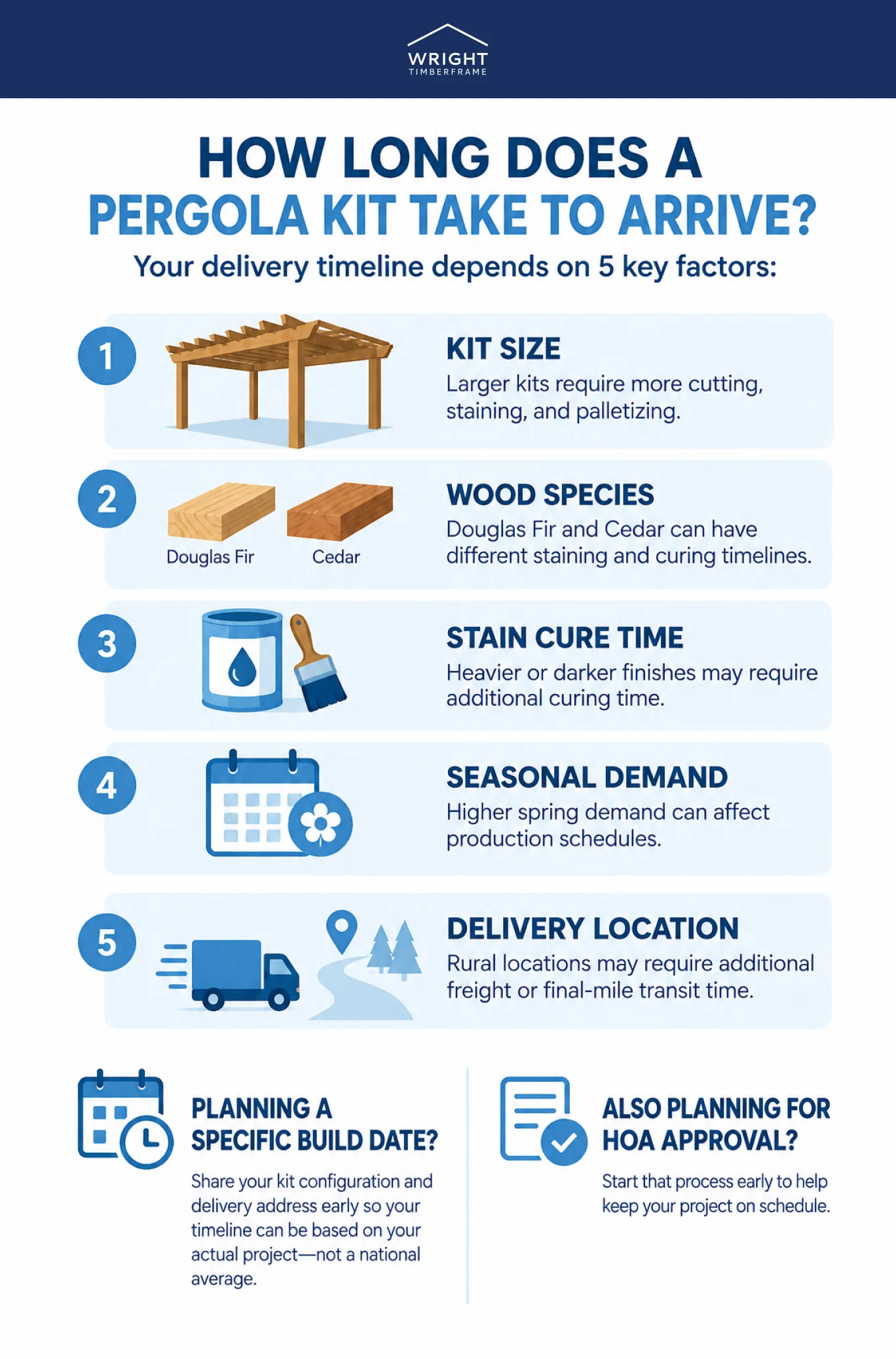
How long a pergola kit takes to arrive depends on several variables working together, not one number we can publish upfront. Kit size, wood species, stain cure time, seasonal demand, destination, and distance from the nearest freight terminal can all affect the timeline.
We do not publish a guaranteed turnaround, because each order has different production and freight requirements. If you have a target build date, tell us when you request your quote so the production and delivery schedule can be planned around your actual configuration and destination.
| Variable | How It Affects Lead Time |
| Kit size | Larger pergolas generally require more pieces to cut, stain, package, and prepare for freight. |
| Species | The selected timber species can affect production and finishing requirements. |
| Stain cure time | The finish needs appropriate time before the components are packaged for shipment. |
| Season | Production volume and freight demand can affect scheduling during busier periods. |
| Destination | Your location affects the freight route and delivery schedule. |
| Freight terminal distance | Rural or remote destinations can require additional transit or final-mile coordination. |
If you have a target build date, tell us early. We would rather set expectations before you order than have you guessing after. If your pergola project also requires HOA approval, it’s worth getting that process started early; see our guide to Pergola Kit HOA Approval
Rural addresses are the variable buyers underestimate most. A metro delivery zone might sit thirty minutes from a freight terminal, while a mountain or rural address can add a full extra leg to the route, sometimes handled by a second, smaller carrier for the final stretch. Neither situation is a problem. It just means the number we give you accounts for your actual address, not a national average that does not apply to your driveway.
How Your Kit Is Packaged for Transit

Your pergola kit is packaged into custom pallets built to the dimensions of your specific order, not a generic shipping box. Every component is bundled by type, strapped down, and separated with shims to protect the pre-stained finish during transit.
Here is what that looks like in practice:
- Custom pallet sizing. Pallets are built around your posts, beams, and braces, not a one-size-fits-all frame.
- Strapping and shrink wrap. Bundles are secured to prevent shifting inside the truck.
- Shims between stained boards. These protect the finish from rubbing during transit and are the source of most of the light marks you will see on delivery.
- Labeled bundles. Components are grouped and labeled by type, which matters when you get to assembly.
A large post can weigh more than 200 pounds on its own before it is even bundled with hardware and braces. That single fact changes how you should plan delivery day. This is not a kit you carry across the yard solo, and planning for that weight now saves a frustrating morning later.
Douglas Fir is our standard species, chosen partly for its strength-to-weight ratio, and a Cedar upgrade is available for buyers who want a lighter timber with more natural decay resistance. Either species ships with the same pre-cut, pre-stained process described above, just with different handling weight and cure characteristics factored into your production schedule.
Want to see what a completed structure looks like before your own kit arrives? Our project gallery includes builds like the McDonough Project and the Arvidson Project, both built from the same joinery and species used in every kit we ship.
Delivery Day: What the Freight Carrier Will and Won’t Do
On delivery day, the freight carrier brings the shipment to the agreed curbside delivery point. The carrier does not move the timbers into your backyard, garage, or building area, so you need to have a plan for moving the pallet or individual timbers after delivery. Liftgate service or other special equipment may be available depending on the shipment and carrier, but those arrangements should be confirmed before delivery.
| The Carrier Handles | You Handle |
| Call-ahead communication before the scheduled delivery | Confirming someone is available during the delivery window |
| Delivery to the agreed curbside location | Moving the kit from the curb to your staging or build area |
| Standard freight delivery according to the shipment’s service terms | Having helpers or mechanical equipment ready for unloading and moving the timbers |
| Any liftgate or special delivery service that was specifically arranged | Requesting and confirming any special access or unloading requirements before shipment |
| Delivery paperwork, including the bill of lading or delivery receipt | Inspecting the shipment and documenting visible damage before signing |
Freight service varies by shipment, destination, and carrier, so confirm the delivery arrangement with Wright Timberframe when your quote is prepared. The important point is simple: curbside freight delivery is not the same as having a moving crew carry your pergola into the backyard.
How to Unload a Timber Frame Pergola Kit Safely
Unloading a timber frame pergola kit safely starts before the truck ever turns onto your street. Confirm truck access, line up enough help or mechanical equipment for the heaviest pieces, and prepare a clear staging area before delivery. Because these kits contain substantial structural timbers, the goal is to plan the move rather than improvise once the truck arrives.
Before the truck arrives, confirm:
- Truck access and turning radius on your street and driveway
- Two to three helpers, or a forklift if one is available
- Wire cutters or a strap knife for cutting banding
- A clear, flat staging area near where the pallet will land
- Tarps, in case the kit needs to sit outside briefly before you move it
Once the truck arrives, work through the pallet methodically. Cut strapping carefully, since components can shift once the tension releases. Move the heaviest pieces first with your full crew, then break down smaller bundles. Individual wood movement and checking can begin the moment timber is exposed to open air, which is one more reason not to leave bundles half-unwrapped for days.
Terminal Pickup: The Alternative to Curbside Delivery
If your driveway cannot take a full-size freight trailer, a terminal pickup is often the better answer. Instead of the carrier attempting a delivery your site cannot physically support, you collect the pallet from the freight terminal yourself, typically with a pickup truck and trailer or a rented box truck.
This matters more than most kit sellers admit. A tight cul-de-sac, a steep or narrow driveway, or overhead power lines can all make curbside delivery impractical. Tell us about your access before we book freight, and we will route around it rather than let a driver find out the hard way.
Inspecting Your Kit and Handling Freight Damage
Inspecting your kit before you sign for it protects you if something went wrong in transit. Count bundles against your packing list, photograph everything before unwrapping, and note any damage on the delivery receipt before you sign, not after the truck leaves.
Here is the sequence that protects you:
- Count bundles against the packing list the driver hands you. A missing bundle is easier to trace before the truck drives away.
- Photograph the pallet before you cut any strapping or unwrap anything.
- Note visible damage in writing directly on the delivery receipt, before you sign it. A verbal note to the driver does not create a record.
- Contact us the same day if anything looks wrong, with your photos ready to send.
Federal freight-claim rules provide specific requirements for filing a claim for loss or damage under 49 CFR Part 370. A notation of damage or shortage on a delivery receipt does not, by itself, constitute a formal claim under 49 CFR § 370.3, but documenting visible damage at delivery creates an important record of the shipment’s condition. For interstate shipments, carrier liability for actual loss or injury to property is addressed under the Carmack Amendment, 49 U.S.C. § 14706. If you see damage, record it on the delivery paperwork, take clear photos, keep your shipping documents, and contact us promptly so we can help determine the next step in the claims process.
Minor Scuffing vs. Real Freight Damage
Not every mark on a delivered timber is transit damage. Light rub marks from shims, small surface scuffs from timber-on-timber contact, and minor dust from the pallet are normal and expected. What is not normal: cracked or split beams, crushed corners, missing hardware, or a bundle that arrives visibly loose or torn open. If you are unsure which category a mark falls into, send us a photo. We would rather look at ten photos of normal wear than have you sign off on something that needed a claim filed the same day.
Where to Store Your Kit Before You Build
Store your pergola kit off the ground, covered, and out of direct sun until you are ready for assembly. Pre-stained timber still needs airflow, and stacking bundles directly on the ground or wrapping them airtight can cause problems before you ever pick up a drill.
Follow these basics between delivery and build day:
- Keep the kit off the ground, on blocks or dunnage, not directly on dirt or concrete
- Cover it, but leave room for ventilation rather than sealing it completely
- Keep it out of direct sun, which can affect the stain over an extended storage period
- Leave stickers or spacers between bundled boards to allow airflow
- Keep bundles labeled and grouped as they arrived, so assembly day is not a scavenger hunt
If you are storing your kit for more than a few weeks, following OSHA’s general guidance for safe materials handling and storage on stacking and securing heavy material is good practice even for a homeowner, not just a jobsite. Once you are ready to build, proper long-term maintenance starts with how the wood was treated before assembly, not just after—learn more about how to never worry about timber pergola maintenance again.

Frequently Asked Questions About Pergola Kit Delivery
Do I need a forklift to unload my pergola kit?
No, but it helps for the heaviest bundles. Most kits can be unloaded with two to three able-bodied helpers using proper lifting technique, though a forklift makes the process faster and safer for larger orders.
What happens if I’m not home when the freight truck arrives?
The carrier will typically attempt to reach you using the contact information on file and may reschedule the delivery, sometimes with an additional redelivery fee from the carrier. Confirming your call-ahead window in advance is the easiest way to avoid this.
Is shipping included in the price of a pergola kit?
We quote shipping as part of your project estimate rather than folding it into a flat product price, since freight cost depends on kit size and destination. Contact us with your ZIP code for an accurate quote.
Can you ship a pergola kit outside the continental US?
Availability outside the continental United States varies by destination and must be confirmed directly with our team before you order. Please contact us to discuss your specific location.
What if a timber arrives damaged or a piece is missing?
Document it on the delivery receipt before you sign, photograph the issue, and contact us the same day. We handle replacement and claims coordination directly with you.
How long can a kit sit before I assemble it?
There is no fixed limit, but the longer a kit sits, the more attention its storage conditions need. Keeping it covered, off the ground, and ventilated, as described above, is what allows a longer storage window without finish or moisture problems.
Planning Ahead for Your Pergola Kit Shipping
Planning ahead for pergola kit shipping means handling freight, site access, HOA review, and site preparation in parallel. If your driveway has access restrictions or your project depends on a specific build window, sharing those details before production gives the shipping plan a chance to account for them.
You can also start HOA or architectural review while your kit is being prepared, rather than waiting for freight to be scheduled before beginning the paperwork. The more of these details you resolve early, the fewer surprises you are likely to face when delivery day arrives.
Ready to plan your delivery? Request your free, no-obligation kit quote and include your delivery ZIP code and any driveway or site-access concerns. We can help you understand what shipping and delivery will look like before your kit leaves the shop.