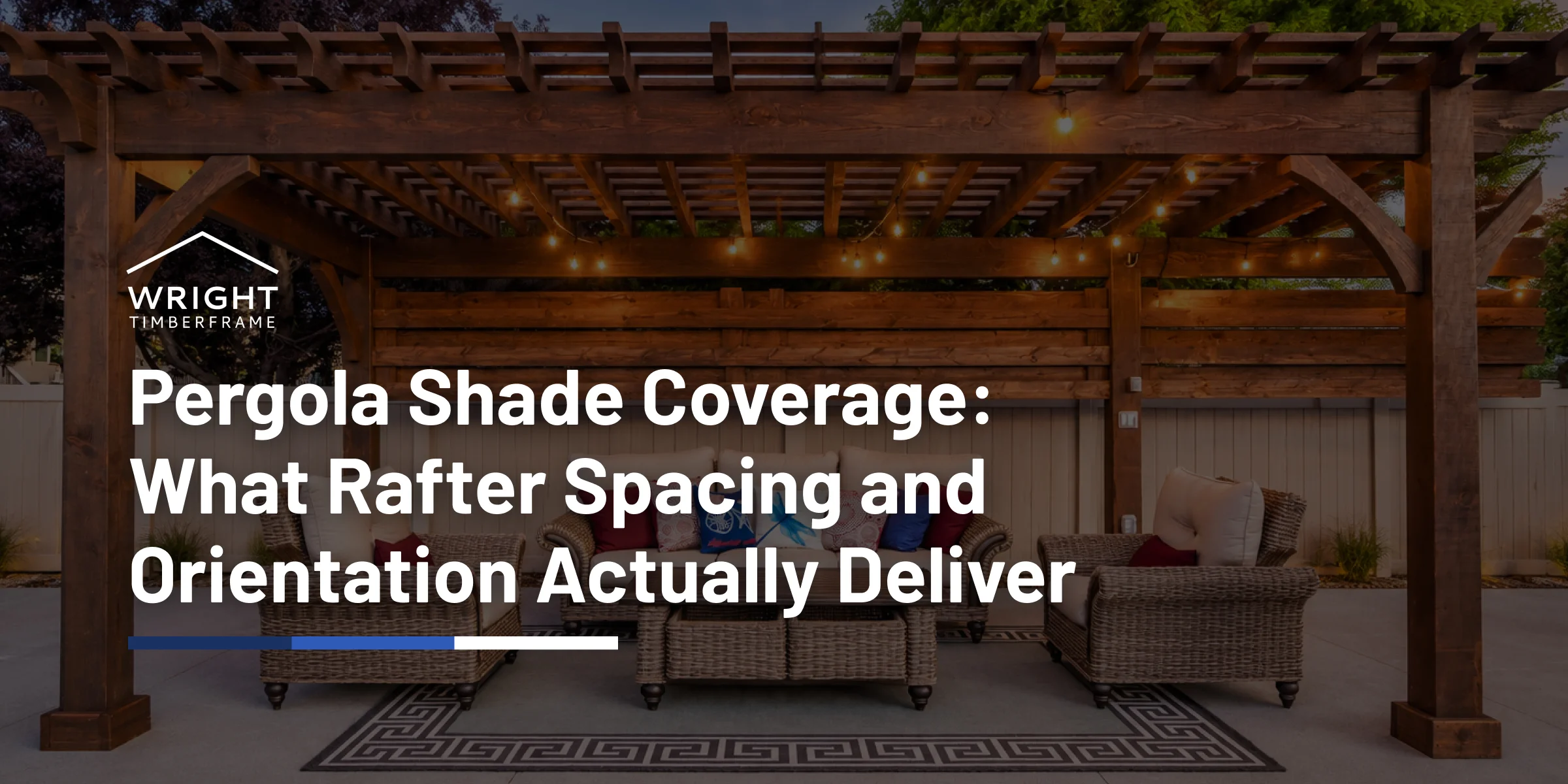

Why Choosing Wood for Pavilion & Pergola Matters More Than You Think
Choosing wood for pavilion and pergola construction is one of the most critical decisions you’ll make for your custom outdoor structure. The right wood determines your structure’s lifespan, its resilience against the climate, and its beauty for years to come.
Quick Answer: Best Wood for Pergola and Pavilions
- Cedar – Naturally rot and insect-resistant, beautiful reddish color, low maintenance (20-30+ years)
- Douglas Fir – Best strength for large spans, excellent stability, great for structural integrity (15-25+ years with proper care)
Key factors to consider:
- Durability – Resistance to rot, insects, and weather.
- Strength – Ability to support heavy loads and span wide distances.
- Aesthetics – Natural color, grain, and aging characteristics.
- Cost – Upfront investment vs. long-term value.
Understanding the differences between wood species is essential. Each type brings distinct characteristics that affect performance, appearance, and maintenance. Douglas Fir is the strongest western softwood, perfect for large, open-span designs.
Cedar offers natural resistance to rot and insects, aging to a beautiful silver-gray if left unstained. With proper care, a quality wood pavilion can last 15 to 30 years or more, making your initial choice a generational investment.
We’ve spent years working with premium Douglas Fir and Cedar, learning how each performs in Utah’s demanding climate. Our experience in choosing wood for pavilion and pergola projects has shown us that the right material, combined with traditional mortise-and-tenon joinery, creates structures that truly stand the test of time.
This guide will walk you through everything you need to know to make an informed decision, from the key pillars of wood selection to maintenance and longevity.
Choosing Wood for Pavilion & Pergola: The Four Pillars of Selection
When you’re choosing wood for pavilion & pergola projects, the decision comes down to four essential factors: durability, strength, aesthetics, and cost-effectiveness. Understanding these pillars will help you select the perfect wood for your vision.

Durability: Standing Up to the Elements
Your pavilion will face sun, rain, and snow 24/7. Durability is its first line of defense. Woods like Cedar contain natural oils that provide built-in protection against rot, decay, and insects.
This natural resistance means less reliance on chemical treatments. Cedar also handles moisture well, resisting the swelling and cracking that can plague lesser woods. With proper maintenance, a quality wooden pavilion can last 15 to 30 years or longer, with Cedar structures often lasting 20-30+ years.
Strength: The Backbone of Your Pavilion & Pergola
A pavilion must safely support its own weight, stand firm against wind, and, in places like our home state of Utah, bear heavy snow loads. Structural integrity is non-negotiable. Douglas Fir is the strongest of all western softwoods, giving it an exceptional strength-to-weight ratio.
This makes it our go-to for large, load-bearing timbers. Its ability to span wide distances allows for the grand, open designs that define a classic pavilion. When combined with traditional timber framing joinery, this strength creates a structure with lasting stability.
Aesthetics: Defining Your Outdoor Style
Your pavilion is the centerpiece of your outdoor living space, and its appearance matters. Each wood species has a unique personality. Cedar offers a rich reddish-brown hue and warm character.
Douglas Fir has a beautiful, straight grain that takes stain exceptionally well, allowing for endless customization. You can also choose how the wood ages. Cedar can be left unstained to weather into a distinguished silver-gray patina, a look many of our clients love.
Cost-Effectiveness: A Long-Term Investment
True cost-effectiveness goes beyond the initial price tag. While premium woods like Cedar have a higher upfront material cost than pressure-treated pine, they often save you money in the long run. Cedar’s natural durability means lower long-term maintenance costs and less hassle.
A more durable wood that lasts 30 years can be more economical per year than a cheaper option needing replacement in 10-15 years. A well-built timber frame pavilion also adds significant value to your property, enhancing your lifestyle for decades.
Top Wood Choices for Your Custom Timber Pavilion or Pergola
When choosing wood for pavilion or pergola projects, two species consistently rise to the top for their blend of strength, beauty, and longevity: Douglas Fir and Western Red Cedar. These are the proven performers we trust for our own projects and confidently recommend to our clients.
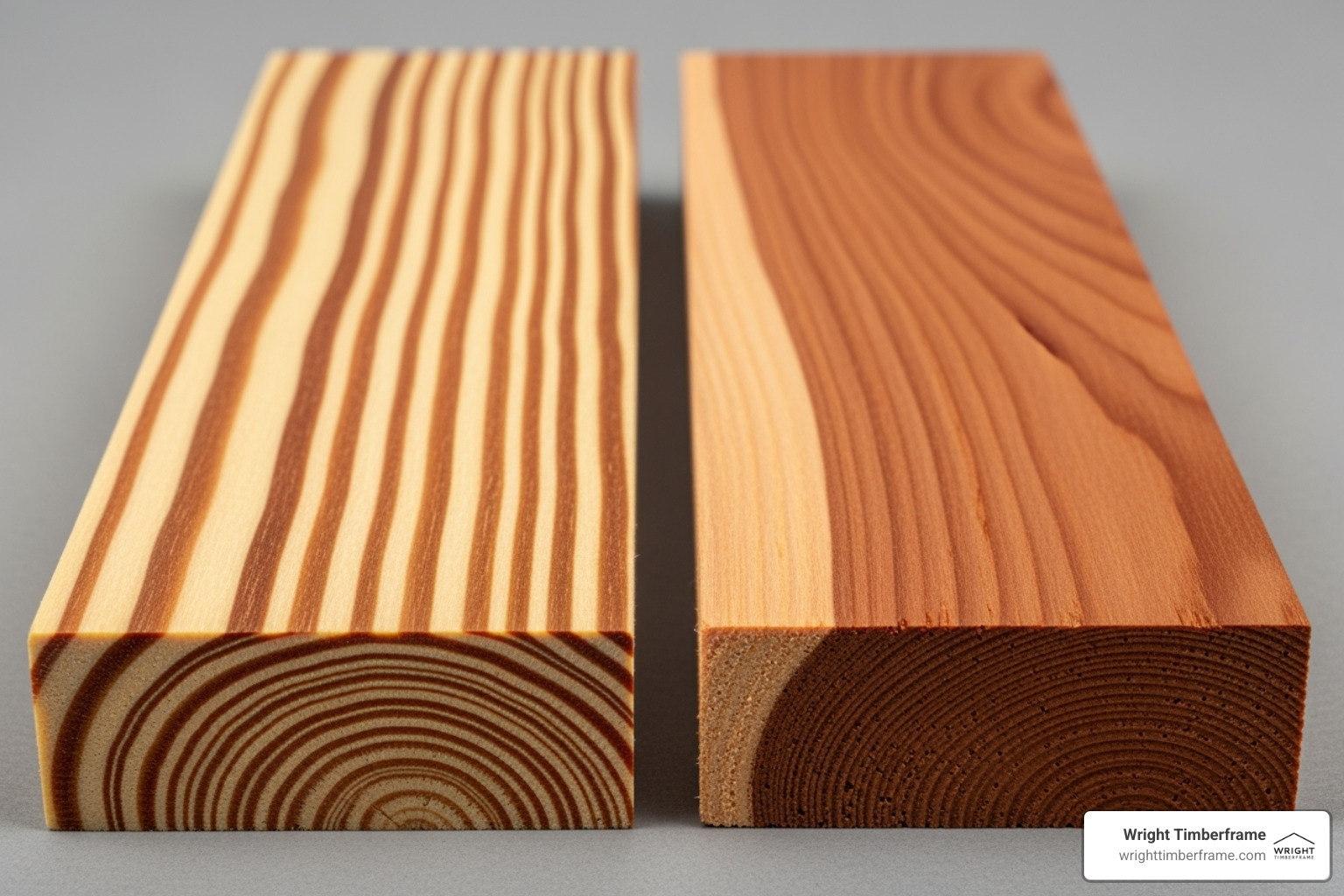
Douglas Fir: The Strength Standard
For projects where strength and stability are paramount, we turn to Douglas Fir. As the strongest western softwood, it’s ideal for the heavy timbers used in pavilion construction. This strength allows for impressive open spans and ensures your structure can handle heavy roof loads, like Utah’s significant snowfall.
Douglas Fir’s density also makes it less likely to warp or crack, which is critical for the precision of our mortise and tenon joinery. Its consistent grain takes stains and paints exceptionally well, offering a wide range of aesthetic possibilities. The main consideration is that it requires proper sealing and regular maintenance to protect it from moisture and pests, but with that care, it will last 15-25+ years.
Cedar: The Durable Beauty
If Douglas Fir is the strength champion, Western Red Cedar is the low-maintenance beauty. It is naturally resistant to rot, fungal pests, and insects, thanks to its inherent oils. This means you don’t need chemical treatments to keep it safe from decay.
Its striking reddish-brown color and fine, straight grain create a warm, inviting aesthetic. One of Cedar’s most appealing traits is its low maintenance. You can leave it untreated to weather to a beautiful silver-gray patina or apply a stain to preserve its natural tones.
While softer than Douglas Fir, it stands strong for 20-30+ years, making it a smart long-term investment. For a deeper dive, see our guide on Choosing the Right Wood for Your Timber Frame Pavilion.
Other Noteworthy Wood Options
Redwood is another premium option, offering exceptional resistance to weather, rot, and insects. It has a beautiful rich, red color and is one of the most stable woods, making it highly resistant to warping. Like Cedar, a Redwood pavilion can last 20-30+ years with minimal maintenance.
However, its premium cost puts it beyond the budget for many projects. While we can source it for clients upon request, we find that Douglas Fir and Cedar typically offer a better balance of value, quality, and longevity.
At Wright Timberframe, we specialize in premium Douglas Fir and Western Red Cedar for our custom timber frames. We believe these woods, combined with our traditional joinery techniques, create structures that are both stunning and built to last for generations.
To help you visualize the differences, here’s a quick comparison:
| Feature | Douglas Fir | Western Red Cedar | Redwood |
|---|---|---|---|
| Durability | Good, requires sealing for rot/insect resistance | Excellent, naturally resistant to rot/insects | Excellent, naturally resistant to rot/insects |
| Strength | Highest among western softwoods | Good, softer than Douglas Fir | Good, strong for its weight |
| Cost | Mid-to-High | High | Premium |
| Maintenance | Regular sealing/staining | Low, can be left to weather | Low, can be left to weather |
| Warping | Less likely due to density | Good stability | Least likely, very stable |
Custom Timber Frame vs. Kits: Choosing Wood for Your Pavilion & Pergola Build
After selecting your wood, the next decision is the build method: a fully custom timber frame or a convenient pre-designed kit. Both are excellent options when choosing wood for pavilion construction, but they serve different needs.

The Art of Timber Framing: Strength and Craftsmanship
Custom timber framing is our passion at Wright Timberframe. This method uses traditional joinery techniques like mortise and tenon, where precisely cut wood-on-wood connections create an incredibly strong and durable structure without visible metal fasteners. We use large wooden beams (often 8×8 or larger) that provide superior structural integrity and a bold, timeless aesthetic.
This approach allows for full customization, letting us design a pavilion that perfectly matches your home, landscape, and vision. As local Utah experts, we craft unique outdoor structures that are a true reflection of your personal style. For more inspiration, see our Custom Pavilion Ultimate Guide.
The Convenience of Kits
Pavilion kits offer a more streamlined path to a beautiful timber structure. Our Wright Timberframe kits are crafted from the same high-quality Douglas Fir or Cedar as our custom builds. The timbers arrive pre-cut and pre-drilled, ready for assembly. This significantly reduces construction time and complexity.
Many kits are designed for DIY assembly with detailed instructions, making a timber pavilion an achievable and rewarding project for homeowners. Kits also offer predictable costs and use standard lumber dimensions with modern fasteners for easier installation, providing an excellent balance of quality and convenience.
Making the Right Choice When Choosing Wood for Your Pavilion & Pergola
The decision between a custom build and a kit depends on your goals, budget, and desire for customization.
- Custom builds are for those seeking a one-of-a-kind design, maximum strength with traditional joinery, and a powerful architectural statement. If you have a unique property or a specific vision, a custom timber frame is the best path.
- Kits are perfect for standard sizes, budget-conscious projects, and DIY enthusiasts. They offer a straightforward process and predictable costs while still delivering the beauty and longevity of premium wood.
Whether you choose a custom build or a kit, we are committed to providing a beautiful and lasting outdoor structure. Explore all our Pavilions to see which option is right for you.
Lifespan, Maintenance, and Protecting Your Investment
After choosing wood for pavilion and pergola construction, protecting your investment is key to ensuring it lasts for decades. Understanding how to care for your chosen wood will keep it strong and beautiful.
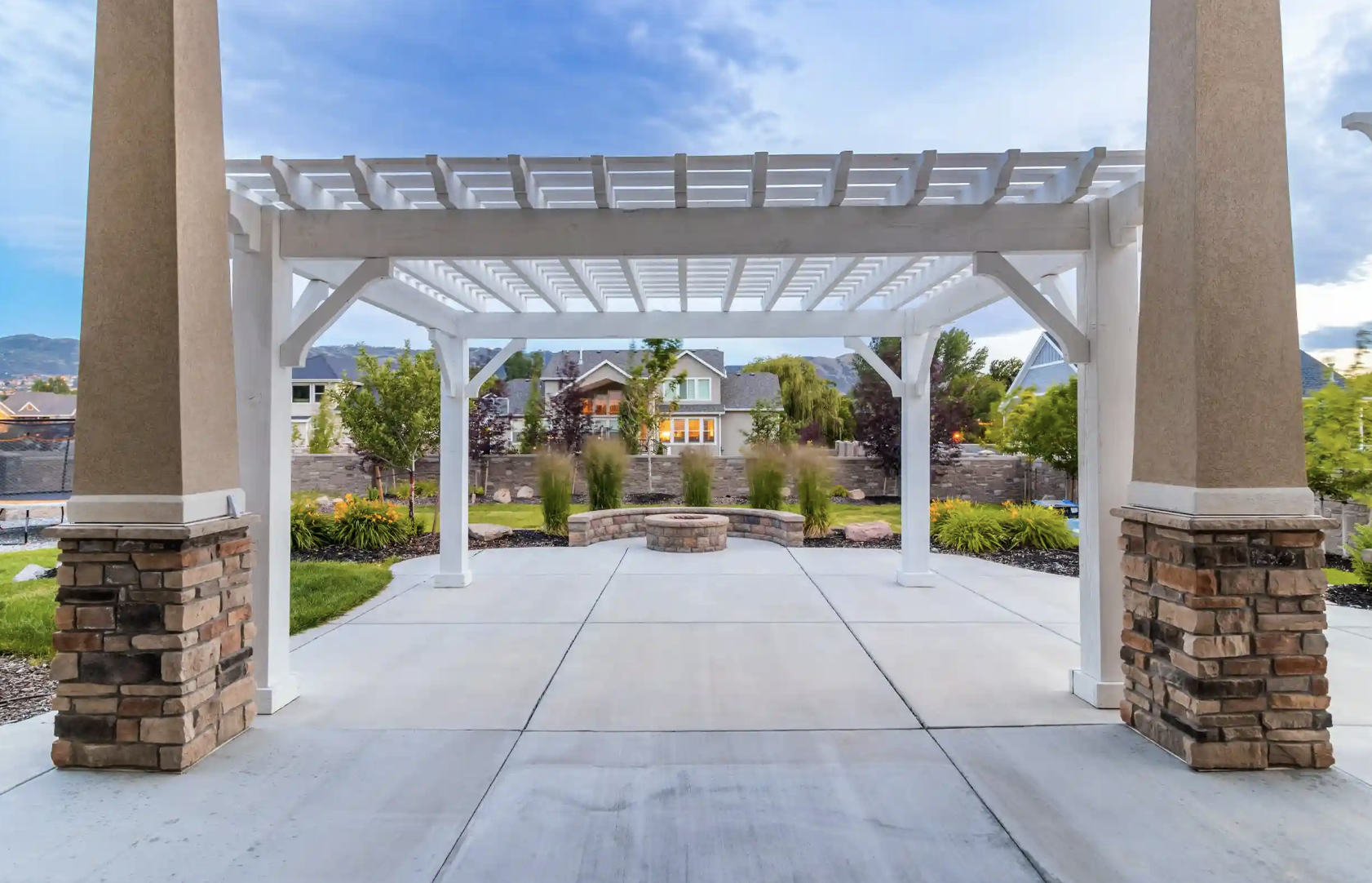
How Wood Choice Affects Pavilion Lifespan
The wood you select directly impacts your pavilion’s longevity. With proper maintenance, a quality wood pavilion can last 15 to 30 years or more.
- Cedar: Thanks to natural oils that repel insects and resist rot, this wood can easily last 20-30+ years. They are the marathon runners of pavilion woods.
- Douglas Fir: While it lacks the same natural rot resistance, its superior strength and density allow it to last 15-25+ years with proper care. It rewards attention with decades of reliable service.
Essential Maintenance for Different Wood Types
Maintaining your pavilion is straightforward with a simple routine.
For Cedar and Redwood, you can preserve the natural color by applying a UV-protective stain every 2-3 years. If you prefer the weathered silver-gray look, a clear water-repellent sealer every few years is often sufficient.
Douglas Fir requires a bit more attention. A high-quality stain or paint every 2-3 years is essential to protect it from moisture and rot. Its tight grain holds finishes beautifully, making the effort worthwhile.
For all wood types, an annual cleaning with mild detergent removes dirt that can trap moisture. Also, ensure landscaping allows for good airflow and that water drains away from the posts. Catching small issues early prevents them from becoming major problems.
For more detailed guidance, check out our resource on Timber Frame Pavilion Maintenance: How to Keep Your Structure Looking Great.
Choosing Wood for Your Pavilion in Challenging Climates
Our experience in Utah has taught us how climate influences wood selection. The dry heat, intense UV radiation, and heavy snow loads in our region demand high-performance materials. Woods with greater stability, like Redwood and dense Douglas Fir, handle temperature swings with less warping.
For local projects, we often recommend Douglas Fir for its ability to handle heavy snow loads and Cedar for its natural resilience in dry conditions. Pairing these woods with a high-quality, UV-resistant stain is essential for longevity in demanding climates.

Frequently Asked Questions about Choosing Wood for Pavilion & Pergola
We hear these questions all the time from homeowners planning their dream outdoor spaces. Here are answers to the most common concerns about choosing wood for pavilion projects.
What is the most durable wood for a pavilion & pergola?
For natural durability, Cedar and Redwood are top performers. They contain natural oils that resist rot and insects. Douglas Fir offers excellent structural durability but requires a protective finish to achieve maximum longevity.
Is Douglas Fir or Cedar better for a pavilion?
It depends on your priority. Douglas Fir is best for structural strength, especially for large spans or heavy snow loads. Western Red Cedar excels in natural weather resistance and requires less maintenance, offering a beautiful aesthetic that ages gracefully.
How much does a wood pavilion cost?
Pricing for a custom wood pavilion depends on several factors, including size, design complexity, timber choice, and added features like lighting or finishes. Since every structure is custom-built, Wright Timberframe provides personalized quotes based on your specific project and site needs.
What wood is least likely to warp outdoors?
Redwood is the most stable wood and is highly resistant to warping. High-quality, dense Douglas Fir is also a very reliable choice, as its density helps it hold its shape and resist twisting over time in outdoor conditions.
Making the Final Cut in Choosing Wood for Your Pavilion & Pergola
Making an informed decision when choosing wood for pavilion and pergola construction is the key to a successful and long-lasting outdoor living space. It requires balancing durability, strength, aesthetics, and cost to fit your specific needs and climate. Whether you prioritize the best structural integrity of Douglas Fir or the natural, low-maintenance beauty of Cedar, your choice will define your pavilion for decades.
At Wright Timberframe, we pride ourselves on our local Utah expertise and commitment to handcrafted outdoor structures. We use premium timbers and traditional mortise and tenon joinery to ensure every pavilion we build or provide as a kit offers timeless design and lasting strength. We believe the right wood and expert craftsmanship are an investment in your home’s value and your family’s enjoyment for years to come.
Ready to bring your dream outdoor space to life? Explore our custom timber frame pavilion projects and contact us today. Our team is here to guide you through every step.