
Why Wood Pergola Design Matters for Your Outdoor Space
Wood pergola design shapes how you live outside your home. The right design adds usable shade, defines outdoor “rooms,” and creates a focal point that improves daily life and long-term property value.
Here is what makes a great wood pergola design:
- Style flexibility: From modern minimalist to rustic timber frame, wood adapts to any aesthetic.
- Natural integration: Wood blends seamlessly with landscaping and existing architecture.
- Customization: Control shade levels, size, and features like lighting or privacy walls.
- Longevity: Premium woods like Cedar and Douglas Fir withstand decades of weather with proper care.
- Value addition: Quality pergolas increase property value while enhancing daily living.
A well-designed pergola creates an outdoor room that extends your living space. It provides dappled shade for hot afternoons, a structure for climbing plants, and a gathering place for family and friends. The best designs balance form and function, offering shelter without feeling closed in, and style that complements your home’s character.
We believe in crafting structures with timeless techniques, like traditional mortise-and-tenon joinery, to ensure lasting quality. Our expertise in wood pergola design is built on hands-on building experience, focusing on handcrafted outdoor structures that stand the test of time. Understanding how pergolas fit within broader building standards is also important, and official resources can be a helpful starting point for researching safe, code-conscious outdoor structures.
Inspiring Wood Pergola Design Ideas and Key Considerations
When considering a wood pergola design, the possibilities are as vast as your imagination. We aim to help you steer these choices, ensuring your outdoor structure is not just an addition, but an integral part of your home’s aesthetic and your lifestyle. From selecting the perfect style to choosing the most suitable timber, every decision contributes to the final masterpiece.
Modern vs. Rustic: A Tale of Two Styles
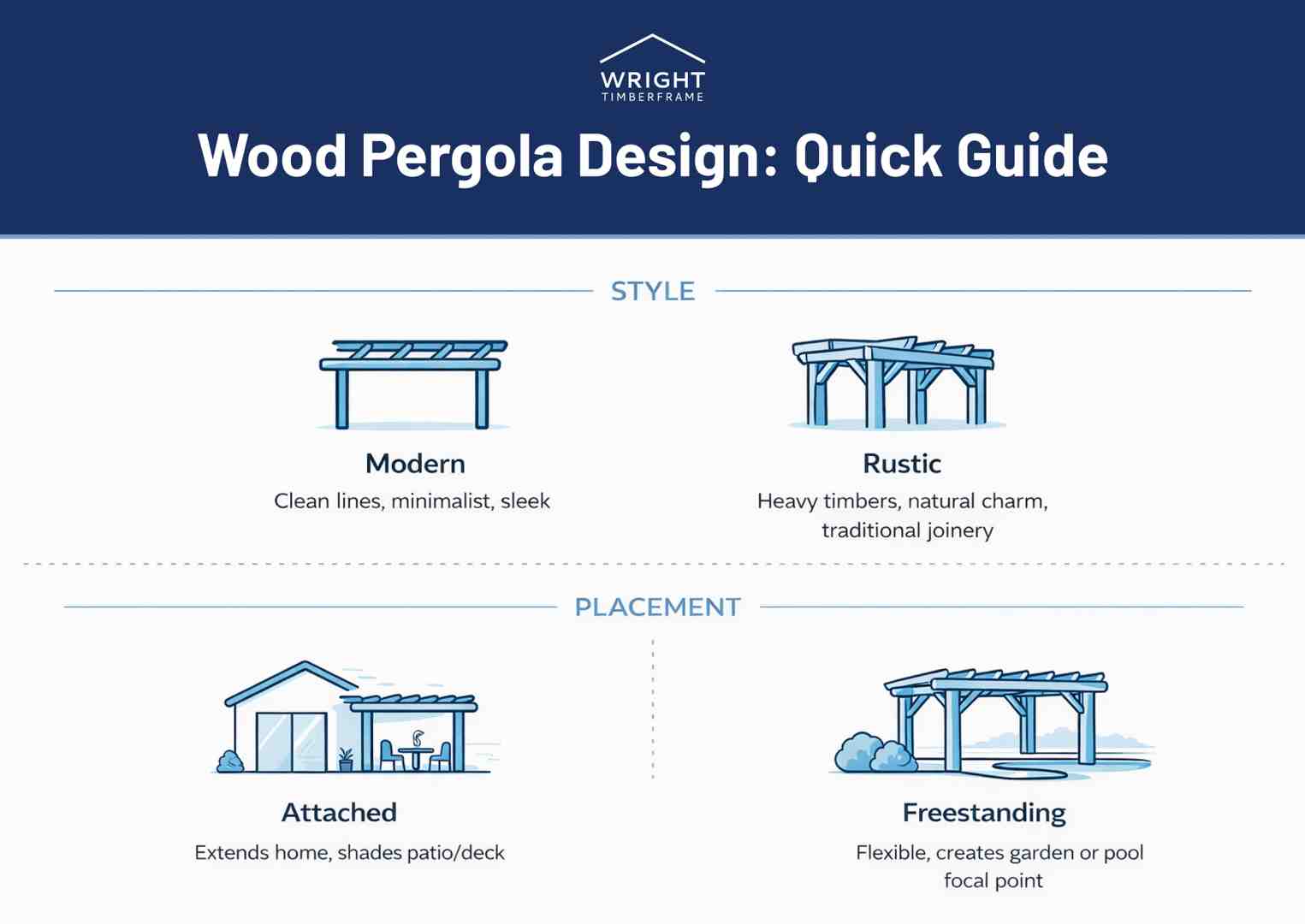
The aesthetic of your pergola sets the tone for your entire outdoor living space. Two prominent styles in wood pergola design are modern and rustic, each offering a distinct appeal.
Modern pergola designs are characterized by clean lines, minimalist aesthetics, and sleek profiles. They often feature exposed lumber with precise, geometric forms, creating a contemporary look that complements modern architecture. This style focuses on simplicity and functionality, often incorporating innovative features like motorized louvers for adjustable shade.
_compressed.jpg?alt=media&token=d1c28eb2-4cc3-4f08-a6d0-bd36899e55b7 "Custom Wood Pergola Design for Backyard Living")
In contrast, rustic pergola designs accept natural charm with substantial posts and exposed, often rough-sawn, timbers. This style evokes a cozy, country vibe, paying homage to nature’s raw beauty. Timber frame pergola designs often lean into this rustic elegance, showcasing traditional joinery and mortise and tenon craftsmanship that speaks to enduring strength and timeless appeal.
The choice between modern and rustic often depends on your home’s existing architecture and your personal preference for outdoor ambiance. Both styles can be incredibly impactful, changing a simple backyard into a sophisticated retreat or a charming, natural haven.
Attached vs. Freestanding: Integrating Your Pergola
Another fundamental decision in wood pergola design is whether to choose an attached or freestanding structure. Each option offers unique benefits for integrating your pergola into your outdoor space.
Attached pergolas seamlessly extend your home, creating a natural flow from indoor to outdoor living areas. They are perfect for covering a patio or deck directly adjacent to your house. This provides shade, expands your usable living space, and can even help reduce cooling costs by shading windows and walls.
Freestanding pergolas stand alone with four posts, offering immense flexibility in placement. They can create a distinct destination in your yard, like a poolside oasis or a garden centerpiece. A freestanding design allows you to define a new area for gathering away from the main house.
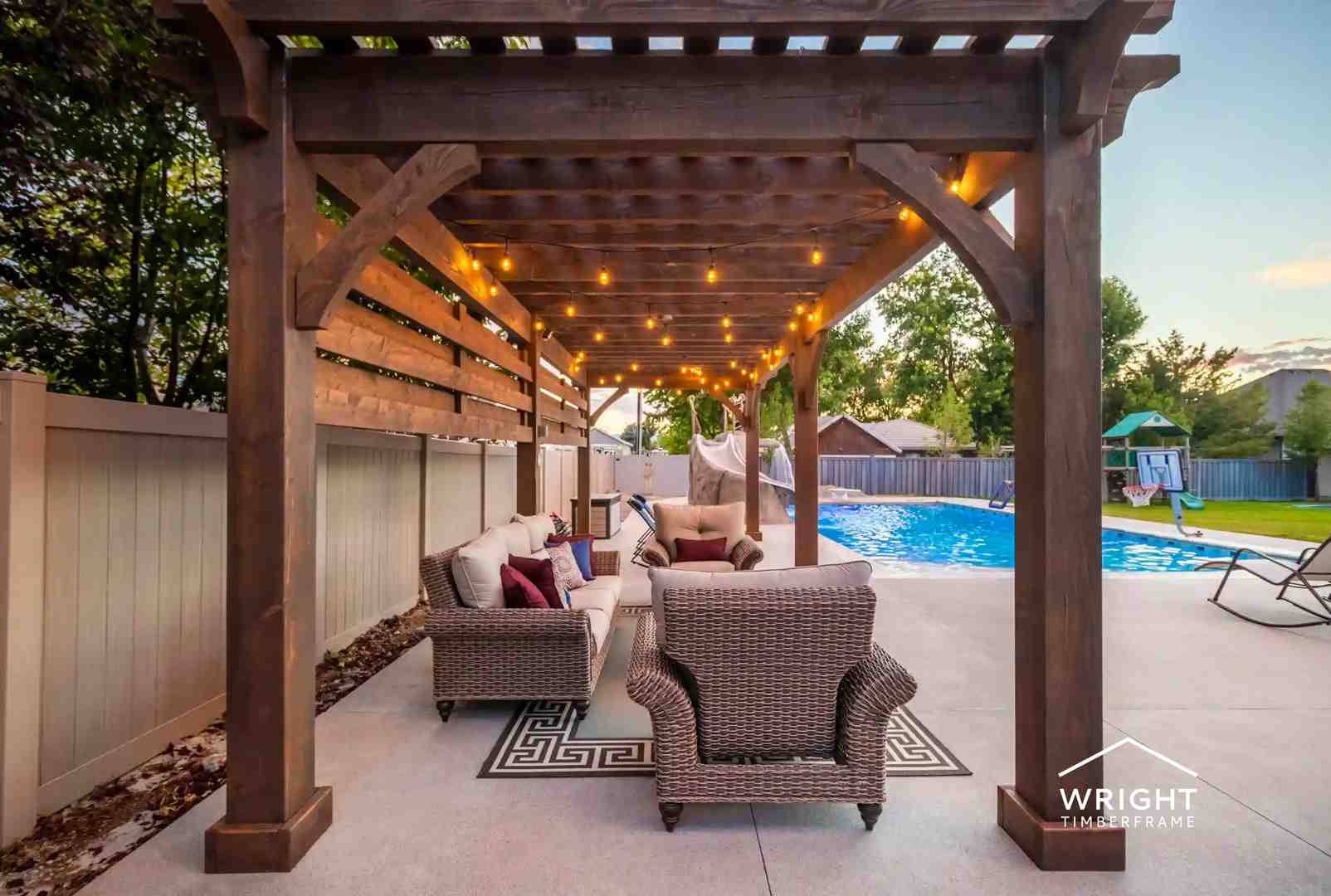
The best choice depends on your space, your desired function, and how you envision your outdoor areas connecting with your home. Both options can significantly improve your outdoor living experience, offering versatile solutions for shade and style.
Choosing the Best Timber for Your Wood Pergola Design
Selecting the right wood is crucial for the longevity, aesthetic, and maintenance of your pergola. We specialize in premium timbers known for their durability and natural beauty, particularly suited for Utah’s unique climate.
Cedar is a popular choice for wood pergola design due to its natural resistance to rot, decay, and insect infestation. It’s lightweight, easy to work with, and takes stains beautifully, offering a range of aesthetic possibilities from natural tones to rich colors. Western Red Cedar, in particular, is naturally durable and ready for stain or paint immediately after installation.
Douglas Fir is another excellent option, prized for its strength and straight grain. It’s a robust timber that handles seasonal changes well, making it a reliable choice for structural integrity. Douglas Fir is often favored for its distinctive grain patterns and warm, inviting color.
For those considering other options, Pressure-Treated Pine is a common choice, treated with chemicals to resist rot and insects. While often more budget-friendly than cedar or fir, it requires a drying period (typically 3-4 months) before it can be stained or painted.
Here’s a comparative look at these popular timber choices:
| Wood Type | Durability & Resistance | Cost (Relative) | Maintenance |
|---|---|---|---|
| Cedar | Excellent natural resistance to rot, decay, insects. | Medium-High | Low. Benefits from regular sealing/staining to maintain color and prevent weathering. |
| Douglas Fir | Very strong, good resistance to decay (if heartwood). | Medium | Moderate. Good with proper sealing/staining. |
| Pressure-Treated | High resistance to rot and insects due to chemical treatment. | Low-Medium | Moderate. Requires 3-4 months drying time before staining/painting. Regular re-sealing/staining is needed to maintain appearance and protection. |
The “best” wood depends on your budget, desired aesthetic, and willingness to maintain the structure. Understanding the characteristics of various timbers is key to making an informed decision. You can learn more about selecting the right Timber for Building a Pergola.
Customizing for Shade, Function, and Beauty
A truly exceptional wood pergola design goes beyond basic structure, incorporating elements that improve comfort, utility, and visual appeal. Customization allows us to tailor your pergola to your specific lifestyle and outdoor environment.
Shade options are paramount for enjoying your outdoor space, especially in sunny climates. While traditional pergolas offer dappled light through their open rafter design, we can customize the rafter spacing for more dense shade. For even greater control, consider features like adjustable louvers or retractable canopies that allow you to fine-tune sun exposure at will. Solar screens can also be integrated for customizable sun protection.
Beyond shade, we can integrate various functional additions to make your pergola a central hub for al fresco dining and gatherings. Imagine an outdoor kitchen nestled under your pergola, complete with integrated lighting, power sources, privacy walls, or built-in benches. Learning How to integrate outdoor kitchens with pergolas can help transform your space into a year-round retreat.
For aesthetic improvements, the details make all the difference. Decorative end cuts on rafters, the use of unique joinery, and the selection of custom stain colors like the timeless Canyon Grey can significantly lift the design. Climbing plants like jasmine or wisteria can be trained to grow over the structure, adding natural beauty, fragrance, and additional shade.
Even simple additions like pendant lights or string lights can create a magical ambiance for evening gatherings. Some designs even incorporate curved sawn rafters for a truly unique look.
By thoughtfully combining these elements, we can create a wood pergola design that is not only beautiful but also perfectly suited to your needs, providing a functional and visually stunning extension of your home.
Frequently Asked Questions about Wood Pergola Design
Do I need a permit for a pergola in Utah?
Permit needs in Utah vary by city and pergola size. Detached structures under 200 sq. ft. may be exempt, but attached or larger ones often require a permit. Always check with your local building department and HOA for specific rules. Appendix AH of the International Residential Code is a useful reference for patio cover standards.
What’s the best wood for a pergola in Utah’s climate?
For Utah’s climate, we recommend Douglas Fir and Cedar. Douglas Fir offers superior strength, while Cedar provides natural resistance to rot and insects. Both are durable, beautiful choices that stand up well to our local environment.
How much does a custom pergola cost in Utah?
The cost of a custom pergola in Utah depends on several factors, including overall size, timber selection, structural complexity, and added features. Design details such as traditional joinery, integrated lighting, shade elements, or privacy panels all influence the final investment. Site conditions and placement can also affect scope and build requirements.
Because every pergola is built to fit a specific space and purpose, pricing is best determined through a tailored consultation. To get guidance based on your yard, design goals, and material preferences, contact a pergola specialist to discuss your custom project.
How long does it take to build a pergola?
A custom build is more involved than a kit. After design, if concrete footings are needed, they take several days to set. The main timber frame assembly by skilled carpenters typically takes another 1 to 3 days. The full process can span several weeks.
Where can I learn more about general pergola design principles?
For a broader overview of pergolas and garden structures, educational resources such as the garden architecture article on Wikipedia provide historical context and typical design elements that can help inform your planning.
Bringing Your Wood Pergola Design to Life
A well-executed wood pergola design is more than an outdoor structure. It is a lasting addition that enhances how you use your yard and how your home feels from the outside. A thoughtfully designed pergola creates a natural extension of your living space, offering shade, visual balance, and a comfortable place to gather throughout the seasons.
From quiet garden retreats to spacious areas built for entertaining, the right pergola improves both form and function. Attention to material quality, structural integrity, and proportion ensures the structure holds up over time while complementing your home’s architecture. When design and craftsmanship work together, the result is an outdoor space that feels intentional and timeless.
If you are ready to turn your wood pergola design into a finished structure, speaking directly with a specialist helps clarify options, layout, and next steps. Call us to discuss your pergola project and explore design solutions tailored to your property.

