Why the Right Wood Matters for Your Garden

Alternatives to pressure treated lumber for raised beds include naturally rot-resistant woods like cedar, juniper, and Douglas fir, as well as non-wood options such as galvanized steel, stone, and composite materials. Here are some top choices:
Best Natural Wood Options:
- Cedar – Lasts 10+ years, naturally pest-resistant, widely available
- Juniper – Exceptional durability (30+ years), sustainably harvested
- Redwood – Premium longevity and rot resistance, higher cost
- Douglas Fir – Good durability at a moderate price point
- Black Locust – Highly rot-resistant, excellent long-term value
Non-Wood Alternatives:
- Galvanized Steel – Modern, rust-proof, 30+ year lifespan
- Natural Stone/Brick – Permanent, beautiful, no chemical concerns
- Concrete Blocks – Affordable, durable, easy to work with
- Food-Safe Composite – Made from recycled materials, rot-proof
When planning a raised bed garden, your choice of materials is crucial. For decades, pressure-treated lumber was a popular choice for its affordability and rot resistance. However, many gardeners now seek alternatives due to concerns about treatment chemicals leaching into the soil and, potentially, their food.
These concerns are valid. Wood treated before 2003 contained chromated copper arsenate (CCA), which includes arsenic. While modern treatments like Micronized Copper Azole (MCA) are arsenic-free, they use copper-based preservatives. Research from Oregon State University shows these can increase soil copper levels near the wood, though their study found no measurable increase in the plants themselves.
For many organic gardeners, however, any chemical exposure is a risk worth avoiding. Fortunately, excellent alternatives exist, from naturally rot-resistant woods to durable non-wood materials that offer peace of mind and longevity.
At Wright Timberframe, our expertise is in crafting outdoor structures from premium timbers like cedar and Douglas fir that are built to last. This deep understanding of wood durability and natural rot resistance applies directly to choosing the best materials for your garden, and we’re happy to share what we’ve learned.
Why Gardeners Seek Alternatives to Pressure-Treated Lumber for Raised Beds
A flourishing garden starts with a solid foundation, and for many, that means raised beds. While pressure-treated lumber was historically used for its affordability and longevity, concerns over food safety and environmental impact have led gardeners to seek alternatives to pressure treated lumber for raised beds.
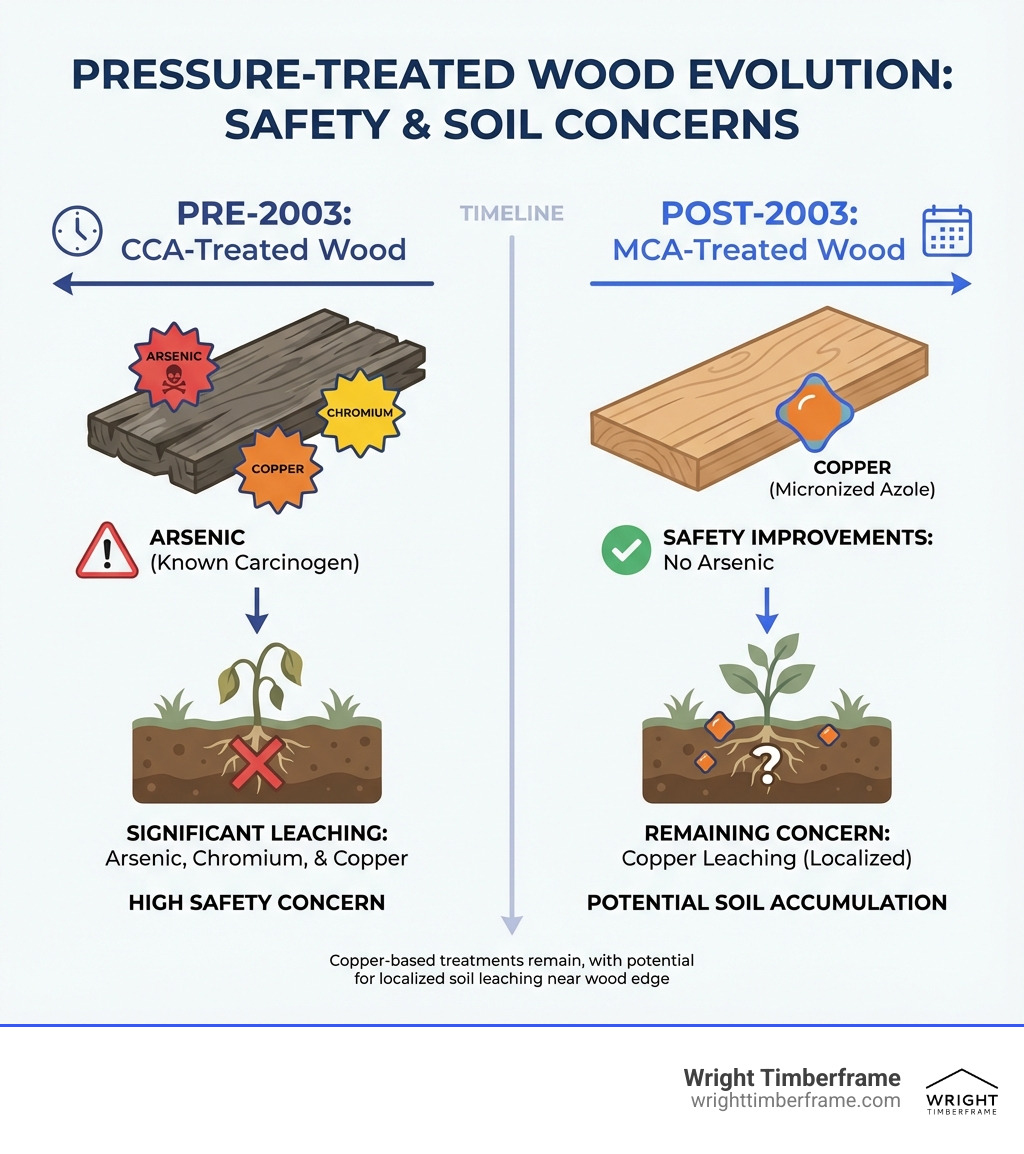
The primary concern is the chemicals used to prevent rot. Wood treated before 2003 contained Chromated Copper Arsenate (CCA), which includes the carcinogen arsenic. Modern treatments like Micronized Copper Azole (MCA) are arsenic-free but still use copper. While copper is an essential micronutrient, it can be toxic in high concentrations. Research from Oregon State University found that copper levels do increase in the soil within an inch of the wood, but their study found no corresponding increase in the plants themselves.
Despite these findings, the “peace of mind” factor remains significant for organic gardeners and those growing root vegetables. For us, building with timber means understanding the desire for materials that are not only durable but also inherently safe and natural.
The Old vs. The New: Understanding Treated Wood
To appreciate the alternatives to pressure treated lumber for raised beds, it’s helpful to understand the evolution of treated wood. CCA-treated wood (pre-2003) contained toxic arsenic and chromium, which is why we strongly advise against using reclaimed treated lumber for edible gardens. After 2003, treatments shifted to copper-based formulas like Micronized Copper Azole (MCA) and Alkaline Copper Quaternary (ACQ). While safer than arsenic, the long-term effects of copper leaching into garden soil remain a concern for many gardeners, who prefer to err on the side of caution. For more detailed information, you can review guidance on treated lumber safety.
Making Treated Wood Safer: Liners and Barriers
If you must use pressure-treated lumber, you can mitigate potential chemical leaching with a barrier. One common approach is lining the inside of the bed with a heavy, food-grade plastic liner. This creates a physical barrier between the treated wood and your soil. Ensure the liner covers the interior sides completely but has holes in the bottom for drainage to prevent waterlogging. This method offers an additional layer of protection, but for growing edible plants, choosing truly untreated alternatives to pressure treated lumber for raised beds remains the most straightforward path to peace of mind.
The Best Untreated Woods for Your Garden
Our philosophy in timber framing is to use woods that offer both beauty and enduring strength, a principle that applies perfectly to raised garden beds. The best untreated woods are naturally resistant to rot and pests, containing oils and tannins that act as preservatives. This allows them to withstand the constant moisture and soil contact of a garden. These natural woods also offer a beautiful aesthetic that complements any garden design, and sourcing them locally can be both cost-effective and eco-friendly.

Cedar: The Gold Standard
Cedar is often considered the gold standard for alternatives to pressure treated lumber for raised beds. Both Western Red and Eastern Red Cedar are prized for their natural resistance to rot and pests, thanks to a high concentration of preservative oils. A well-built cedar raised bed can last 10 years or more, making it a smart, long-term investment. While it can be more expensive than common lumber, its extended lifespan and chemical-free nature provide excellent value. As we know from building our custom pergolas and pavilions, cedar is a top contender for its beauty and strength. For those interested in premium wood choices, you can find More info about premium wood choices on our site.
Douglas Fir and Other Durable Options
While cedar is popular, several other durable wood alternatives to pressure treated lumber for raised beds are excellent for outdoor use.
Douglas Fir is a robust timber we use extensively in our timber frames for its strength. For raised beds, it offers good durability and can last for many years, often at a more cost-effective price than cedar. Its inherent strength makes it a reliable option for your garden.
Other woods with exceptional rot resistance include:
- Juniper: A champion of rot resistance, juniper can last over 30 years in ground-contact settings. It’s an incredibly durable choice and is often harvested from grassland restoration projects.
- Redwood: Similar to cedar, redwood is famed for its natural resistance to decay. It offers outstanding durability but is often a premium-priced option.
- Black Locust: This hardwood is renowned for its extreme durability and rot resistance, offering a very long lifespan. It can be harder to source and work with due to its density.
- Cypress: Praised for its resistance to decay, cypress contains a natural preservative oil called cypressene that contributes to its longevity.
Budget-Friendly, Shorter-Term Woods
For those on a tighter budget, some untreated woods can serve as excellent, shorter-term solutions. Pine is the most common and affordable option, but it lacks natural rot resistance and typically lasts only 3-5 years. It’s ideal for temporary beds or for gardeners who don’t mind rebuilding more frequently. Other woods like Hemlock and Spruce fall into this category—they are inexpensive and readily available but will require more frequent replacement.
Comparing Your Options: Durability, Cost, and Maintenance
Choosing the right material for your raised garden beds involves balancing longevity, cost, and maintenance. As specialists in crafting durable timber structures, we understand the nuances of wood performance. Let’s compare some of the most popular alternatives to pressure treated lumber for raised beds.
| Material | Longevity (Years) | Avg. Cost ($-$$$) | Rot Resistance (Low-High) | Maintenance Needs |
|---|---|---|---|---|
| Cedar | 10-20 | $$ | High | Low (optional sealing for aesthetics) |
| Douglas Fir | 7-15 | $ | Medium-High | Low (optional sealing for longevity) |
| Juniper | 30+ | $$-$$$ | Very High | Very Low |
| Redwood | 15-25 | $$$ | Very High | Low (optional sealing for aesthetics) |
| Black Locust | 30+ | $$-$$$ | Extremely High | Very Low |
| Pine | 3-5 | $ | Low | Moderate (will rot quickly without care) |
(Note: Costs are relative and can vary greatly based on local availability, board dimensions, and current market prices. $-$$$ represents a general range from budget-friendly to premium.)
When choosing, consider your local availability, as what’s common in our home state of Utah might be a specialty item elsewhere. Sourcing locally can reduce your carbon footprint. Finally, thickness matters significantly. Robust 2-inch thick boards will offer far greater durability than thin 3/4-inch planks.
Longevity and Durability Showdown
When selecting alternatives to pressure treated lumber for raised beds, several factors influence wood’s lifespan. Our experience in timber framing has taught us that a wood’s inherent properties are key.
Heartwood, the denser wood from the center of a tree, is more resistant to decay than the outer sapwood because it contains more natural preservatives. Prioritizing boards with more heartwood increases durability. The impact of climate is also crucial; while our dry Utah climate helps, the constant moisture in a raised bed creates a microclimate that accelerates decay, making rot-resistant wood essential. Finally, thickness impacts lifespan directly. Thicker boards (ideally 2 inches) provide more material for decay to work through, extending the life of the bed far beyond that of thin planks.
Here’s a general ranking of woods by expected lifespan in a garden setting:
- Juniper / Black Locust: 30+ years
- Redwood: 15-25 years
- Cedar: 10-20 years
- Cypress / Douglas Fir: 7-15 years
- Pine / Hemlock / Spruce: 3-5 years
Cost and Availability of Alternatives to Pressure Treated Lumber for Raised Beds
The cost of alternatives to pressure treated lumber for raised beds is a significant consideration, requiring a balance of upfront cost versus long-term value.
In a general price comparison:
- Pine is the most budget-friendly option.
- Cedar and Douglas Fir are mid-range, offering a good balance of durability and cost.
- Redwood, Juniper, and Black Locust are premium-priced due to their exceptional longevity.
Regional price differences are significant. Sourcing local wood can often lead to savings on both materials and transportation. We always encourage exploring local lumberyards. Also, remember to factor in the cost of hardware, as quality fasteners like stainless steel screws prevent rust and premature failure.
It’s about evaluating long-term value. A pine bed is cheap initially but may need replacing in 3-5 years. A cedar or juniper bed, while more expensive upfront, could last over a decade, making it more economical over its lifetime.
Beyond Wood: Exploring Other Safe Materials
While wood offers a natural aesthetic, many excellent non-wood alternatives to pressure treated lumber for raised beds provide different benefits in durability, style, and maintenance.
Stone, Brick, and Concrete Blocks
Masonry materials offer permanence and can be a beautiful, long-lasting solution for garden beds.
- Natural Stone: Perhaps the most durable and aesthetically pleasing option, natural stone provides a timeless look. Stone beds are incredibly long-lasting and require virtually no maintenance, but the material cost and labor-intensive installation are the main drawbacks.
- Concrete Blocks: An affordable and easy-to-use option, concrete blocks are sturdy and long-lasting. They can be stacked without mortar for simple construction. Be aware that concrete can leach lime, raising soil pH, which may affect certain crops. For food gardens, it’s best to use modern concrete blocks.
- Brick: Offering a classic aesthetic, bricks are another durable choice. Like stone, they can be mortared for a permanent structure or dry-stacked. They also retain heat, which can be advantageous in cooler climates, but installation can be labor-intensive.
Metal and Composite Materials
For those seeking modern aesthetics or extreme durability, metal and composite materials are compelling alternatives to pressure treated lumber for raised beds.
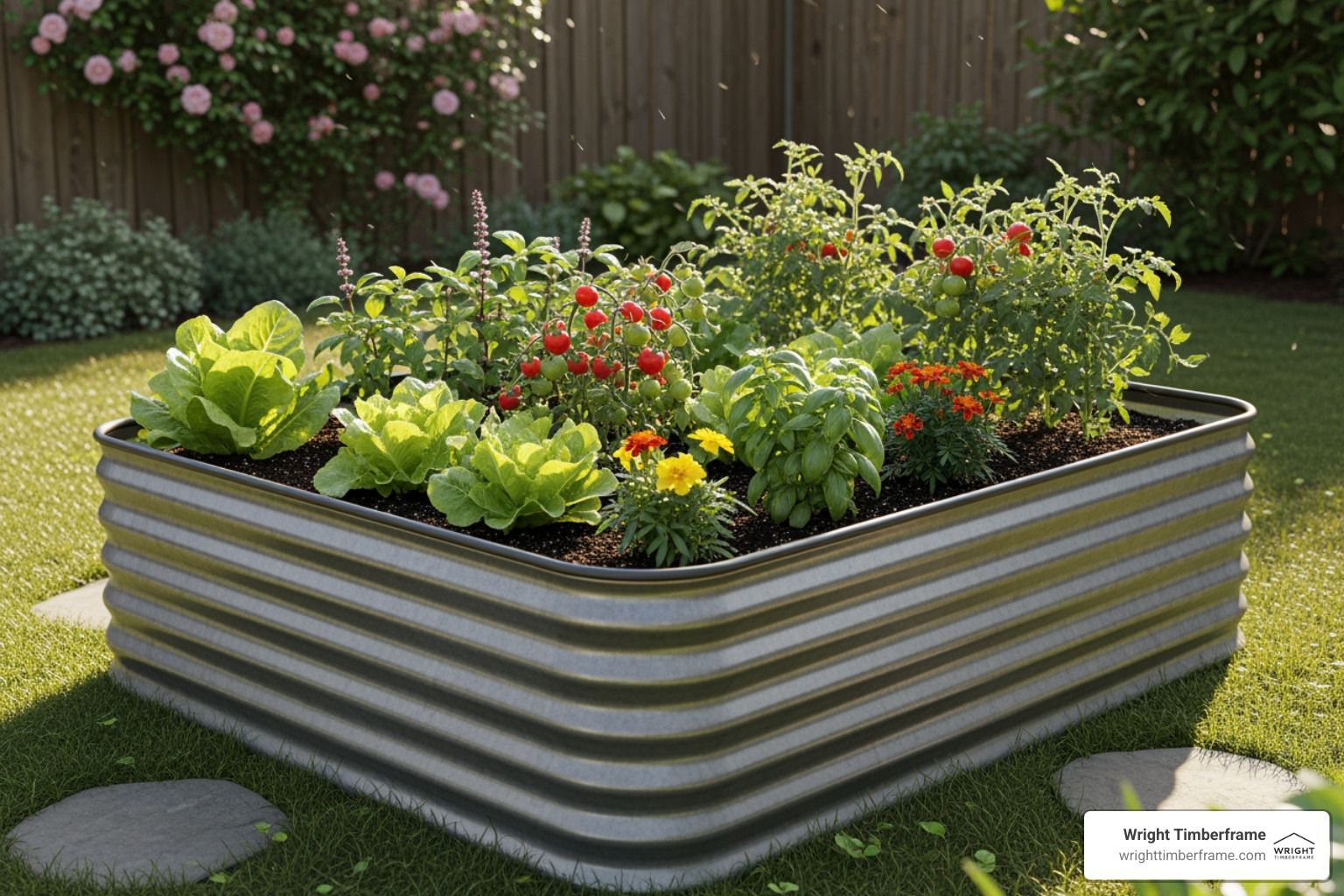
- Galvanized Steel: An increasingly popular choice, galvanized steel offers a sleek, modern look and exceptional longevity of 30 years or more. Its zinc coating prevents rust. In sunny climates, the metal can heat up, which may warm the soil at the edges and extend the growing season.
- Composite Wood: Made from recycled materials like sawdust and plastic, composite wood is a rot-proof and highly durable alternative. It resists insects and splintering with little maintenance. While it doesn’t have the exact look of natural wood, its longevity is a significant advantage.
- Recycled Plastic Lumber: Similar to composite, this material is impervious to moisture and insects. When choosing recycled plastic, ensure it is food-grade and free of harmful chemicals like BPA, especially for growing edibles. It’s a durable, low-maintenance choice that diverts waste from landfills.
Frequently Asked Questions about Raised Bed Materials
What is the longest-lasting untreated wood for a raised bed?
Juniper and Black Locust are exceptionally long-lasting, often exceeding 30 years in ground contact. Cedar and Redwood are also excellent choices, typically lasting 10-20 years, making them far more durable than common pine.
Can I use a plastic liner to make any wood safe for my vegetable garden?
Yes, lining a raised bed with a food-grade, heavy-duty plastic liner can create an effective barrier between the wood and your garden soil. This is a great strategy if you are using modern pressure-treated wood or less rot-resistant woods to extend their life while protecting your soil.
Are non-wood alternatives like metal or concrete better than wood?
“Better” depends on your priorities. Galvanized steel and concrete blocks offer superior longevity and are rot-proof, but metal can get hot in sunny climates and concrete can affect soil pH. Wood offers a natural aesthetic and is often easier to work with, but even the best types will eventually need replacement.
How does our Utah climate affect wood choices for raised beds?
In Utah’s climate, with its dry periods and temperature fluctuations, woods with natural rot resistance like cedar and Douglas Fir are excellent choices. While the dry air helps prevent some decay, the constant moisture within a raised bed means that robust, durable timbers are still essential for longevity.
What is the advantage of using thick lumber for raised beds?
Using thicker lumber, such as 2-inch dimensional boards, significantly increases the lifespan and structural integrity of your raised bed. Thicker wood provides more material for decay to work through, meaning it will last much longer than thinner fence pickets or other less substantial boards.
Conclusion: Choosing the Right Alternatives to Pressure-Treated Lumber for Raised Beds
As we’ve explored, alternatives to pressure treated lumber for raised beds is rich with options for every gardener. From the natural beauty of rot-resistant woods like cedar and Douglas Fir to the modern permanence of steel and stone, you can create a garden that is both productive and safe.
The key is to balance cost, longevity, and aesthetics with your commitment to chemical-free gardening. As timber craftsmen at Wright Timberframe, we appreciate the inherent strength of natural timbers. Our expertise in selecting premium materials like Douglas Fir and Cedar for our handcrafted pavilions and pergolas is rooted in the same principles of lasting strength and timeless design that you can apply to your garden beds.
No matter which path you choose, investing in quality materials is an investment in a healthy, productive garden for years to come. We encourage you to make an informed decision that aligns with your gardening values.
Explore our handcrafted timber frame structures to see how our commitment to quality timbers and traditional joinery translates into enduring beauty.