What Are Timber Frame Pergola Kits and Why They Matter
Timber frame pergola kits are pre-engineered packages of heavy timbers that arrive pre-cut and pre-drilled, using traditional joinery so the structure locks together as a true frame. They offer a way to build a long-lasting pergola with predictable fit and structural performance, without starting from raw lumber. Unlike lightweight retail options, these kits are designed to be substantial, permanent additions to your landscape.
Key Takeaways for Homeowners
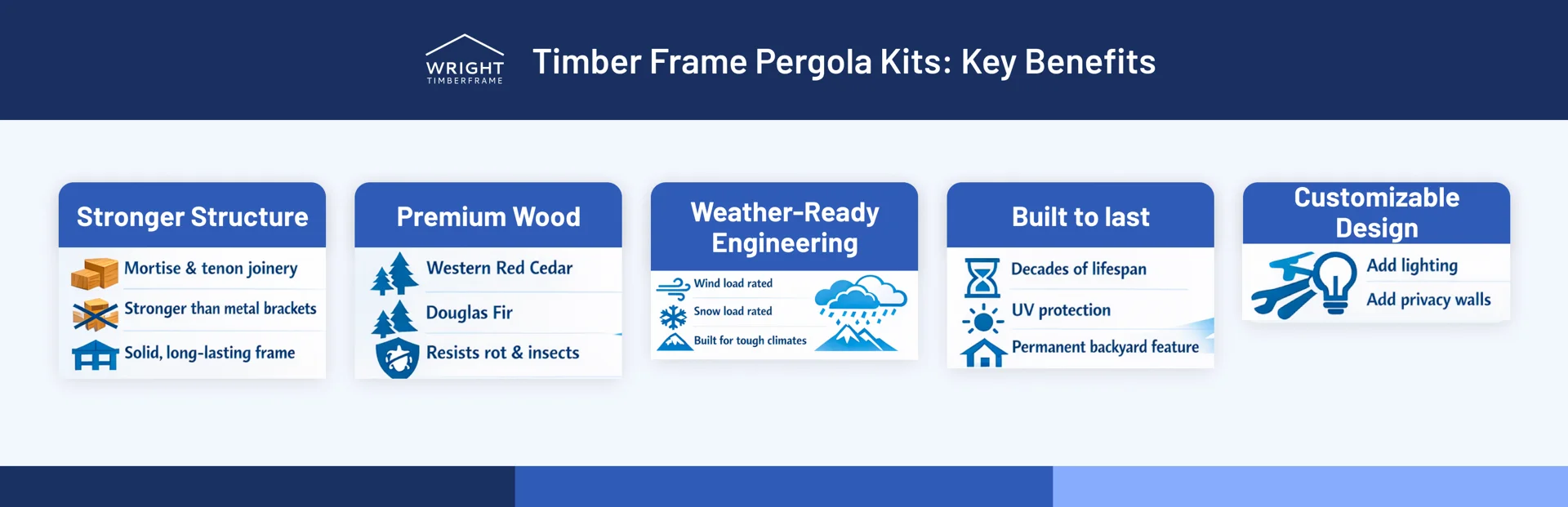
- Structural Integrity: Timber frame kits utilize traditional joinery like mortise and tenon, which provides superior strength compared to metal-bracket systems.
- Material Quality: Premium species like Western Red Cedar and Douglas Fir offer natural resistance to decay and high structural load capacities.
- Engineering Matters: High-quality kits are engineered for specific wind and snow loads, ensuring safety in extreme weather conditions.
- Longevity: With proper maintenance and UV protection, a timber frame structure can last for decades, becoming a permanent architectural feature of the home.
- Customization: Beyond basic shade, these kits allow for integrated lighting, privacy walls, and specific rafter orientations to maximize comfort.
In this guide, we share what we look at as local timber experts when we design, size, and specify a timber kit for real backyards, patios, and mountain climates. We believe that understanding the physics and the biology of the wood is the first step toward a successful project. Our goal here is education first, so you can compare options confidently and avoid the common pitfalls we see in the field.
What Sets Timber Frame Pergola Kits Apart From Standard Options
When we talk about a timber-frame-pergola, we are referring to a specific method of construction that dates back centuries. Unlike modern stick-built structures held together by nails and thin metal plates, true timber framing relies on the strength of the wood itself. This method creates a rigid skeleton that distributes weight through the fibers of the wood rather than relying on the shear strength of a few screws.
The hallmark of these kits is the use of heavy timbers, often 6×6 or 8×8 posts. These provide a massive, grounded aesthetic that standard kits simply cannot replicate. The sheer mass of the wood acts as a thermal sink and a windbreak, providing a sense of enclosure and security that lightweight aluminum or vinyl structures lack.
How traditional joinery creates lasting strength
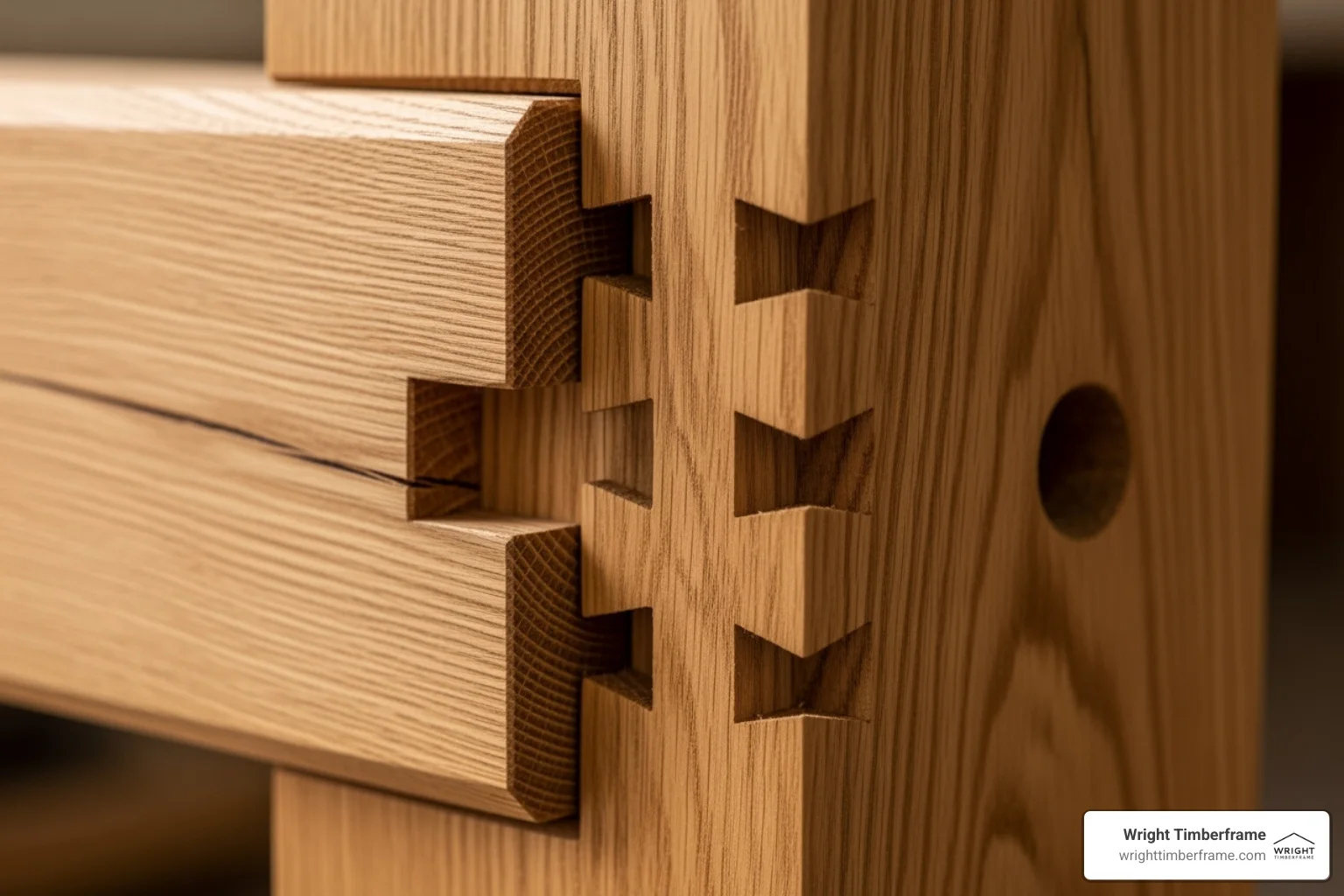
The secret to structural longevity lies in the joinery. We utilize mortise and tenon joints, where a tongue (the tenon) on one beam fits perfectly into a hole (the mortise) on another. These joints are then secured with wooden pegs, creating a wood-to-wood connection that actually grows stronger as the timber seasons and tightens over time. This is because the peg and the timber eventually reach a moisture equilibrium, locking the joint in place.
Another advanced technique found in high-end timber frame pergola kits is the dovetail joint. This interlocking design is incredibly effective at resisting tension, ensuring that beams do not pull apart even under heavy loads. We often use dovetails where rafters meet the main carrying beams, as this prevents the structure from spreading or “racking” over time.
This precision fit is achieved through modern CNC technology combined with old-world hand-finishing. The CNC machines allow us to cut to tolerances of a fraction of an inch, while hand-finishing ensures that every surface is smooth and every edge is properly chamfered. The result is a load-bearing capacity that far exceeds lightweight retail alternatives.
We take pride in the fact that our joinery is not just functional but also beautiful. The visible wooden pegs and tight-fitting seams are a testament to the quality of the work. This level of craftsmanship ensures that your pergola remains stable and square for decades, even as the wood naturally expands and contracts with the seasons.
Material Selection and Engineering That Drives Performance
The durability of your outdoor structure depends heavily on the bones beneath the finish. In our experience, Western Red Cedar and Douglas Fir are the gold standards for timber frame pergola kits. Each species has unique cellular properties that make them suitable for different environments.
Why Western Red Cedar and Douglas Fir lead the field
Western Red Cedar is naturally resistant to decay and insects, making it a favorite for climates with wide temperature swings or high humidity. According to the Western Red Cedar Lumber Association, this species contains natural oils called thujaplicins that act as preservatives to help the wood resist rot and insect attack. It is also a very stable wood, meaning it is less likely to warp or twist as it dries in the sun.
Douglas Fir, on the other hand, is prized for its superior strength-to-weight ratio. It is one of the strongest softwoods available and is often used in commercial heavy timber construction. It holds fasteners tightly and handles larger spans with less deflection, which matters when you want an open, airy feel without sacrificing structural integrity. We often recommend Douglas Fir for projects requiring long spans between posts.
We also prioritize “Free of Heart Center” (FOHC) timbers. By avoiding the unstable center pith of the log, we ensure the wood is less likely to twist or warp as it seasons, keeping our precision joinery tight and aligned over time.
Engineering for wind and snow
Engineering is where a premium kit proves its worth. High-quality kits are often designed to withstand staggering environmental pressures, with some of the most robust designs rated to handle 175 mph wind gusts. This is crucial for homeowners in coastal areas or regions prone to high winds. We look at the “tributary area” of the roof to determine how much wind force the posts must resist.
We also consider snow load capacities, which are vital in mountainous regions. Our heavy-timber rafters are sized to handle significant weight without bowing. In areas with heavy snow, we might increase the depth of the rafters or decrease the spacing between them. This engineering focus provides peace of mind that your structure is built for the specific demands of your local environment, rather than being a one-size-fits-all solution.
Maintaining your timber investment
Maintenance is the key to ensuring your investment lasts a lifetime. While the joinery provides the strength, the finish provides the protection. We suggest a proactive approach to wood care:
- UV Protection: Apply a UV-rated stain to protect the wood from harsh high-altitude sun, which can break down lignin in the wood fibers.
- Annual Inspections: Conduct an annual inspection to check for moisture traps or minor settling. Look specifically at the post bases where water might collect.
- Preservative Reapplication: Reapply a quality wood preservative every few years to prevent decay and keep the timber looking rich. This prevents the wood from turning a weathered gray, unless that is the specific aesthetic you desire.
With the right care, a well-built timber frame pergola can serve your family for generations, becoming more beautiful as the wood develops a natural patina.
Planning, Installation, and Customization That Actually Improves Performance
Most pergola problems we troubleshoot come down to planning details, not the timbers themselves. With timber frame pergola kits, a little upfront design work pays off in easier installation, fewer surprises with permits, and better comfort in day-to-day use. We encourage homeowners to think about how the sun moves across their property throughout the year before finalizing their layout.
Freestanding vs. Attached: How we help you decide
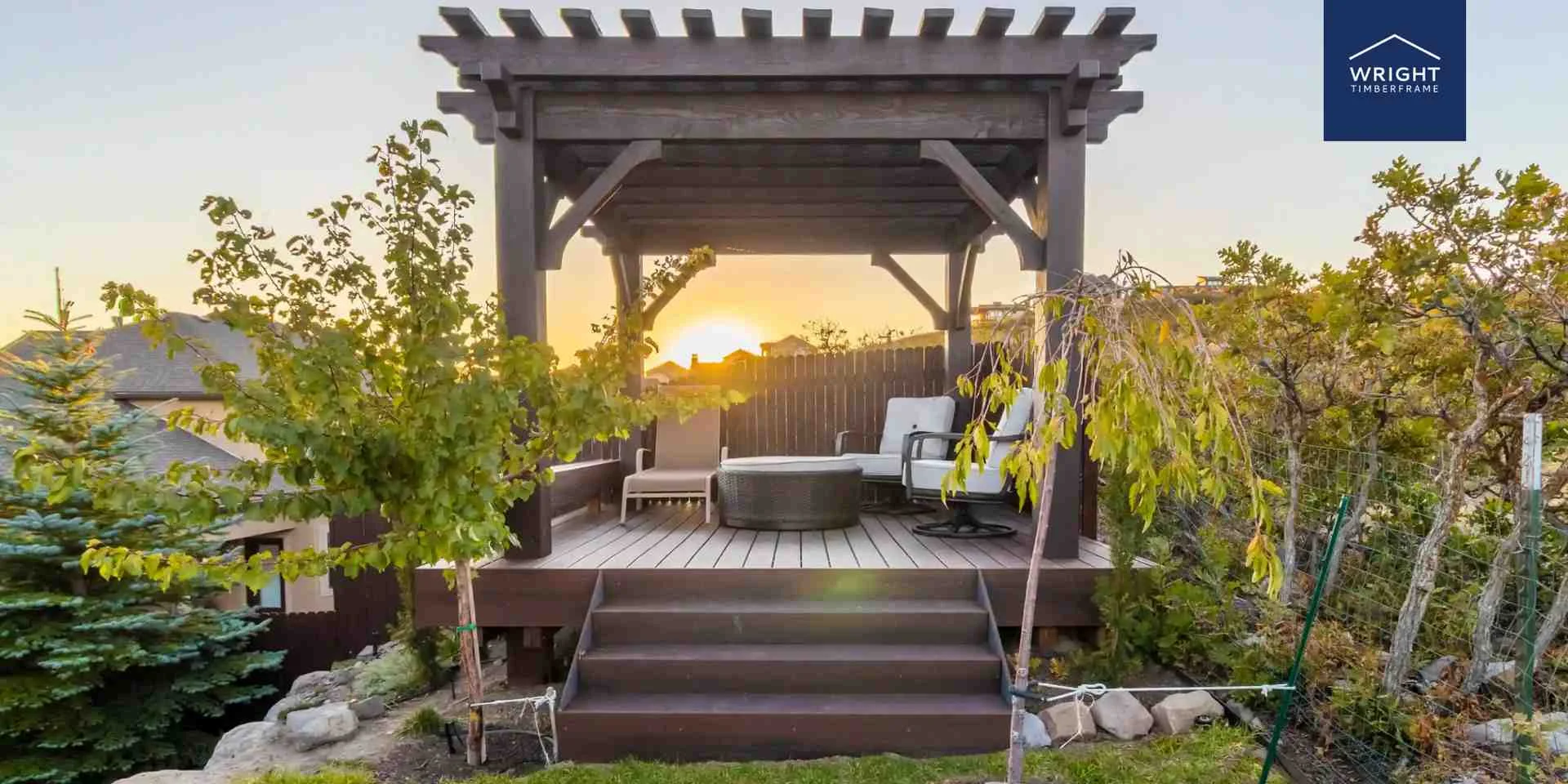
A quick rule we use is to start with the purpose of the space. This decision affects both the engineering and the installation process.
- Freestanding pergola: Best when you want a destination zone, like a hot tub cover, fire pit lounge, or garden walkway. These structures must be engineered to be entirely self-supporting, often requiring larger knee braces to prevent lateral movement.
- Attached pergola: Best when you want shade right where you enter the house, or when the pergola should read as part of the home’s architecture. When attached, we pay close attention to ledger attachment, flashing, and water management details. Those small items are what prevent long-term moisture issues at the home’s rim joist.
Foundations and anchors: where longevity really starts
A heavy timber structure needs a foundation that resists uplift, racking, and freeze-thaw movement. Because timber frames are heavy, they cannot simply sit on top of a standard 4-inch patio slab without proper support. In most areas, that means concrete footings below frost depth and hardware that is rated for exterior exposure.
We recommend you confirm four items before the kit arrives:
- Local frost depth and footing requirements: This varies widely even within the same state. A footing in the mountains may need to be 48 inches deep, while one in the valley may only need 18 inches.
- Setback rules and permit triggers: Many municipalities treat permanent roofed or anchored structures differently than temporary ones. Always check your local zoning laws.
- Final finished surface elevations: Consider patio thickness, pavers, or deck height so post bases land at the right height. We want the steel stand-off bases to be slightly above the grade to prevent the timber from sitting in standing water.
- Staging and Access: These kits are heavy. We recommend having a clear staging area and a plan for moving timbers. A large 8×8 post can weigh over 200 pounds, so mechanical assistance or a strong crew is essential.
Layout and orientation: more shade with the same lumber
Rafter direction and spacing are not just aesthetics. They change how the pergola feels at different times of day. For example, if your patio faces south, we might suggest tilting the rafters or spacing them closer together to block the high summer sun while still allowing the lower winter sun to warm your windows.
- For more afternoon shade, we often align rafters to block the lower west sun.
- For balanced light, we keep spacing more open and use accessories like canopy fabric or vines for seasonal control.
If you are comparing approaches, our overview on custom-pergolas-vs-prefab can help you understand which variables are truly customizable and which are mostly cosmetic. We find that true customization happens in the structural layout, not just the end-cut profiles.
Smart, practical upgrades we see homeowners appreciate
Customization should solve a real comfort or usability need. We often see homeowners regret not adding these features during the initial build:
- Privacy walls: Useful for wind, neighbors, and creating a defined “room” feel. These can be integrated directly into the timber frame using the same joinery techniques.
- Integrated lighting paths: Planning wire routes before assembly prevents visible conduit later. We can often pre-drill or “chase” the timbers to hide wires for fans and lights.
- Knee Brace Enhancements: While functional for stability, larger or curved knee braces can drastically change the architectural style of the kit from rustic to modern.
- Post placement adjustments: Aligning posts with furniture layouts and traffic paths prevents awkward pinch points. We always suggest mocking up your furniture layout with tape on the ground before setting your footings.
We aim to keep each upgrade purposeful, so the finished pergola feels intentional rather than overbuilt. A well-planned timber frame is a balance of form, function, and physics.
Frequently Asked Questions about Timber Frame Pergola Kits
Do I need a permit for a timber frame pergola?
Often yes, especially if it is anchored to footings or attached to the home. Because these are heavy, permanent structures, building departments want to ensure the wind uplift and snow load requirements are met. Check setback rules and structural permit triggers with your local building department before ordering your kit.
What wood species holds up best in dry, high-UV climates?
Western Red Cedar performs exceptionally well due to its natural decay resistance and stability. However, the sun is the biggest enemy in dry climates. We recommend pairing it with a high-quality, UV-rated oil finish to reduce graying and surface checking over time. Douglas Fir is also excellent but requires more diligent staining to prevent moisture absorption.
How should I plan for snow loads near the mountains?
Ask for snow load assumptions up front and size beams accordingly. You should share details about your roofline and nearby windbreaks so engineers can account for drifting. If your pergola is located under a house roof eave, it may need to handle “shedding” loads, which are much higher than standard falling snow.
Can I install a timber frame pergola kit on an existing patio slab?
Sometimes, but it is rarely as simple as bolting it down. The slab must be thick enough and properly reinforced for anchors to prevent cracking under the weight or pulling out during high winds. In many cases, we recommend cutting out sections of the patio to pour dedicated footings that reach below the frost line.
How long does a typical DIY installation take?
For a standard-sized kit, plan on a weekend for layout and post setting, then another full weekend for beams, rafters, and finishing. Having a crew of at least three people is highly recommended because of the weight of the timbers. Site access and the availability of lifting equipment like a material lift or a tractor can significantly affect the timeline.
Will the wood crack over time?
Yes, this is a natural process called “checking.” As large timbers dry, the exterior dries faster than the interior, causing small cracks to open along the grain. In timber framing, this is considered part of the character of the wood and is rarely a structural concern. We explain to homeowners that checking is a natural seasoning process and rarely impacts the structural integrity of the frame.
Making the Most of Timber Frame Pergola Kits
Choosing a timber frame pergola kit is about more than adding shade. It is about adding a permanent architectural feature to your home that performs in your specific climate and fits the way you actually use your outdoor space. We believe that the transition from indoors to outdoors should be seamless, and a heavy timber structure provides the visual weight necessary to bridge that gap.
By combining traditional joinery with premium timbers like Western Red Cedar and Douglas Fir, a well-chosen kit delivers decades of structural reliability and visual warmth. The key is getting the details right: species selection, engineering for local loads, proper foundations, and thoughtful layout. We have seen how these structures transform a simple backyard into a sanctuary for family gatherings and quiet reflection.
Whether you are looking for a timber-frame-pergola to host family dinners or a quiet corner for reflection, a handcrafted kit provides a timeless design that will serve you for years to come. We are here to help you work through the decisions and build something that stands the test of time, providing a legacy of craftsmanship for your home.