Why Pergola Color Selection Matters More Than You Think
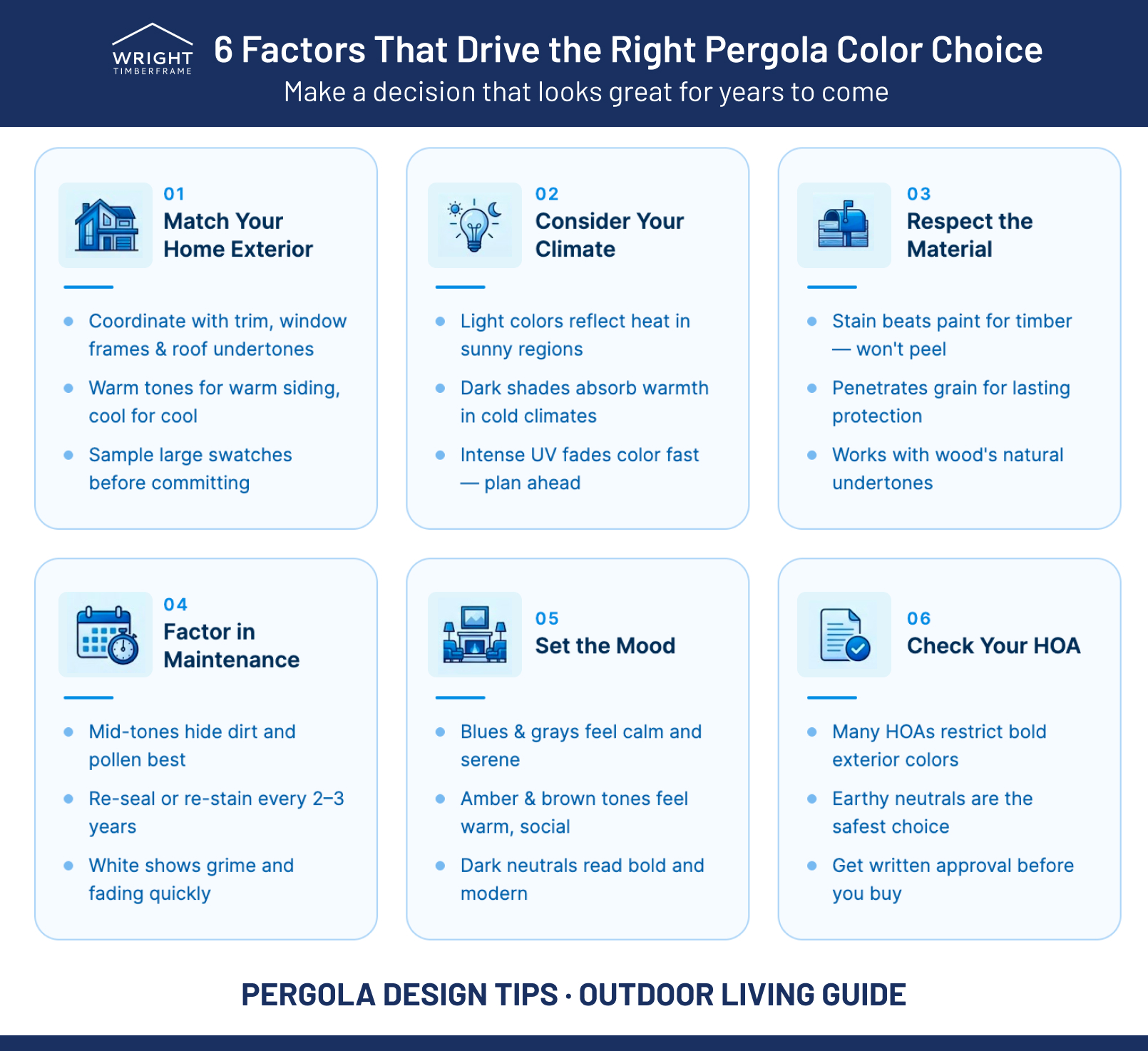
Pergola color selection is one of the most impactful decisions we make for an outdoor space, and the right choice comes down to a handful of key factors.
Quick answer: How to choose the right pergola color
- Match your home’s exterior – coordinate with your siding, trim, and roof undertones (warm or cool).
- Consider your climate – light colors reflect heat in hot climates; dark colors absorb warmth in cooler regions.
- Think about your material – natural timber looks best stained to preserve wood grain rather than painted.
- Factor in maintenance – mid-tones and neutrals hide dirt and resist visible fading better than extremes.
- Set the mood – blues and greens encourage relaxation; warm tones like amber and red stimulate conversation.
- Check your HOA – some communities restrict bold or non-standard exterior colors.
Most homeowners focus on the structure itself and treat color as an afterthought. We believe that is a mistake. Color is the first thing your eye lands on, and it shapes how the entire backyard feels, whether it reads as warm and inviting, sleek and modern, or natural and grounded.
A timber pergola, in particular, gives us a unique starting point. Unlike synthetic alternatives, real wood carries its own natural undertones, and the stain or finish we choose either works with those tones or fights against them. Getting that relationship right is what separates a pergola that looks like it belongs from one that feels out of place.
We are the team at Wright Timberframe, and after more than a decade designing and building custom timber pergolas across Utah and beyond, pergola color selection is something we have worked through with hundreds of clients. The questions are always the same, and the answers are almost always simpler than people expect.
Matching Architecture and Home Exterior
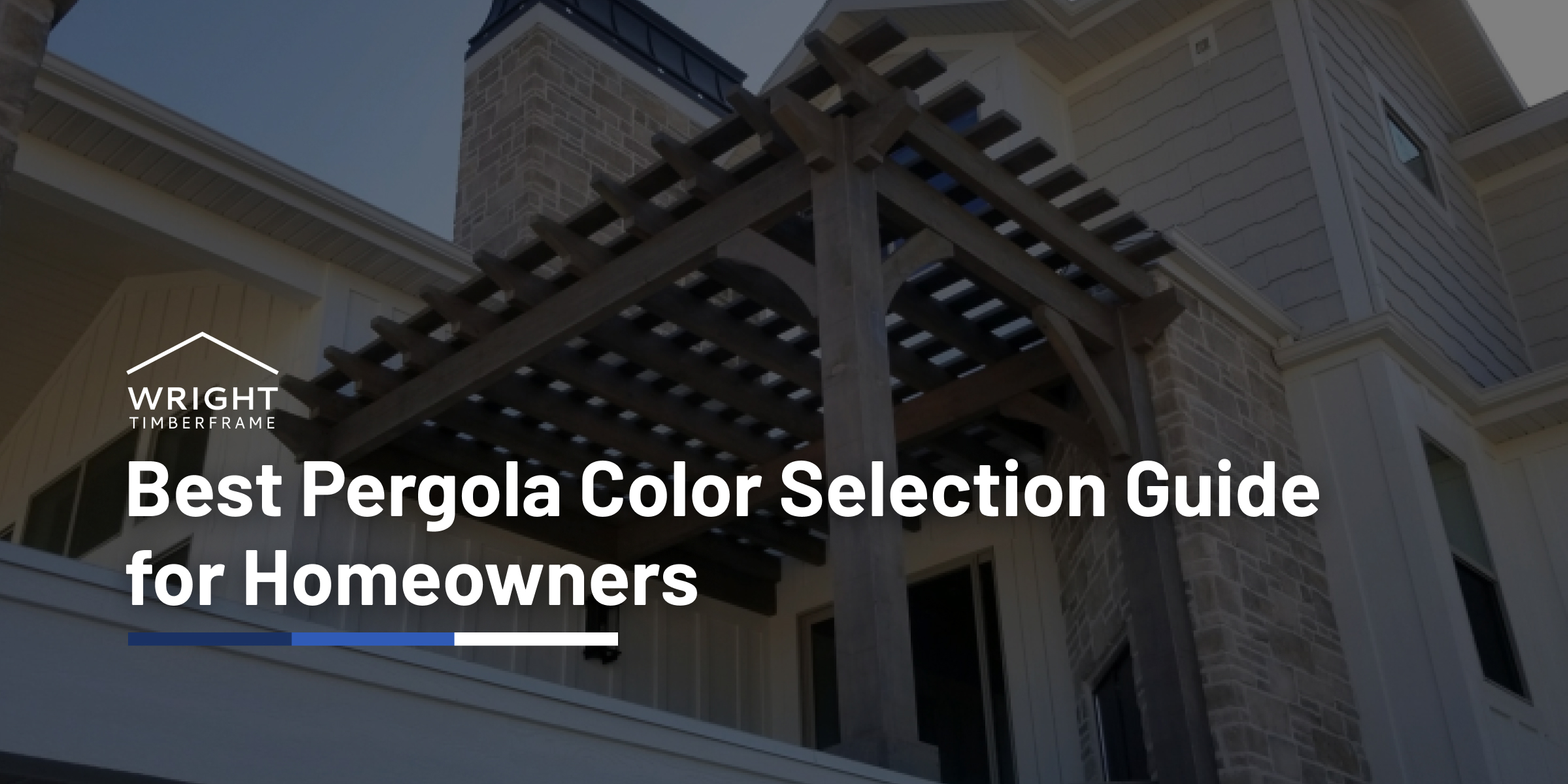
The most common goal for Pergola color selection is to make the structure look like a natural extension of your home. We often see homeowners try to match their siding exactly, but this can actually make the backyard feel flat. Instead, we recommend looking at your home’s secondary colors, such as the trim, the window frames, or the stone accents.
If your home has crisp white trim, a Wright Timberframe Pergola in Arctic White creates a clean, intentional look that pops against darker siding. For homes with a lot of brick or stone, we look for the dominant undertone in the masonry. If your stones are warm with hints of tan and gold, a warm stain will harmonize beautifully. If the stones are cool grays, a weathered or ash-toned finish is the way to go.
Don’t forget to look up at your roof. Coordinating your pergola color with your shingles or metal roofing creates a sense of top-down harmony. For example, a house with charcoal shingles often looks best with a cool-toned or dark neutral pergola, whereas brown shingles pair perfectly with deep wood stains.
Identifying Your Wood’s Undertones
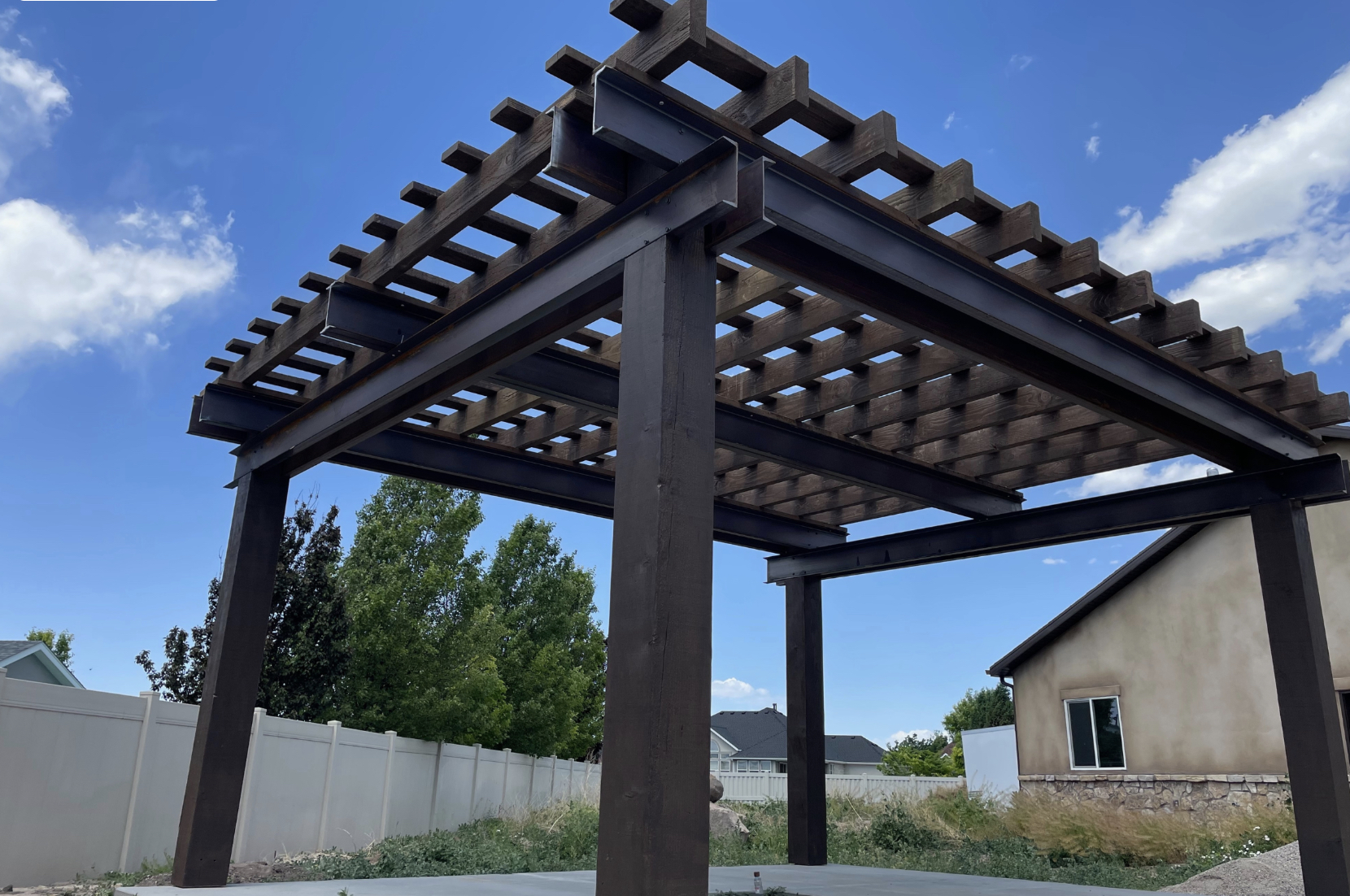
When working with timber, we aren’t just picking a color; we are enhancing a living material. Every wood species has a natural soul or undertone. Douglas Fir tends to have warm, yellowish-brown hues, while Western Red Cedar offers a reddish-pink glow.
To identify these undertones, hold a plain white piece of paper against the raw wood. The contrast will immediately reveal if the wood leans warm (reds, oranges, yellows) or cool (grays, blues). Choosing a stain that respects these tones is vital for a professional finish. You can learn more about how different woods react to finishes in our guide on The 7 Best Timbers for Outdoor Structures Compared.
Curb Appeal and Neighborhood Aesthetics
While your backyard is your private sanctuary, the pergola often peeks over the fence or sits visible from the street. We always suggest checking your local HOA guidelines in Murray or surrounding areas before finalizing your Pergola color selection. Most neighborhoods prefer earthy, neutral palettes that maintain a cohesive streetscape.
A well-chosen color doesn’t just please the neighbors; it adds tangible value to your property. A pergola that matches the architectural language of the house, using the same high-quality finishes found on your front door or deck, signals to future buyers that the outdoor space was professionally designed and cared for.
Climate Impacts on Pergola Color Selection
In Utah, our climate plays a massive role in how your pergola performs over time. We experience intense UV radiation in the summer and heavy snow in the winter. According to data on Utah’s high UV index, the elevation and clear skies mean your outdoor structures face significant solar stress.
Darker colors, like a Wright Timberframe Pergola in Charcoal Black, are stunning and modern, but they are heat magnets. On a 95-degree July day in Murray, a dark-colored beam can become hot to the touch and radiate heat downward into your seating area. If your pergola is in a wide-open, sun-drenched spot, you might prefer a lighter shade to keep the area cooler.
UV Resistance and Fading
Sunlight is the primary enemy of any outdoor finish. Over time, UV rays break down the pigments in stains and paints. Generally, darker stains with more pigment offer better protection for the wood fibers underneath, as they act like sunscreen for the timber. However, the darker the color, the more noticeable the fading can be over several years.
Lighter colors reflect more light, which can help prevent the wood from drying out too quickly. If you want a low-maintenance option that ages gracefully, consider mid-tone greige or weathered gray stains. These shades mimic the natural silvering process of wood, making any minor fading almost invisible to the naked eye.
Maintenance and Finish Durability
Maintaining your pergola’s beauty depends heavily on the quality of the finish. We recommend sealing or staining your timber structure every 2 to 3 years to protect against moisture and UV damage. Light colors, like whites and creams, tend to show dirt, bird droppings, and pollen more easily, requiring more frequent cleaning.
Dark colors are excellent at hiding surface dirt but can highlight scratches or water spots from sprinklers. For the busiest families who want the least amount of scrub time, we usually point toward medium browns or earth tones. These colors strike the perfect balance between hiding debris and resisting the bleaching effects of the sun.
Psychological Effects of Pergola Color Selection
The colors we choose for our outdoor living space do more than just match the house; they dictate how we feel when we sit under the rafters. This is known as color psychology, and it is a powerful tool in backyard design.
If your goal is to create a Zen retreat for morning yoga or quiet reading, cool tones are your best friend. Soft grays, muted blues, or a Weathered Ash evoke a sense of calm and serenity. These colors recede into the background, allowing the natural greenery of your garden to take center stage.
Conversely, if you love hosting loud, energetic dinner parties, warm tones are the way to go. Rich, amber stains like a Redwood Chestnut create a hearth-like feel. These colors are known to stimulate conversation and make a large outdoor space feel cozy and intimate, especially when paired with hanging outdoor string lights.
Creating Visual Focal Points
Sometimes, you don’t want your pergola to blend in; instead, you want it to be the star of the show. A bold Pergola color selection can turn a simple shade structure into a piece of architectural art. We have seen incredible results when clients use a two-tone approach, perhaps staining the main posts a dark, grounded espresso while keeping the top rafters a lighter, natural tone to create a sense of height and lift.
| Color Category | Mood Created | Best Use Case |
|---|---|---|
| Bright Whites | Airy, clean, expansive | Small yards or coastal-style homes |
| Deep Blacks/Grays | Modern, sophisticated, bold | Industrial or contemporary architecture |
| Warm Browns | Cozy, traditional, inviting | Social spaces and outdoor kitchens |
| Natural/Clear | Rustic, organic, grounded | Heavily wooded or naturalistic landscapes |
Balancing the Environment
Consider your landscaping when choosing your color. If you have a lush, green backyard with lots of deciduous trees, a greenish-brown or deep cedar stain will make the pergola feel like it grew right out of the earth. If your yard is more hardscaped with pavers and gravel, a sleek, dark neutral can provide the necessary contrast to make the space feel designed and intentional.
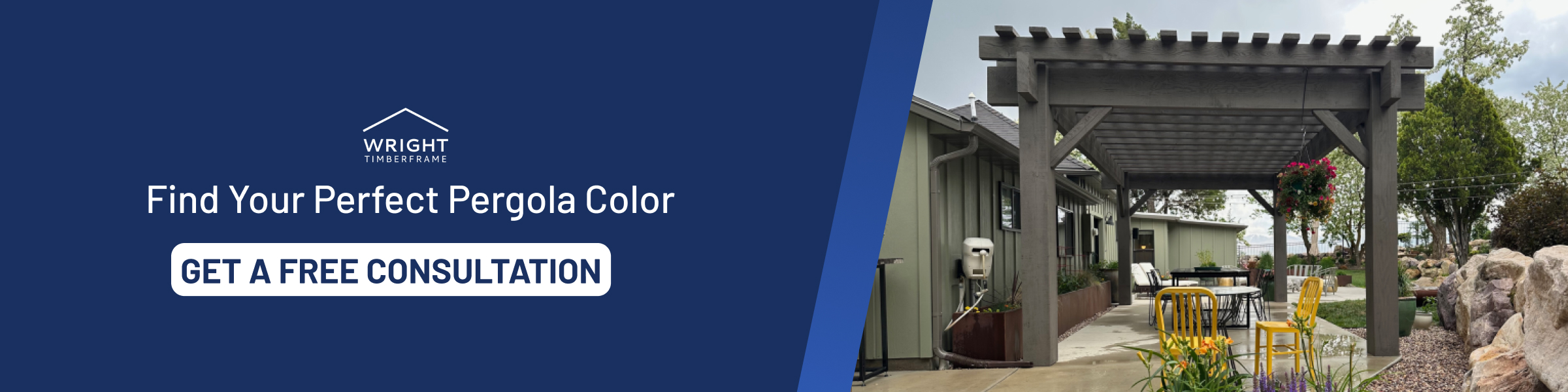
Frequently Asked Questions on Pergola Color Selection
What is the most popular color for a pergola?
Earthy tones remain the most popular choice for timber pergolas. Shades like medium brown, warm gray, and greige are favorites because they provide a timeless look that bridges the gap between traditional and modern styles while hiding dirt effectively.
Should I stain or paint my timber pergola?
We almost always recommend staining over painting for timber structures. Stain penetrates the wood fibers to provide protection while allowing the natural beauty of the grain to show through. Paint sits on the surface and is more prone to peeling or cracking as the wood naturally expands and contracts.
How does maintenance differ between light and dark colors?
Light colors show organic dirt more quickly but stay cooler in the sun. Dark colors hide dirt well but absorb significant heat and may show fading from UV exposure more prominently over time. Mid-tones offer the best balance for most homeowners.
How does pergola color affect property value?
Neutral and architecturally consistent colors typically offer the best return on investment. A pergola that matches the home’s trim or masonry signals professional design, which appeals to a broader range of potential buyers than highly customized or bold colors.
Finalizing Your Pergola Color Selection
Choosing the right color is the final brushstroke on your outdoor masterpiece. Whether you opt for a bold, modern black or a warm, traditional cedar stain, the key is to ensure it reflects your personal style while respecting the architecture of your home and the demands of the Utah climate.
At Wright Timberframe, we believe that a pergola should be as durable as it is beautiful. Our custom designs utilize traditional mortise and tenon joinery and premium timbers to ensure your structure stands the test of time. Based in Murray, Utah, we take pride in being the local experts who understand how to make timber thrive in our unique environment.
Ready to see these colors in person? From rich chocolates to airy whites, we can help you find the perfect match for your backyard. Explore our custom pergolas and let’s start building your dream outdoor retreat today.