
Why Weather-Proofing Your Pergola is Non-Negotiable
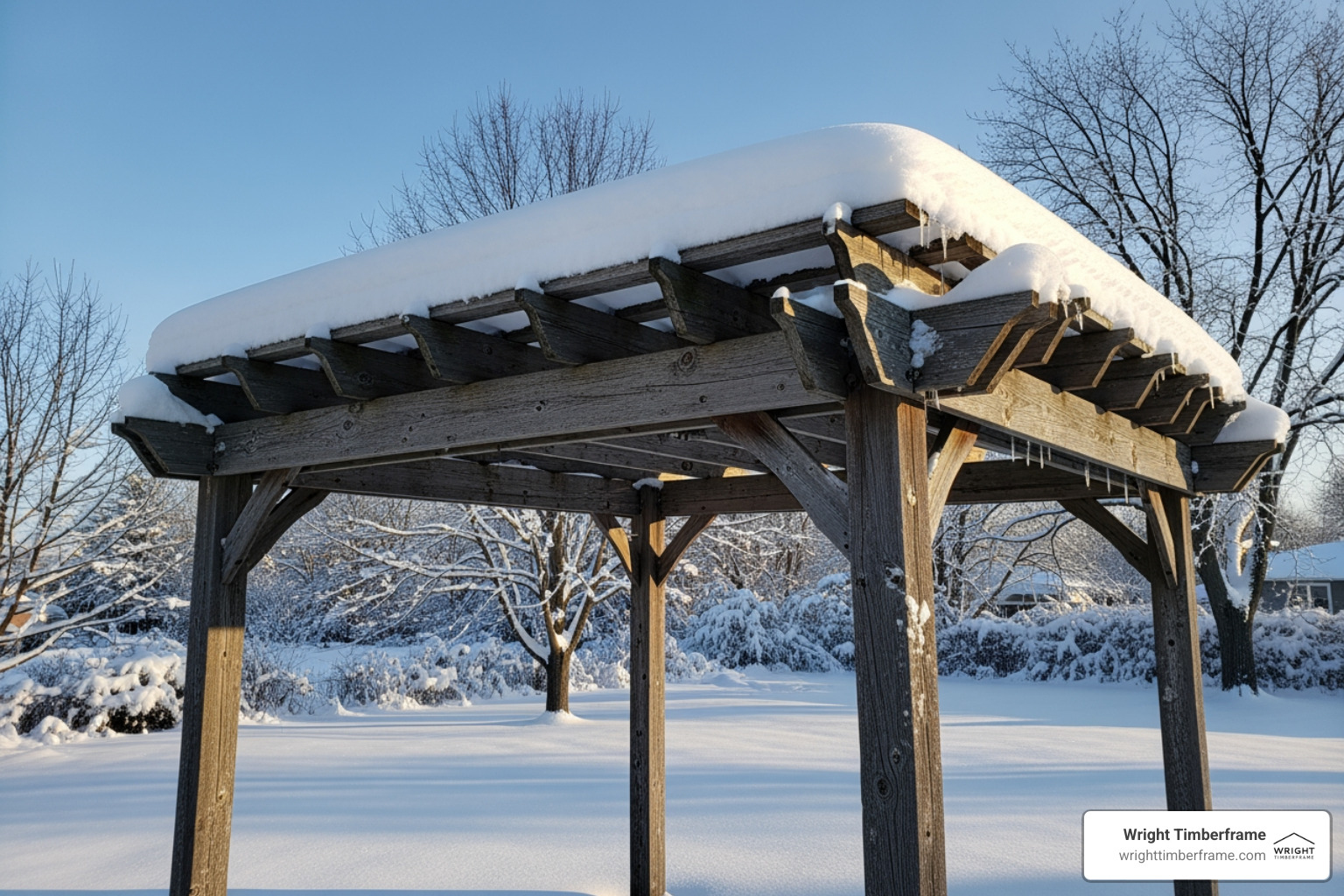
Pergola Weather-Proofing Tips are essential for protecting your investment and ensuring your outdoor structure withstands the elements year after year. Whether you’re facing heavy winter snow, summer UV rays, or relentless rain, understanding how to shield your pergola from weather damage will dramatically extend its lifespan and usability.
Quick Weatherproofing Essentials:
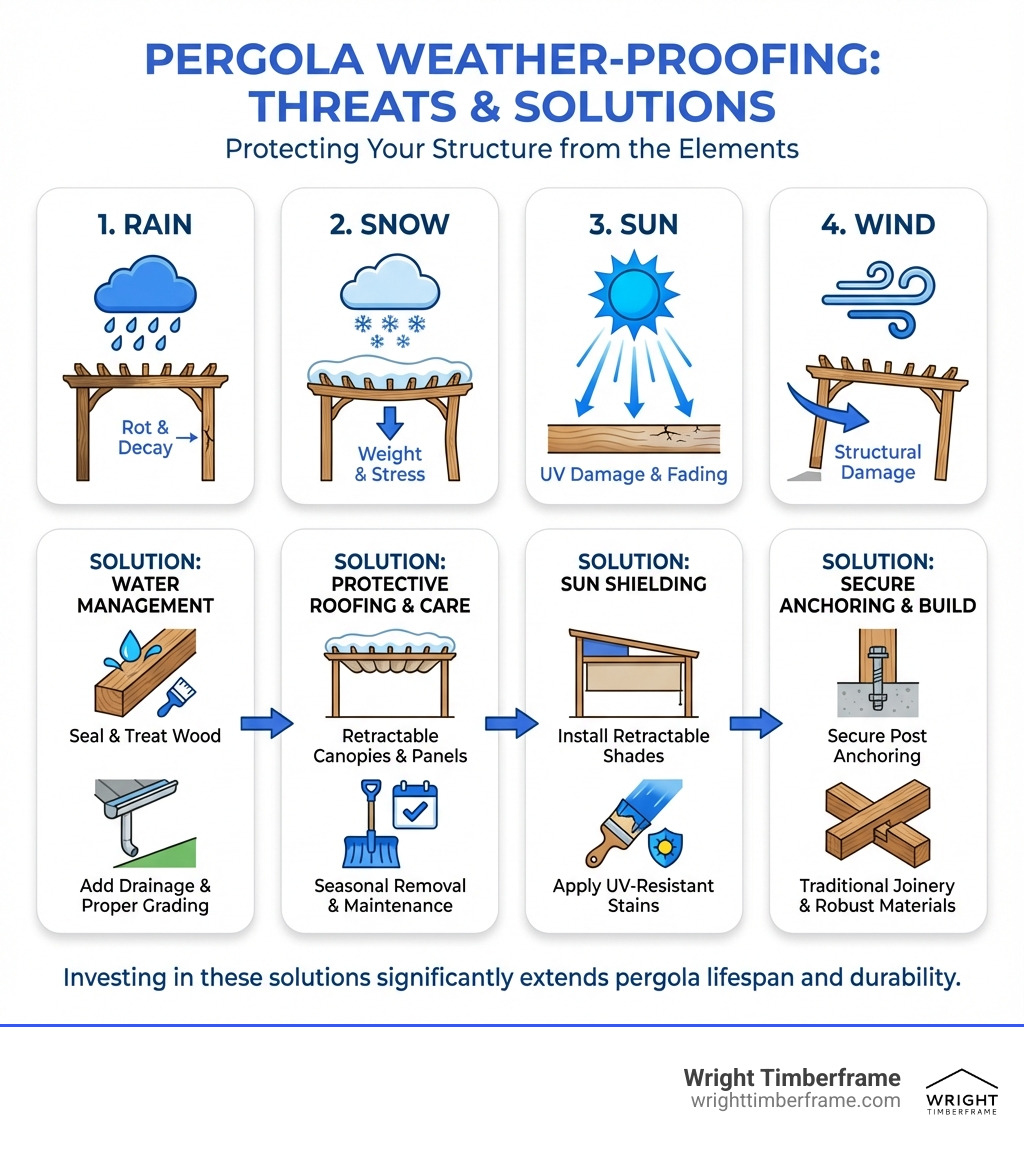
- Seal and treat wood annually with UV-resistant stains or oil-based sealants
- Install a protective roof using retractable canopies, polycarbonate panels, or louvered systems
- Add proper drainage with gutters, downspouts, and correct ground grading
- Choose weather-resistant materials like cedar or Douglas fir with traditional joinery
- Perform seasonal maintenance including snow removal and regular inspections
Without proper weatherproofing, even the most beautifully crafted pergola is vulnerable. Rain can seep into untreated wood, causing rot and structural weakness. UV rays fade and crack timber surfaces. Snow accumulation can stress joints and connections. Wind can loosen poorly anchored structures.
The good news? With the right approach, a properly weatherproofed pergola can extend its lifespan by 5-20 years compared to an untreated structure. This means more summers enjoying shade in your backyard, more evenings entertaining under a protected canopy, and more value from your investment.
As local timber experts based in Utah, we at Wright Timberframe have spent years crafting custom timber pergolas designed to withstand everything from Wasatch snowstorms to the scorching desert sun. Through hands-on experience with traditional mortise-and-tenon joinery and countless client projects, we’ve learned which Pergola Weather-Proofing Tips truly make the difference between a structure that lasts a few years and one that becomes a generational landmark.
The Foundation of a Weather-Resistant Pergola: Material and Structure
When it comes to building a pergola that stands the test of time and weather, the journey begins with the right materials and a robust structural design. We believe that a strong foundation is the first and most critical of all Pergola Weather-Proofing Tips.

At Wright Timberframe, we specialize in handcrafted outdoor structures using premium timbers like Douglas Fir and Cedar. These aren’t just beautiful woods; they offer inherent weather-resistant properties. Douglas Fir is known for its strength and stability, while Cedar boasts natural resistance to rot, decay, and insect infestations, making it an excellent choice for outdoor exposure, especially in Utah’s varied climate. Choosing quality wood upfront is a significant investment, but it offers a substantial long-term payoff in durability and reduced maintenance. You can learn more about our timber selection at Timber for Building a Pergola.
Our commitment to lasting strength extends to our construction techniques. We employ traditional joinery methods such as mortise-and-tenon joints. Unlike metal fasteners that can rust or weaken over time, these interlocking wood joints create structures that are inherently stronger and more resilient against the forces of nature. This traditional craftsmanship ensures timeless design and unparalleled structural integrity.
Beyond the wood itself, proper anchoring is paramount for wind resistance. A pergola, with its open design, can act like a sail in strong gusts. Properly anchored pergolas can withstand winds of up to 100 mph. We ensure robust anchoring systems, often utilizing concrete screws or ground plates, to keep your structure firmly in place, even during Utah’s occasional high winds.
Finally, consider how the pergola posts meet the ground. Wood is naturally porous and can absorb moisture, leading to rot if it’s constantly wet. To prevent this, we recommend raising wooden pergola posts slightly on concrete footings or using metal brackets that lift the timber off the damp ground. This simple measure prevents water damage at the base, a common vulnerability for wooden structures.
Best Practices for Sealing and Treating Your Wooden Pergola
Once you’ve chosen quality materials and ensured structural integrity, the next layer of defense in our Pergola Weather-Proofing Tips is proper sealing and treatment. This is especially crucial for timber pergolas, as wood is a natural material prone to damage from water, moisture, UV rays, and temperature fluctuations.
Preparation is key to effective waterproofing. Before applying any treatment, thoroughly clean the timber to remove dirt, grime, mold, mildew, or any existing finishes. For stubborn buildup, a pressure washer can be used with caution, but always ensure the wood is completely dry before proceeding. Inspect the entire structure for any cracks, splinters, or signs of rot, and make any necessary repairs. Sanding rough spots will also create a smoother surface for application and better adhesion.
Choosing the right treatment is crucial. You have several options, each offering different benefits:
- Sealants: These provide a clear finish, allowing the natural beauty of the wood to shine through. Some penetrate the wood for deep protection, while others form a protective surface layer. Look for sealants specifically designed for outdoor wood structures that offer UV protection and resist mold and mildew. Water-based sealants are often easier to apply and less toxic, while oil-based sealants can penetrate deeper for longer-lasting protection.
- Stains: Wood stains not only improve the aesthetic appeal by adding color but also provide an extra layer of protection. Opt for water-repellent stains that contain UV inhibitors to guard against sun damage, which can cause fading and cracking.
- Paints: For a solid color finish, waterproof exterior paints can create a durable barrier against moisture. Proper wood preparation, including sanding and priming, is essential for paint adhesion and longevity.
- Wood Preservatives: These treatments penetrate the wood to protect against rot, fungi, and insect infestations. They are often applied before a stain or sealant. A high-quality, oil-based wood preserver, like Barrettine Wood Preserver, can be an excellent choice.
When applying your chosen treatment, always follow the manufacturer’s instructions closely. We recommend applying multiple thin coats, allowing each to dry thoroughly, rather than a single thick coat. This ensures better absorption and a more uniform, durable finish. Pay special attention to joints, end grains, and any areas where water might pool, as these are common entry points for moisture.
Regularly reapplying wood sealant or stain annually, or every 1-3 years depending on the product, your climate, and the wood type, is vital. You’ll know it’s time to reapply when water no longer beads on the surface and starts to soak into the wood. The best time to waterproof is in the spring or early summer when the weather is mild and dry, allowing the treatment to cure properly. For Utah’s climate, a reapplication before winter can also provide crucial protection against snow and ice.
Top-Tier Protection: Choosing the Right Roof for Your Pergola
While the open lattice design is characteristic of many pergolas, adding a roof is one of the most effective Pergola Weather-Proofing Tips for year-round usability. The choice of roofing impacts not only protection from rain, sun, and snow but also the overall aesthetic and functionality of your outdoor space. When considering roofing options, we balance protection with aesthetics, taking into account Utah’s climate—from intense summer sun to heavy winter snowfall—and your budget.
Retractable Canopies and Shade Sails for Flexible Coverage
For those who love the open-air feel but desire flexible protection, retractable canopies and shade sails are excellent options. Their versatility allows you to enjoy the sun when you want it and quickly deploy cover when rain or intense heat arrives.
Retractable canopies are designed to slide open and close, offering on-demand shade and rain protection. They are typically made from durable, waterproof or water-resistant fabrics like polyester, polyethylene, or vinyl, many of which are UV-resistant to prevent fading and material degradation. These canopies can improve both the moisture resistance and aesthetic appeal of your pergola.
Shade sails offer a more affordable and often DIY-friendly solution. Made from waterproof or water-resistant fabric, they stretch over the pergola structure and can be removed seasonally. While easy to install, it’s crucial to ensure they are taut and properly anchored to prevent water pooling, which can lead to sagging or damage. For winter, we highly recommend removing any fabric canopies or shade sails to protect them from heavy snow accumulation and strong winds. This seasonal removal helps preserve their lifespan and prevents potential damage to your pergola structure from excessive snow load.
Solid Roof Panels: Polycarbonate and Metal Options
For comprehensive, long-term weather protection, solid roof panels are a top choice. They offer a permanent solution that can keep your outdoor space dry and usable in almost any weather.
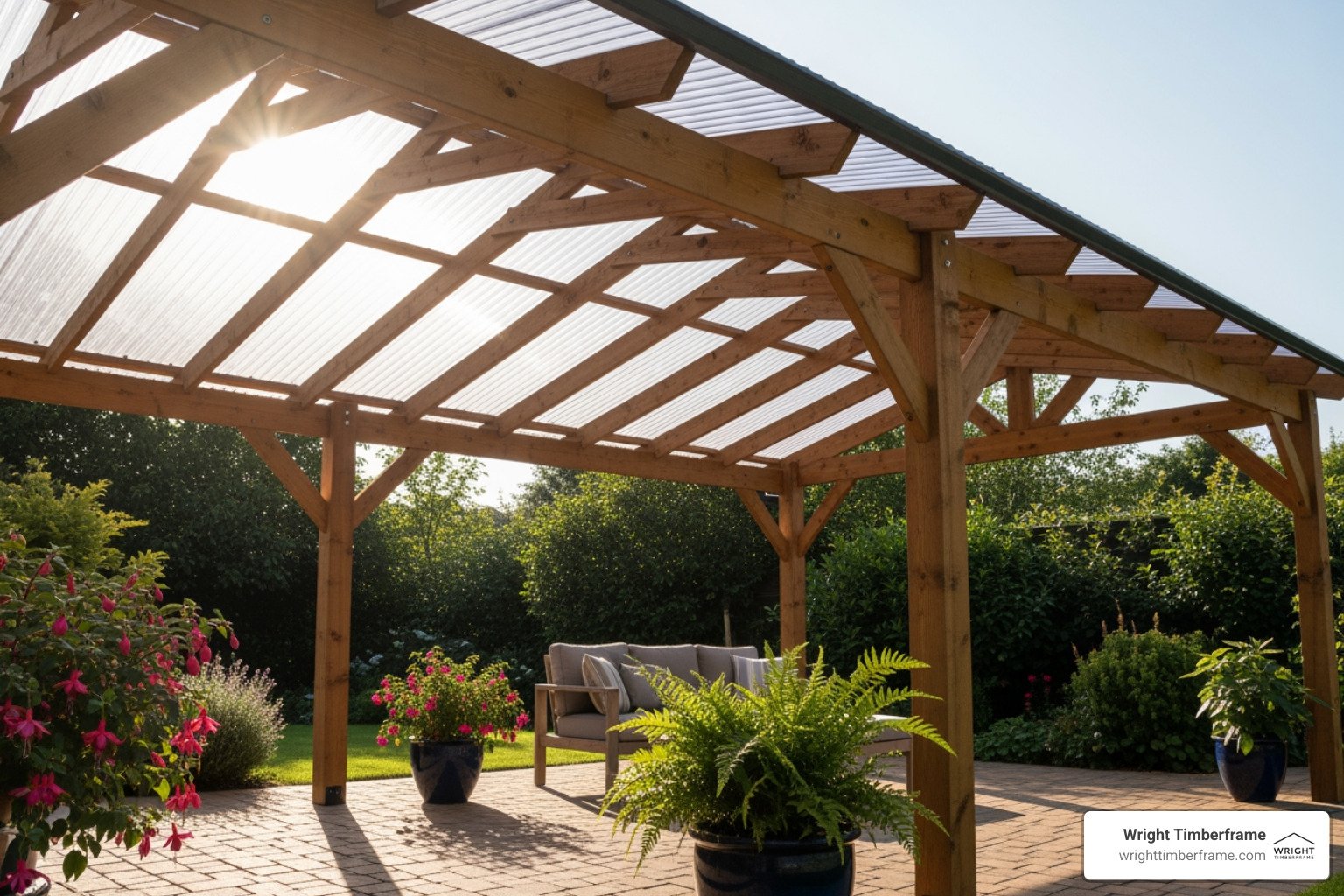
Polycarbonate panels are a popular choice for modern pergolas, especially in areas where diffused natural light is desired. They are durable, lightweight, UV-protected, and highly impact-resistant, providing excellent protection from rain, hail, and snow while allowing light to filter through. This means you can enjoy a bright space without direct sun exposure. Polycarbonate sheets are easy to install and maintain, making them a practical option for year-round use. When installing, ensure the panels are sloped slightly to allow water and snow to drain properly, and seal the edges carefully with flashing tape or silicone to prevent leaks. You can find options like Triplewall Polycarbonate Sheet for robust coverage.
Metal roofing provides exceptional durability and longevity, offering complete shade and robust protection from all elements. Materials like galvanized steel or aluminum are excellent for better snow shedding and rust resistance. While metal roofs are virtually maintenance-free and can withstand extreme weather, a consideration is the noise they can produce during heavy rain. Adding insulation underneath can help dampen this sound.
The Ultimate Control: Louvered Roof Systems
For those seeking the pinnacle of weather control and versatility, louvered roof systems are the best premium solution. These innovative roofs feature adjustable slats (louvers) that can be tilted open to allow sunlight and airflow, or closed completely to create a watertight seal.
When closed, the louvers interlock, ensuring rain is channeled through a built-in drainage system. This system typically directs water through the pergola’s framework and down its legs to the ground, keeping the space below completely dry. This integrated drainage is a significant advantage, preventing water accumulation on the roof surface.
Louvered roofs offer ultimate control over your outdoor environment. You can adjust them to allow sunshine during cooler periods, provide complete shade during peak heat, or seal them tight for complete rain protection. This all-weather functionality allows you to make full use of your pergola year-round, changing it into a truly adaptable outdoor room. While a higher investment, the convenience and comprehensive protection of a louvered roof are hard to beat.
Essential Pergola Weather-Proofing Tips for Drainage and Seasonal Care
Implementing proactive drainage solutions and preparing your pergola for seasonal changes are crucial Pergola Weather-Proofing Tips for ensuring its long-term protection and enjoyment. Even with the best materials and roofing, improper water management can lead to significant damage over time.
Managing Water with Effective Drainage Systems
Water is the primary culprit in most pergola damage, leading to wood rot, mildew, and foundation issues. Effective drainage is essential to divert water away from your structure and prevent pooling.
- Gutters and Downspouts: Installing a gutter system along the edges of your pergola roof, especially for solid or louvered roofs, is highly effective. These channel rainwater away from the structure and into downspouts, which then direct the water safely away from the pergola’s base. Regularly clear gutters and downspouts of leaves and debris to prevent blockages that can lead to overflow and water damage.
- Proper Ground Grading: Ensure the ground around your pergola slopes gently away from the foundation. This simple landscaping technique prevents water from pooling around the posts, which can cause moisture absorption into the wood and compromise the structural integrity.
- French Drains or Gravel Beds: For areas prone to heavy runoff or persistent dampness, consider incorporating a French drain or a gravel bed around the base of your pergola. A French drain is a trench filled with gravel and a perforated pipe that redirects surface water and groundwater away. A gravel bed, while simpler, can also help absorb and disperse excess water, preventing it from saturating the soil directly around your posts.
- Trim Nearby Plants: Overhanging tree branches or dense climbing plants can trap moisture against the wood, increasing the risk of rot and mildew. Regularly trim back any foliage that comes into direct contact with your pergola to ensure good airflow and prevent moisture buildup.
Pergola Weather-Proofing Tips for Winter Preparation
Utah winters bring significant snowfall, and preparing your pergola for these conditions is vital. Our Pergola Weather-Proofing Tips for winter focus on mitigating snow load and protecting vulnerable components.
- Snow Load Management: Heavy, wet snow can add thousands of pounds of pressure to a roof, stressing the pergola’s frame and joints. While our timber frame pergolas are built for strength, it’s a good practice to gently clear heavy snow accumulation. Do not let more than a foot of snow accumulate on your pergola. Use a roof rake or a soft broom for snow removal, avoiding shovels or harsh tools that could scratch or damage the roof surface or wood. Gently shaking off snow from the structure after a storm can also help.
- Inspect Before Winter: In the fall, perform a thorough inspection of your pergola. Look for any signs of cracks, loose hardware, or areas where sealant might be failing. Address these issues proactively to prevent small problems from becoming major ones during the harsh winter months. Re-tighten any bolts or stakes in anchoring systems.
- Remove Fabric Canopies: If you have a retractable canopy or shade sail, remove it completely before the first snowfall. Fabric canopies are not designed to bear the weight of snow and ice, and leaving them up can lead to tearing or damage to both the fabric and the pergola structure.
- Protect Outdoor Furniture: While your pergola is being weatherproofed, don’t forget the items underneath. Store non-weather-resistant furniture, cushions, and decorative elements indoors or cover them with waterproof covers to protect them from snow, ice, and freezing temperatures.
By following these essential drainage and seasonal care Pergola Weather-Proofing Tips, you’ll significantly extend the life of your outdoor structure and ensure it remains a beautiful, functional space for many years to come, no matter what Utah’s weather brings.
Frequently Asked Questions about Pergola Weather-Proofing
What is the best way to make a pergola completely waterproof?
To achieve a fully waterproof pergola, you need a solid or louvered roof system. Combining this with properly sealed wood and an effective drainage system like gutters will provide the most comprehensive protection against rain.
How often should I seal my wooden pergola?
We recommend reapplying a quality wood sealant or stain every 1-3 years. The exact frequency depends on your local climate, the type of wood, and the product used. A good indicator is when water stops beading on the surface and starts to soak in.
Can a timber pergola be left up during a snowy winter?
Absolutely, provided it is well-built and maintained. A sturdy timber frame pergola can handle snow, but it’s wise to gently clear heavy accumulations to prevent excessive stress. Always remove fabric canopies before the first snowfall.
What are some affordable DIY options for waterproofing a pergola?
Affordable DIY options include using waterproof fabric shade sails, applying quality wood sealants or stains to timber, and installing clear polycarbonate panels yourself. Ensuring proper slopes for drainage is key for any DIY roofing solution.
How do louvered roofs contribute to a pergola’s weatherproofing?
Louvered roofs offer exceptional weatherproofing by allowing adjustable slats to close tightly, forming a watertight seal. This design integrates a drainage system that channels rainwater away, providing complete protection from precipitation while still allowing for sunlight and ventilation when open.
Conclusion: Enjoy Your Outdoor Oasis for Years with These Pergola Weather-Proofing Tips
Mastering the elements is key to maximizing your outdoor living space. By focusing on the right materials, diligent sealing, a smart roofing choice, and consistent maintenance, you can transform your pergola into a year-round haven. These Pergola Weather-Proofing Tips are designed to protect your investment and ensure your structure remains a beautiful, functional centerpiece for decades. As local timber experts, we at Wright Timberframe have seen how these techniques preserve the beauty and strength of handcrafted structures, allowing them to withstand everything from scorching Utah summers to heavy Wasatch snows. To see what’s possible for your backyard, explore our gallery of stunning and durable Pergolas.

