
Why Douglas Fir Outdoor Structures Deserve Your Attention
Douglas fir outdoor structures like pergolas, pavilions, and trellises combine natural beauty with exceptional strength, but they need proper treatment to reach their full potential. Here’s what you need to know:
- Strength: Douglas fir scores 660 lbf on the Janka hardness test and offers a superior strength-to-weight ratio.
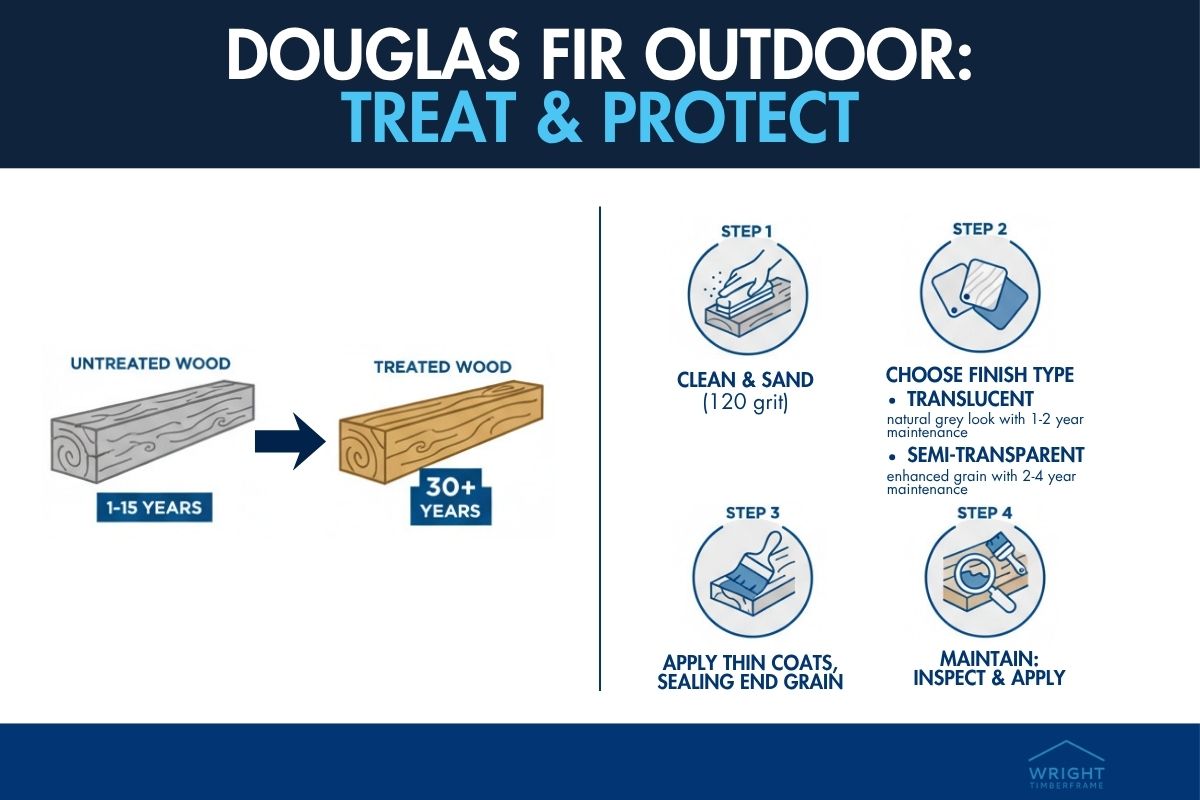
- Durability: Untreated wood lasts 1-15 years; properly treated structures can last 30+ years.
- Treatment Options: Choose from transparent, semi-transparent, or solid-color stains based on desired appearance.
- Maintenance: Regular inspection and finish reapplication every 1-5 years (depending on finish type).
- Cost: More budget-friendly than cedar while offering superior structural integrity.
Creating a backyard escape often starts with the warmth and beauty of natural wood. For outdoor structures like pergolas and pavilions, Douglas fir is a top contender, known for its incredible strength and beautiful, straight grain. But to ensure your beautiful Douglas fir outdoor project stands the test of time against sun, rain, and snow, it needs the right care.
Research and long-term field tests show that properly treated Douglas-fir can provide service lives measured in decades. In some treated installations, researchers have recorded 30–50+ years, making it an investment worth protecting. Without treatment, that same wood might only last a handful of years before moisture damage, cracking, and rot take their toll.
At Wright Timberframe, we’ve spent years crafting custom Douglas fir outdoor structures across Utah and beyond. Through countless projects, we’ve learned exactly what it takes to make Douglas fir not just survive outdoors, but truly thrive for generations.
This guide will walk you through everything you need to know to treat and maintain your Douglas fir, from selecting the right finish to establishing a simple maintenance routine. Whether you’re building a new structure or restoring an existing one, you’ll find the practical steps that transform good wood into a weather-defying work of art.
Why Choose Douglas Fir for Your Outdoor Oasis?
When you’re planning an outdoor structure that will become the heart of your backyard gatherings, the wood you choose matters more than you might think. Douglas fir outdoor structures have earned their reputation through decades of proven performance, combining strength, stability, and natural beauty in ways that few other woods can match.
Strength That Goes the Distance
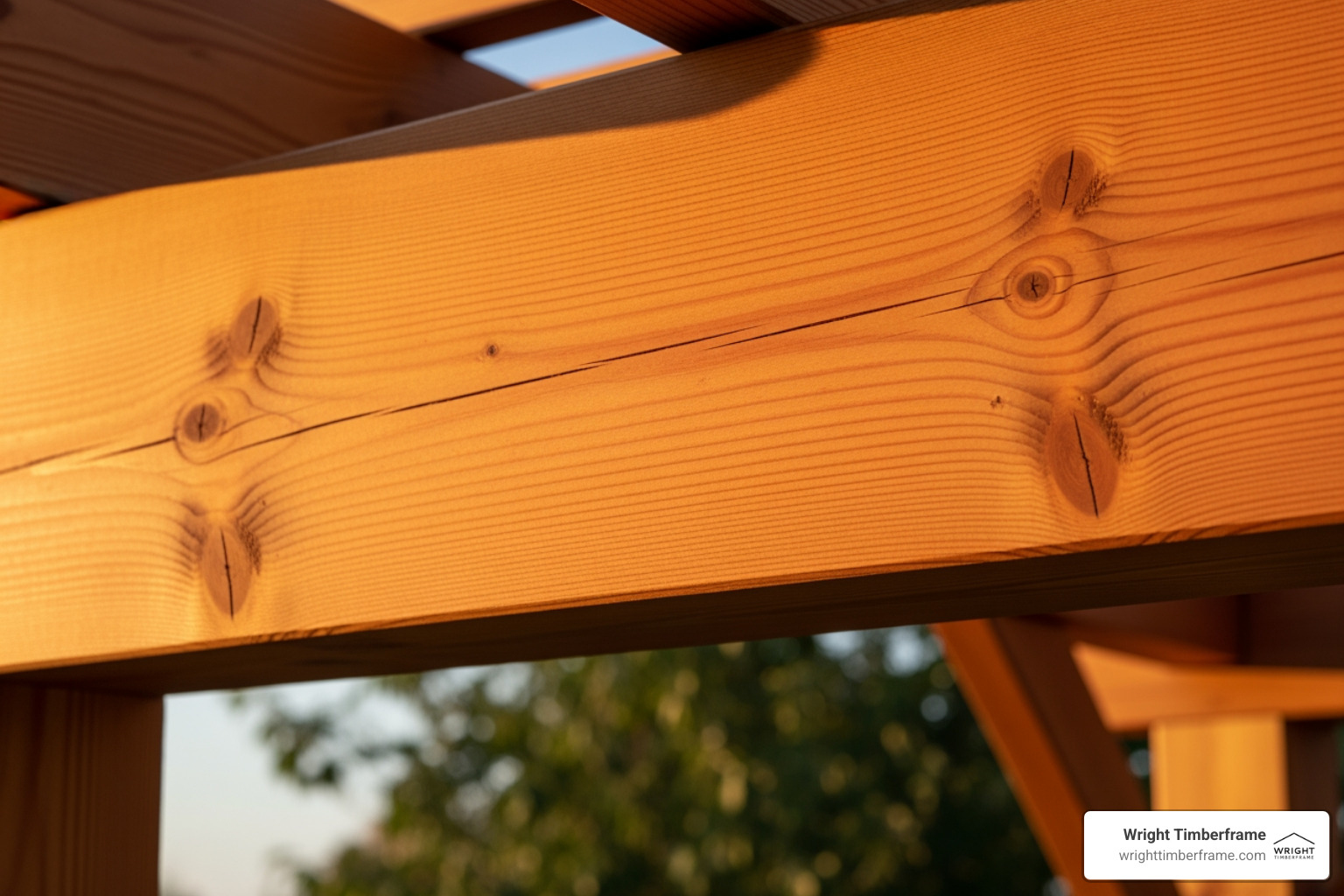
Don’t let the “softwood” label fool you, Douglas fir packs serious muscle. With an impressive strength-to-weight ratio, it handles heavy snow loads and structural demands without the excessive bulk that some hardwoods require. This makes it perfect for those expansive ceiling beams and neat trusses that define a stunning Timber Frame Pavilion.
In fact, Douglas fir scores 660 lbf on the Janka hardness test, demonstrating its remarkable resistance to dents and wear.
A Wood That Keeps Its Promises
Here’s something that sets Douglas fir apart: its exceptional dimensional stability. While other woods might warp, twist, or bow when moisture levels change with the seasons, Douglas fir holds its shape beautifully.
This means the precise mortise and tenon joints we craft stay tight and true, year after year. Your structure maintains its integrity and appearance through Utah’s hot summers and snowy winters without the frustrating shifts that can compromise lesser materials.
Beauty You Can See and Feel
The natural aesthetics of Douglas fir bring warmth to any outdoor space. Its light rosy color and remarkably straight grain pattern create a clean, sophisticated look that complements both modern and traditional design styles. The tight grain also means fewer loose knots – just smooth, handsome wood that accepts stains and finishes beautifully.
Whether you want to improve the natural color or customize the appearance to match your home, Douglas fir gives you that flexibility.
Smart Value for Your Investment
Quality doesn’t have to empty your wallet. Douglas fir offers a cost-effective alternative without sacrificing performance or beauty, making it possible to invest in a premium handcrafted structure while staying within budget.
This practical advantage means you can focus on getting the size and design features you really want, rather than compromising due to material costs. It’s simply smart value that delivers on every front.
To Treat or Not to Treat: The Fate of Untreated Douglas Fir Outdoor
The decision to treat your Douglas fir outdoor structure isn’t just about aesthetics, it’s about protecting your investment and ensuring your timber frame stands strong for decades. While Douglas fir brings impressive natural strength to any project, leaving it completely untreated outdoors tells a very different story than most homeowners expect.
The Natural Weathering Journey
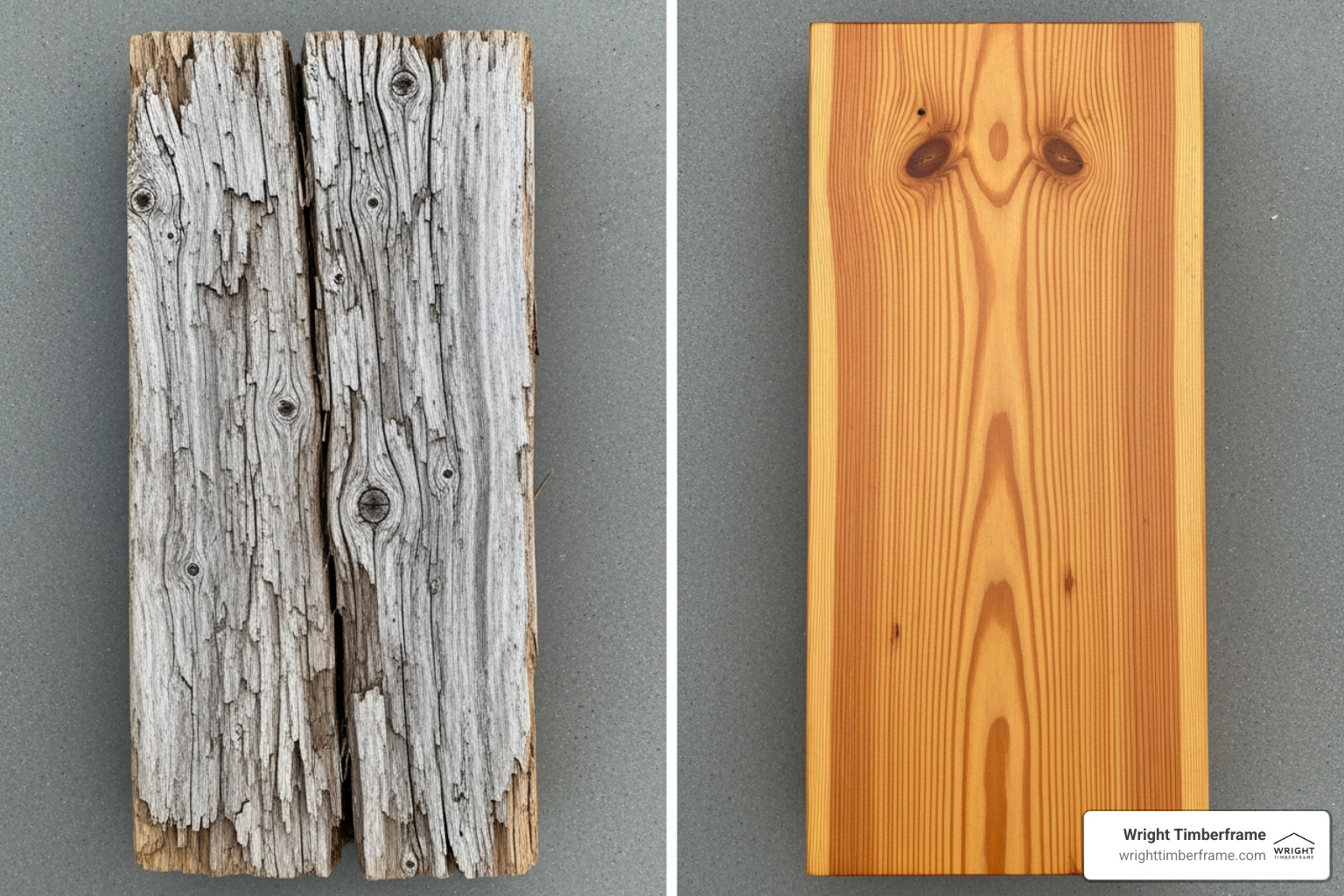
Untreated Douglas fir begins changing the moment it faces sun and rain. Within the first six months to a year, you’ll notice the warm, rosy tones fading into a silvery-grey patina. Some homeowners actually prefer this weathered look, it has a certain rustic charm that feels organic and timeless.
But here’s what’s really happening beneath that grey surface. The color change isn’t just cosmetic, it’s UV radiation breaking down the wood’s lignin, the natural polymer that gives wood its structure. According to research from Oregon State University, this weathering process opens the door to moisture penetration, which leads to far more serious problems.
What Happens Without Protection
The real trouble starts when moisture absorption becomes a pattern. Douglas fir, despite its impressive strength, is classified as low-durability timber when constantly exposed to weather without protection. Each rain shower soaks into the unprotected fibers, and each sunny day draws that moisture back out.
This cycle of expansion and contraction puts tremendous stress on the wood. Surface checks appear first, those small cracks that seem harmless.
But over time, they deepen into splits that can compromise structural integrity. We’ve seen beautiful beams develop significant cracks within just a couple of years when left unprotected.
The Hidden Threats
Perhaps most concerning is how untreated wood becomes vulnerable to rot and insect infestations. While Douglas fir heartwood (the darker, inner wood) has some natural resistance thanks to its tight grain and natural oils, this protection is limited. The sapwood, that lighter outer layer, is particularly susceptible to decay and wood-boring insects.
Once rot establishes itself in your timber frame, it’s incredibly difficult to reverse. What started as a small area of decay can spread through the structure, weakening joints and compromising the very integrity of your outdoor living space.
The Lifespan Reality
Here’s the bottom line: untreated Douglas fir outdoor structures typically last between 1 and 15 years, depending on your climate and specific exposure conditions. That’s a huge range, and it’s essentially a gamble. In Utah’s intense sun and variable moisture conditions, we’ve seen untreated wood deteriorate on the faster end of that spectrum.
Compare that to properly treated and maintained Douglas fir, which we confidently expect to last over 30 years. That’s the difference between watching your investment weather away within a decade or enjoying it for a generation. When you consider the craftsmanship and cost that goes into a handcrafted timber frame, protection isn’t optional, it’s essential.
Your Step-by-Step Guide to Treating Douglas Fir
This is where the magic happens, turning a great piece of wood into a weather-defying work of art. Following these steps will protect your investment and keep your Douglas fir outdoor structure looking incredible for decades to come.
Step 1: Preparation is Everything
A perfect finish starts with a perfect surface, plain and simple. We’ve learned through countless projects that shortcuts in preparation always lead to disappointment later. Don’t skip these crucial prep steps, they ensure your stain or sealer will adhere properly and provide maximum protection.
Clean Away Dirt and Debris
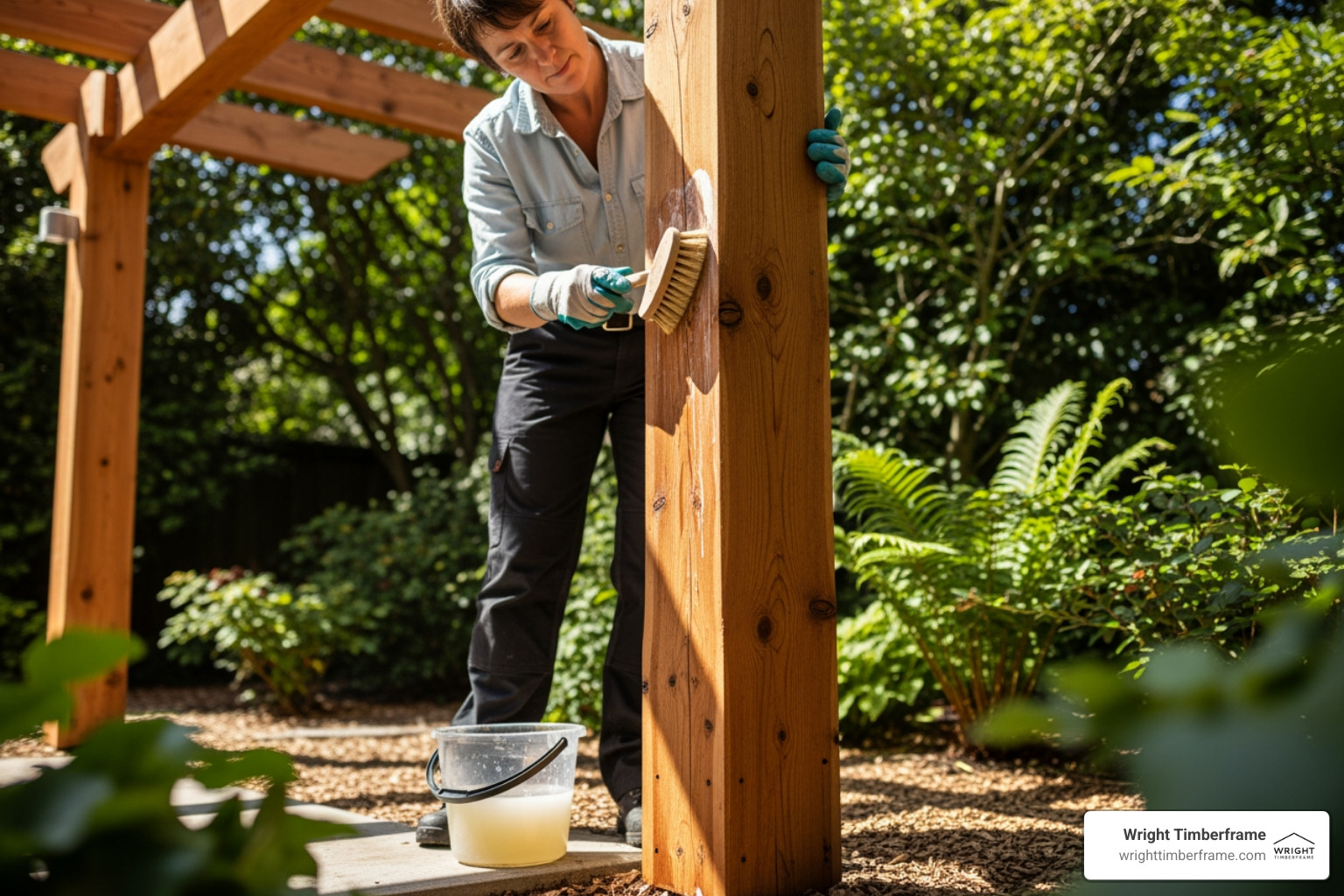
First, your Douglas fir needs to be clean and free of any dirt, dust, or mildew. We recommend using a stiff brush with mild detergent and warm water to gently scrub the surface. For existing structures, especially if they’ve been exposed to the elements for a while, you may need to tackle built-up grime more aggressively.
Sand for a Smooth Surface
Once clean, proper sanding creates the smooth surface that will readily accept your finish. For initial sanding, 120-grit sandpaper works beautifully to remove any splinters or rough patches without closing the wood pores. Here’s a tip we share with all our clients: avoid over-sanding with very fine grits (higher than 100 grit), as this can actually prevent proper stain absorption by sealing those tiny pores you want to keep open.
Ensure Complete Drying
Finally, and this is crucial, make sure the wood is completely dry before applying any finish. For new Douglas fir, we often advise waiting 2-3 months after installation to allow the wood to acclimate to its environment.
Alternatively, you can let it weather naturally for about three weeks. Some experts even recommend brushing it with hot water and black soap to ensure optimal absorption of your chosen treatment.
Step 2: Choosing the Right Finish for Your Douglas fir outdoor Project
The finish you choose determines both the look and the level of protection your structure will have. Consider the aesthetic you want and the climate you live in when making your choice. We guide our clients to select finishes that not only protect but also improve the natural beauty of their timber frame.
Understanding Your Finish Options
There are three main categories of exterior stains, each offering a different balance of appearance and protection:
| Finish Type | Appearance | Protection Level | Maintenance Frequency |
|---|---|---|---|
| Transparent Stain | Allows natural grain to show, lets wood grey naturally | Good (UV & moisture) | 1-2 years |
| Semi-Transparent Stain | Adds a hint of color, improves grain | Very Good | 2-4 years |
| Solid Color Stain | Opaque, like paint, hides grain | Excellent (Maximum) | 5+ years |
Transparent stains are perfect if you love the idea of your Douglas fir naturally developing that distinguished silvery-grey patina while still receiving protection against moisture damage. These non-film-forming treatments penetrate deep into the wood, preventing issues like black spots, splitting, and cracking. They’re ideal for those who want to accept the weathered aesthetic while maintaining structural integrity.
If you prefer to maintain some of the wood’s natural warm color while enhancing its beautiful grain, a semi-transparent stain is an excellent middle ground. These finishes offer strong protection, often with an oil-based formula that deeply nourishes the wood.
For maximum protection and a customizable color palette, solid-color stains are your best bet. They function much like paint, completely obscuring the wood’s natural grain, but some types can still allow a hint of texture to show through.
We generally recommend stains over paint for Douglas fir outdoor structures. Stains penetrate the wood and are less prone to the peeling or flaking that can plague film-forming paints.
Special Finish Considerations
You might also consider specific types of finishes like saturators, which are non-film-forming and preserve the natural look and feel of the wood. Oil-based finishes such as Tung Oil or Linseed Oil penetrate deeply for excellent moisture resistance, while water-based options (Acrylic, Polyurethane) offer quick drying and low odor, perfect for those who want to finish the project in a weekend.
For elements exposed to harsh weather, especially horizontal surfaces that take the brunt of rain and snow, specialized varnishes like Spar Varnish or Marine Varnish provide tough, protective topcoats with excellent UV and water resistance. These are particularly valuable for our Timber Pergolas where overhead beams need extra protection.
Step 3: Application for a Flawless Finish
Applying the finish correctly is just as important as the prep work, maybe even more so. Take your time to ensure every surface, especially the end grain, is fully coated. A careful application ensures maximum penetration and uniform protection for your structure.
Use Quality Tools
We always recommend using a quality large, soft bristle brush for applying stains and sealers. This allows for smooth, even coats and better penetration into the wood fibers. While spray application might seem faster, brushing actually works the finish into the wood, creating a stronger bond and more consistent protection.
Apply Thin, Even Coats
Avoid the temptation to slather it on thick. Thin, even coats are always better than one heavy coat. They dry more uniformly and prevent stickiness or uneven absorption that can leave your beautiful timber looking blotchy.
Think of it like painting a masterpiece: patience and multiple light layers create the best results.
Seal the End Grain
Here’s where many DIY projects go wrong: the end grain. Crucially, pay extra attention to the end grain of your Douglas fir timbers. End grain is like a collection of tiny straws, absorbing significantly more moisture than the side grain, sometimes up to 10 times more.
Applying extra coats of your chosen finish to these areas provides a vital barrier against water penetration and future decay.
Follow Manufacturer Instructions
Always follow the manufacturer’s specific instructions for drying times between coats and overall curing. For solid-color stains, a primer coat may be necessary before applying topcoats, with 3-4 hours of curing time often required between applications. We prefer to work on a mild, clear day to ensure optimal drying conditions, humidity and temperature can significantly affect how well your finish cures.
Long-Term Love: Maintaining Your Structure
Once your Douglas fir outdoor project is complete, a little regular care goes a long way. Proper maintenance is the key to open uping the incredible longevity of Douglas fir, ensuring your investment remains a cherished part of your outdoor living space for decades.
Create a Simple Inspection Routine
A consistent maintenance routine begins with regular inspection every six months. Look closely for any signs of cracking, splitting, rot, or insect damage. Pay particular attention to joints, areas exposed to constant moisture, and any surfaces showing wear on the finish, addressing minor issues promptly can prevent them from becoming major headaches.
Keep It Clean (The Easy Way)
Cleaning your Douglas fir is surprisingly simple and effective. A gentle wash with mild detergent and warm water, applied with a soft brush or cloth, removes accumulated dirt, pollen, and mildew beautifully. Avoid harsh chemicals or high-pressure washers, which can damage the wood fibers and strip away your protective finish.
Know When to Refresh Your Finish
Recognizing when to reapply your finish is crucial for long-term protection. Transparent finishes typically need reapplication every 1-2 years, while semi-transparent stains last 2-4 years, and solid-color stains can protect for 5 years or more. However, always observe your wood closely, when the finish starts to look dull, fade, or show signs of wear, it’s time for a fresh coat.
Protect Your Investment Year-Round
Beyond cleaning and refinishing, being mindful of your structure’s environment makes a real difference. Ensure good ventilation around your structure to prevent moisture buildup, especially in areas prone to dampness.
For our durable Timber Pergolas, we design them to shed water effectively, but regular checks ensure no water is pooling or getting trapped. For any wooden elements in ground contact or poorly ventilated spots, ensure they’re adequately treated and possibly lifted to reduce moisture exposure.

Frequently Asked Questions about Douglas Fir Outdoor Care
How does Douglas fir compare to Cedar for outdoor use?
While cedar has excellent natural rot resistance, Douglas fir offers superior strength and density, making it ideal for structural elements. Douglas fir scores twice as high as cedar on the Janka hardness test, providing robust support for large beams and posts.
It is also typically more budget-friendly, delivering incredible value without sacrificing beauty or performance.
How long will my Douglas fir structure last outdoors?
The lifespan of a Douglas fir outdoor structure depends entirely on its treatment. Untreated, it may last 1-15 years, but with proper finishing and regular maintenance, you can confidently expect it to last over 30 years. Protecting your investment with the right care ensures it will be a lasting feature for generations.
Can I paint my outdoor Douglas fir structure?
Yes, you can paint Douglas fir for excellent protection, but paint will completely hide the beautiful natural wood grain. As an alternative, we recommend a solid-color stain, which provides maximum protection and a custom color while allowing some of the wood’s texture to show through. Stains are also less prone to peeling than paint, simplifying long-term maintenance.
Building a Lasting Legacy with Douglas Fir Outdoor Structures
Your outdoor space deserves more than just furniture, it deserves a centerpiece that tells a story and stands the test of time. Douglas fir outdoor structures offer exactly that: a perfect blend of strength, beauty, and value that transforms your backyard into a lasting legacy. While you could leave it to weather naturally, the real secret to open uping its legendary longevity lies in proper treatment and consistent care.
Think of it this way: every hour you invest in treating and maintaining your Douglas fir is a gift to your future self. By following the steps we’ve outlined, from thorough preparation and choosing the right finish to establishing a simple maintenance routine, you’re ensuring your beautiful pergola, pavilion, or trellis won’t just survive the elements. It will thrive for generations, becoming the backdrop for countless family gatherings, quiet morning coffees, and memories you haven’t even made yet.
At Wright Timberframe, we pour our expertise as local timber experts into every structure we handcraft from premium Douglas fir. Every joint is cut with precision using traditional mortise and tenon joinery, ensuring each beam is ready for a lifetime of memories. We don’t just build outdoor structures, we create heirlooms that grow more beautiful with each passing season.
Whether you’re envisioning a grand pavilion for entertaining or an intimate pergola for your garden retreat, we’re here to help you bring that vision to life. Explore our stunning timber frame kits that ship nationwide, making it easier than ever to create your own timeless outdoor sanctuary. Your dream Douglas fir outdoor retreat is waiting, let’s build something extraordinary together.