Why Choosing the Right Custom Timber Frame Builders Matters
Choosing the right custom timber frame builders is the most important step in bringing your dream outdoor living space to life. When you invest in a pergola, pavilion, or trellis, you’re not just buying a structure, you’re creating a place where family and friends will gather for years. We know how personal that decision is, and we also know that not all builders bring the same level of craftsmanship, engineering, and care to the table.
As local timber experts based in Utah, we’ve helped homeowners and commercial clients throughout the region turn empty patios, bare pool decks, and unused corners of their yards into inviting, functional spaces. Over the years, we’ve seen how choosing the right team can mean the difference between a project that feels stressful and uncertain, and one that feels exciting and rewarding from day one.
To help you make a confident, informed choice, we recommend asking any potential custom timber frame builders seven core questions:
- What is your design and customization process? – Do they truly tailor structures around your lifestyle and property, or rely on rigid templates?
- What materials and joinery techniques do you use? – Are they using premium Douglas Fir and Cedar with traditional mortise-and-tenon or dovetail joinery, or just basic lumber and metal brackets?
- What are the benefits of your timber frame structures? – Can they clearly explain how their pergolas, pavilions, and trellises perform over time in real backyards like yours?
- What styles and structures do you specialize in? – Do they focus on outdoor timber structures like pergolas, pavilions, and trellises, or are they generalists?
- How do you approach a project from start to finish? – Is there a clear, step-by-step process from design and engineering through fabrication, shipping, and installation?
- Can you share examples of your work? – Do they have real projects, with real challenges, they can walk you through?
- What are typical costs and timelines? – Can they provide transparent pricing and realistic schedules so you can plan with confidence?
In this guide, we walk through each of these questions and share how we approach them at Wright Timberframe. Our goal is to help you understand what to look for in custom timber frame builders, what to expect at each stage, and how to choose a partner who respects the centuries-old craft of timber framing while designing a structure that truly fits your home and the way you live.
We focus exclusively on outdoor timber frame pergolas, pavilions, and trellises, using premium Douglas Fir and Western Red Cedar with traditional mortise-and-tenon and dovetail joinery. Whether we’re building a backyard pavilion in Utah County or shipping a pre-cut kit across the country, our team is committed to clear communication, honest expectations, and meticulous craftsmanship that you can see and feel in every joint and beam.

1. What Is Your Design and Customization Process with Custom Timber Frame Builders?
When you’re comparing custom timber frame builders, one of the first things to understand is how they’ll help you move from a rough idea to a finished pergola, pavilion, or trellis that fits your life. We’ve learned that most homeowners know how they want the space to feel—shaded, cozy, open, or grand—but may not know what size, shape, or details are needed to get there. That’s where our process comes in.
At Wright Timberframe, we see your outdoor project as a partnership. We design and build only custom timber frame pergolas, pavilions, and trellises, and our process is built around listening first, then guiding you step-by-step.
Step 1: Conversation about your goals and lifestyle
We start with an in-depth conversation—by phone, video, or in person—where we ask about:
- How you want to use the space (quiet mornings, family dinners, large gatherings, poolside lounging, etc.)
- How many people you typically host
- Existing elements like patios, pools, outdoor kitchens, or gardens
- The style of your home (mountain modern, rustic, traditional, contemporary)
This helps us translate “we want more shade” or “we want a place to host family barbecues” into specific structure types and sizes.
Step 2: Site awareness and design considerations
Next, we look at your property conditions. For Utah clients, we’re very familiar with local climate patterns, snow loads in mountain areas, and strong sun exposure in valley locations. Even when we’re working remotely on a kit project, we ask for photos, dimensions, and orientation (where the sun comes from) so we can:
- Position a pergola to create the right amount of shade at peak hours
- Size a pavilion roof correctly for snow and weather
- Align a trellis to frame views or support plantings without blocking light where you need it
We design around what your space is really like, not just what it looks like on paper.
Step 3: Collaborative design refinement
From there, we develop a concept tailored to your home and yard. We:
- Suggest timber sizes and spans that feel appropriately scaled
- Adjust roof pitch, overhangs, and beam spacing for both performance and aesthetics
- Discuss details like knee braces, corbels, and edge profiles that add character
We share these ideas, get your feedback, and refine the design until it feels right for you. Because everything we build is custom, we can tweak proportions, layout, and details to match your vision rather than asking you to “pick from Option A, B, or C.”
Step 4: Final design, engineering, and preparation
Once the design is dialed in, our in-house team finalizes the structural details and connection points, ensuring that every mortise-and-tenon or dovetail joint works together as a strong, cohesive frame. For us, good design isn’t just about how your pergola or pavilion looks on day one—it’s about how it stands up to weather, use, and time.
The result is a design that feels intentional from every angle and is fully aligned with your property, your lifestyle, and your expectations. That’s what you should expect from any true custom timber frame builders: a design process that respects your ideas, leverages their expertise, and leads to a one-of-a-kind structure that actually works for the way you live.
2. What Materials and Joinery Techniques Define Your Craft as Custom Timber Frame Builders?
One of the clearest ways to tell serious custom timber frame builders from basic outdoor contractors is by the wood they choose and how they join it together. Over many projects, we’ve refined our approach to materials and joinery because we’ve seen how each decision shows up in the strength, longevity, and beauty of your pergola, pavilion, or trellis.
Why we use Douglas Fir and Western Red Cedar
At Wright Timberframe, we intentionally limit our material palette to premium Douglas Fir and Western Red Cedar for our outdoor structures:
- Douglas Fir – Known for its excellent strength-to-weight ratio and dimensional stability, Douglas Fir is ideal for the primary structural members in pavilions and pergolas, especially in climates with snow and wind like Utah’s higher elevations.
- Western Red Cedar – Cedar offers natural resistance to decay and insects and brings a rich, warm appearance that works beautifully in exposed outdoor settings. It’s especially well-suited for accent members and projects where the wood will remain more exposed to the elements.
By focusing on these species, we can predict how they’ll perform over time and mill and detail them accordingly. We avoid cutting corners with cheaper, less stable softwoods, because those choices tend to show their weaknesses a few seasons down the road.
Our commitment to traditional timber frame joinery
We build our frames using traditional joinery methods, primarily mortise-and-tenon and dovetail joints, secured with wooden pegs. This is one of the most important distinctions of our craft:
- Mortise-and-tenon joints create strong, interlocking connections between beams and posts that don’t rely on large metal brackets. The wood itself carries the load.
- Dovetail joints provide mechanically interlocking connections that resist pulling apart, ideal for certain beam and tie conditions.
These joints are carefully cut, test-fitted, and refined in our shop before shipping or raising. While we absolutely use modern tools and equipment for precision, the heart of the work is still in the hands and eyes of experienced timberwrights.
For those who like to dig deeper into wood strength and characteristics, the USDA Forest Products Laboratory offers comprehensive technical data on species performance. But from a homeowner’s perspective, what matters is this: when custom timber frame builders are committed to traditional joinery and quality timbers, you get a structure that feels solid underfoot and looks as well-crafted up close as it does from across the yard.
Why joinery and material choices matter in everyday use
In practical terms, this approach means:
- Fewer exposed metal brackets and bolts, resulting in a cleaner, more timeless look
- Connections that move naturally with seasonal changes in the wood
- A frame that is designed to last for decades with basic care
Whether it’s a cedar pergola framing your garden or a Douglas Fir pavilion sheltering your outdoor kitchen, our material and joinery standards are the backbone of every project we build as local timber experts.
3. What Are the Benefits of a Timber Frame Outdoor Structure?
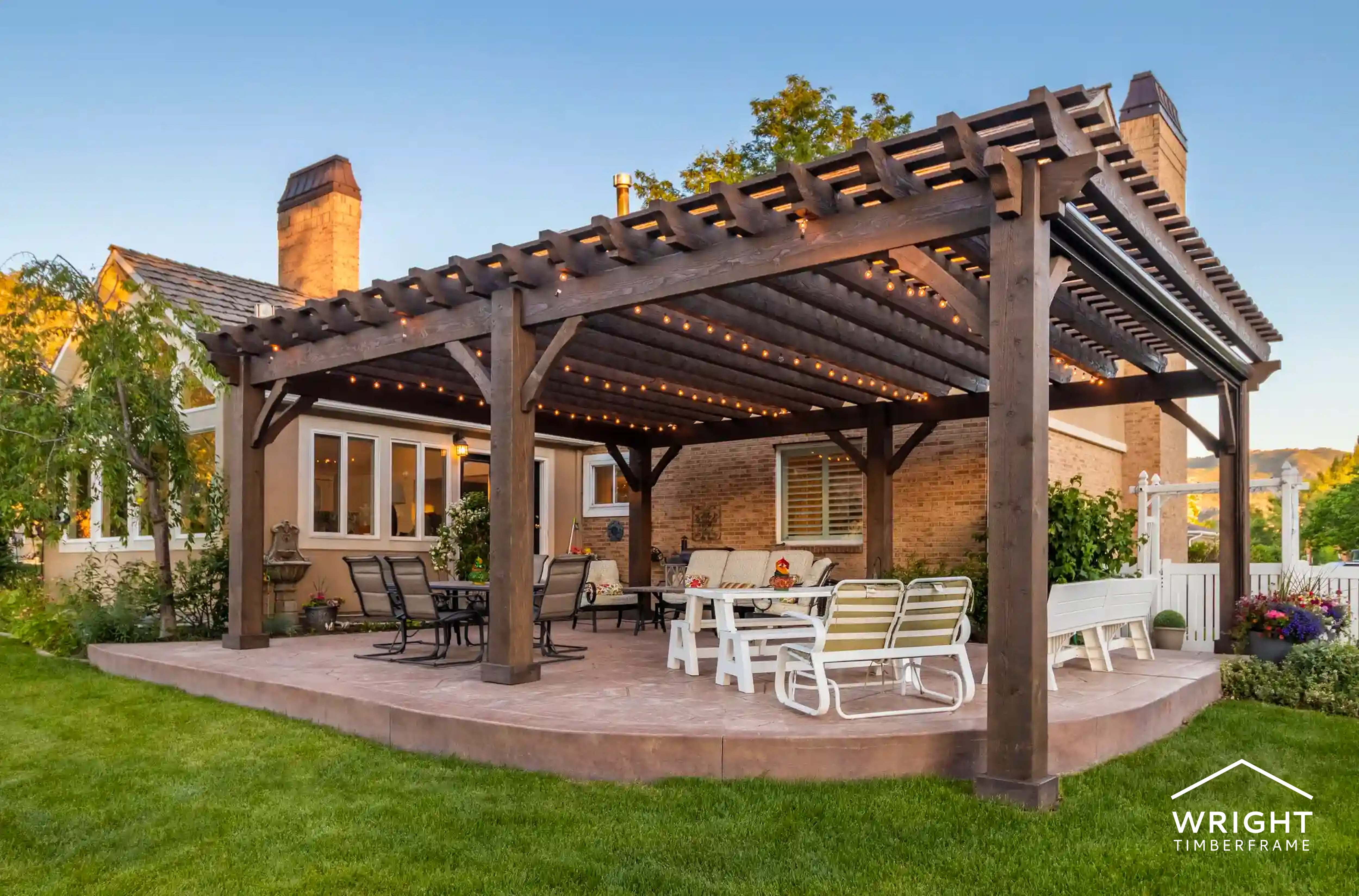
Investing in a timber frame outdoor structure from custom timber frame builders like us offers a wealth of benefits that extend far beyond mere functionality. The natural warmth of wood and the dramatic architectural statements created by our exposed heavy timbers provide an unparalleled aesthetic appeal that instantly lifts any property.
One of the most significant advantages we build into our structures is exceptional strength and longevity. Our timber frames are built to last for generations, resisting the elements and standing firm against the test of time, much like the historic timber frames that have graced landscapes for centuries. We also choose timber because it is a renewable resource, making it a sustainable and environmentally conscious choice.
Beyond durability and beauty, our timber frame pergolas, pavilions, and trellises are expertly designed to create comfortable and inviting outdoor zones. Whether you’re seeking refuge from the Utah sun, a sheltered space for dining, or an elegant transition in your garden, these structures provide effective shade and a defined sense of place. This improvement of your outdoor living experience, combined with the timeless appeal and robust construction, also contributes to a significant increase in your property’s value.
How does a timber frame structure improve your outdoor living?
Our timber frame structures fundamentally transform and improve your outdoor living in several key ways. They represent a long-lasting investment, not just in a physical structure, but in a lifestyle. We design them for minimal maintenance, so you can spend more time enjoying your outdoor space and less time on upkeep. Their inherent durability means your structure will continue to look beautiful and perform its function for decades, requiring only periodic cleaning and perhaps a fresh coat of sealant every few years, depending on exposure.
The beauty of our custom timber frames lies in their ability to be fully customizable to your unique lifestyle. We can design a pavilion perfect for al fresco dining and entertaining, a pergola that offers dappled shade for your poolside oasis, or a trellis that creates a stunning entryway to your garden. Each structure we build adds distinct character and enduring value to your home, creating a focal point that draws you outdoors and encourages connection with nature. For us, it’s about crafting an authentic, distinctive living environment that resonates with your personal taste and improves your daily life.
4. What Styles and Structures Do Custom Timber Frame Builders Specialize In?
When you’re evaluating custom timber frame builders, it’s important to make sure their day-to-day work actually aligns with what you want to build. At Wright Timberframe, we focus our expertise on three outdoor structure types—Custom Wood Pergolas, Timber Frame Pavilions, and Trellises—because we’ve seen how each can transform a property when it’s thoughtfully designed.
Custom wood pergolas
Our Custom Wood Pergolas are ideal when you want to define a space and create shade while still letting in dappled light and air. We regularly design pergolas for:
- Poolside retreats where shade and open airflow are both priorities
- Patio dining areas that feel more intimate and inviting
- Garden paths or seating nooks that need a sense of structure
We adjust the beam spacing, orientation, and overhangs to fine-tune how much shade you get at different times of day. If you’re debating between a one-size-fits-all pergola kit and a custom design, our guide on Custom Pergolas vs Prefab explains how customization affects performance, aesthetics, and long-term satisfaction.
Timber frame pavilions
Our Timber Frame Pavilions provide full roof coverage and a greater sense of enclosure, making them perfect for:
- Outdoor kitchens and dining areas that need shelter from both sun and weather
- Mountain or canyon locations where snow load and wind are real considerations
- Larger gathering spaces for family events or entertaining
Because we’re local timber experts, we design these pavilions with Utah’s climate in mind, from the pitch of the roof to member sizing and joinery details, to help ensure they feel solid and secure year-round.
Trellises and architectural accents
Trellises may be smaller than pergolas and pavilions, but they can have an outsized impact on how your landscape feels. We often design trellises to:
- Create welcoming garden or side-yard entrances
- Support climbing plants in a way that complements your home’s architecture
- Define transitions between spaces, such as from driveway to backyard
Each trellis is sized and detailed to suit its purpose, whether it’s a simple, refined accent or a more substantial feature that visually anchors a garden space.
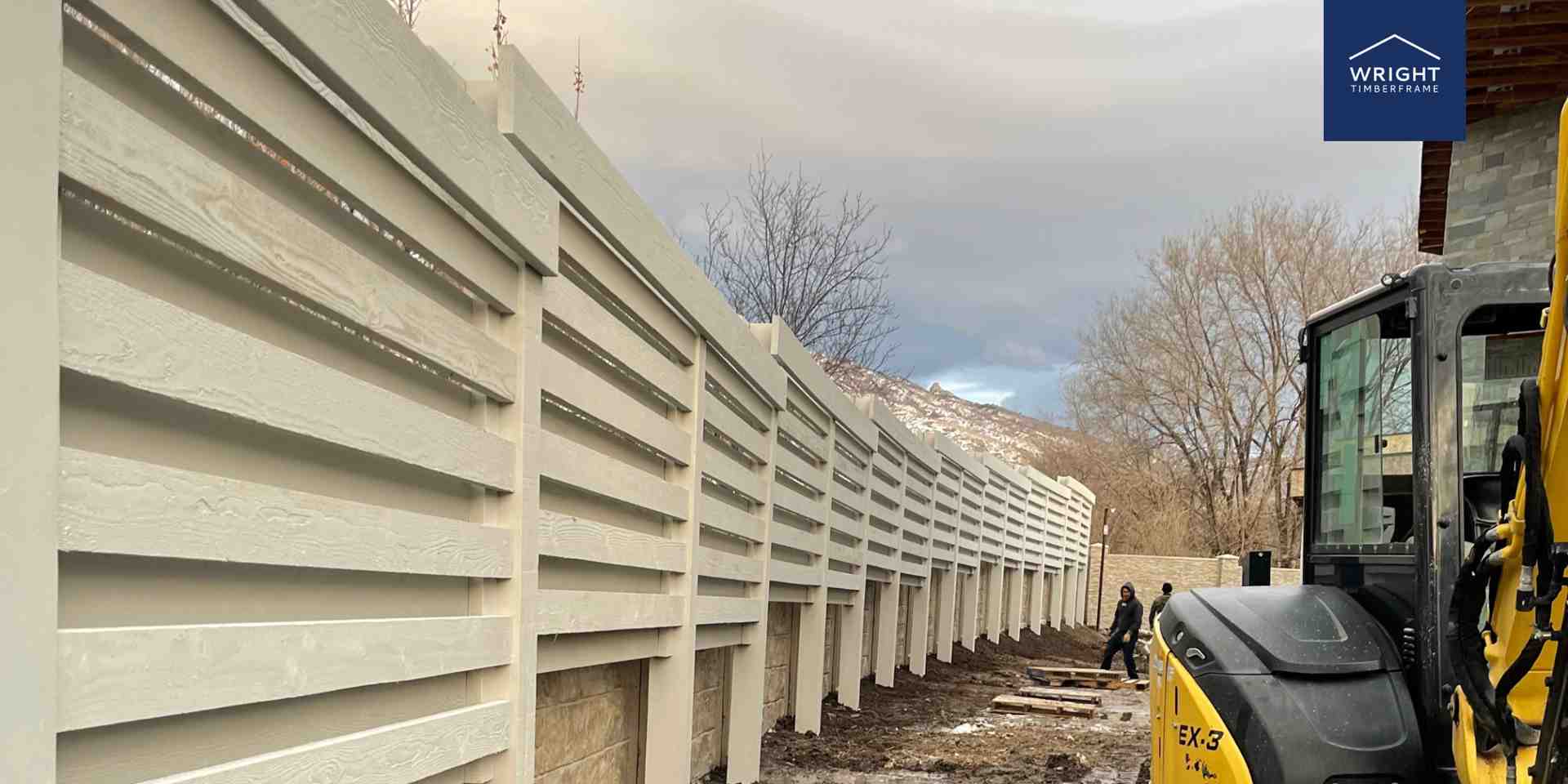
Across all three structure types, we design with your home’s style, the surrounding landscape, and your day-to-day use in mind. That’s what you should expect from custom timber frame builders who specialize in outdoor living, rather than treating these projects as occasional add-ons.
5. How Do Custom Timber Frame Builders Approach a Project?
A clear, predictable process is one of the biggest signs that you’re working with experienced custom timber frame builders. Over time, we’ve refined the way we move from first conversation to final frame so that you always know what’s happening, what’s next, and who is responsible for each step.
Step 1: Discovery and design
We begin with a discovery phase: understanding your goals, your property, your budget, and your timeline. That leads into the collaborative design process described earlier, where we shape a pergola, pavilion, or trellis that truly fits your space.
Step 2: Engineering and detailed planning
Once the concept is approved, our in-house team completes the structural details and prepares precise shop drawings. Every mortise, tenon, dovetail, and peg location is planned so that the frame will fit together perfectly in our shop and on-site.
Step 3: Shop fabrication and quality control
In our workshop, our craftsmen:
- Select and prepare Douglas Fir or Western Red Cedar timbers
- Cut, shape, and finish each member
- Hand-fit and refine traditional joinery
Because all of this happens in a controlled environment, we can maintain tight tolerances and catch any issues before your timber frame leaves our shop.
Step 4: Pre-cut kits and shipping
We pre-cut and pre-fit our frames into kits that we carefully label, package, and ship nationwide. This approach reduces on-site guesswork and dramatically streamlines assembly. For many homeowners working with local contractors, this means:
- Faster installation
- Fewer surprises on site
- A cleaner, more efficient building process
Step 5: On-site assembly and frame raising (for local projects)
For our Utah clients, our team can provide on-site assembly and frame raising. We coordinate with you or your general contractor to confirm:
- Site readiness and foundation or footing locations
- Access for equipment and material staging
During the raising, our crew assembles the pre-cut timbers, fits each joint, and drives the wooden pegs that lock the structure together. This is often the most exciting day of the project, seeing the timber frame come together quickly after all of the planning and shop work.
Afterward, we perform a detailed quality check to confirm alignment, connections, and overall fit. Our goal, as seasoned custom timber frame builders, is to make the entire process—from first idea to finished structure—as clear and smooth as possible, so you can spend more time looking forward to using your new space and less time worrying about how it will get built.
6. Can Custom Timber Frame Builders Share Examples of Their Work?
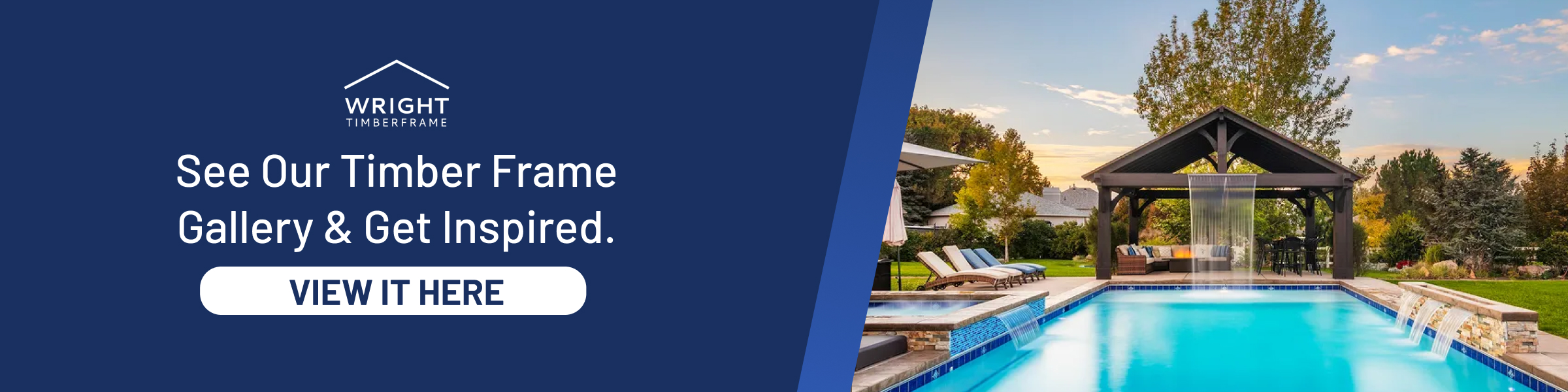
When you’re choosing between custom timber frame builders, seeing real projects, and hearing the story behind them, can be incredibly reassuring. We share a range of projects in our Gallery so you can see how our pergolas, pavilions, and trellises perform in different settings and climates.
Across residential backyards and commercial spaces alike, we consistently hear that our timber frame structures become the most-used and most-loved areas on the property. That feedback guides how we design and build every new project.
7. What Are the Typical Costs and Timelines?
Understanding the investment and timeline is a crucial step when engaging custom timber frame builders. We believe in providing transparent estimates and realistic project schedules from the outset. It’s important to recognize that the cost of a custom timber frame structure is influenced by several factors, reflecting the bespoke nature of the craftsmanship and materials involved.
Key factors influencing cost include the chosen wood species (Douglas Fir and Western Red Cedar are our premium choices), the overall size and complexity of the design, the intricacy of the joinery details, and the desired finish. A simple, elegant pergola will naturally have a different cost profile than a large, elaborate pavilion with custom features.
Regarding timelines, a typical project involves distinct phases. The design and approval phase can take several weeks, depending on the complexity of your vision and the number of revisions. Once the design is finalized, the fabrication period in our workshop typically ranges from a few weeks to a couple of months, where our skilled artisans bring your structure to life.
Finally, there’s the shipping and installation schedule. For our pre-cut kits, shipping time varies by destination, and on-site assembly for both kits and locally installed projects is surprisingly efficient due to our precise pre-fabrication.
How do custom timber frame builders determine the final cost?
When you work with custom timber frame builders like Wright Timberframe, determining the final cost involves a detailed and transparent quote process. We don’t believe in hidden fees or surprises.
First, we conduct a thorough material take-off, carefully calculating the exact quantity and type of premium timber (Douglas Fir or Western Red Cedar) required for your specific design. This includes accounting for joinery details and any special cuts. Next, we estimate the labor for both fabrication in our workshop and, if applicable, on-site installation. Our experienced team’s efficiency means we can provide accurate labor projections.
Finally, we factor in the costs for any specific finishes you choose, as well as packaging and delivery expenses for your pre-cut kit. This comprehensive approach ensures that your detailed quote provides a clear breakdown of all costs, allowing you to understand precisely where your investment is going to create your beautiful and enduring timber frame pergola, pavilion, or trellis.
Frequently Asked Questions about Custom Timber Frame Builders
What is the difference between timber framing and post-and-beam construction?
The main difference is how we connect the timbers. We practice traditional timber framing, using precisely fitted joinery like mortise-and-tenon, secured with wooden pegs, to create a strong, self-supporting frame. Post-and-beam construction, while it can look similar, typically relies more heavily on metal plates and fasteners instead of the traditional wood-to-wood joinery we use.
Are timber frame pergolas and pavilions high-maintenance?
No, our structures are designed for low maintenance. Because we use high-quality Douglas Fir or Western Red Cedar and proper finishes, routine care typically just involves periodic cleaning and reapplying a protective finish every few years, depending on sun and weather exposure.
Can I order a timber frame kit from custom timber frame builders to assemble locally?
Yes. We provide pre-cut, pre-fitted timber frame kits with labeled parts and detailed instructions, so you and your local contractor can assemble the structure efficiently on-site.
What types of wood do you recommend for outdoor timber frame structures?
For outdoor pergolas, pavilions, and trellises, we focus on Douglas Fir and Western Red Cedar because of their strength, stability, and suitability for exposed conditions in a variety of climates.
How long does a custom timber frame project usually take?
Our project timeframes vary with size and complexity. Generally, we plan for several weeks for design and approvals, followed by several more for our shop fabrication and shipping. On-site assembly is usually much faster because we pre-cut and test-fit every frame in our workshop beforehand.
Choosing the Right Custom Timber Frame Builders
Choosing the right custom timber frame builders comes down to more than price or appearance; it’s about partnering with a team that understands how design, materials, joinery, and process all work together to serve your lifestyle. As local timber experts, we focus our craft on outdoor timber frame pergolas, pavilions, and trellises built from Douglas Fir and Western Red Cedar with traditional mortise-and-tenon and dovetail joinery.
When you ask the seven questions we’ve outlined—about design, materials, benefits, specialties, process, examples of past work, and realistic costs and timelines—you gain a clear picture of who is best equipped to bring your project to life. Our goal is always the same: create a structure that feels like it was meant for your property, functions beautifully in your climate, and becomes a space you’re drawn to use every day.
If you’re ready to explore what a custom timber frame pergola, pavilion, or trellis could look like in your yard, contact us. We’re here to walk you through each step and help you make decisions with confidence.