

Why Building a Garden Pergola Transforms Your Outdoor Living Space
Building a garden pergola creates a stunning focal point that adds shade, defines an outdoor space, and increases a property’s value. We’ll guide you through what you need to know to get started.
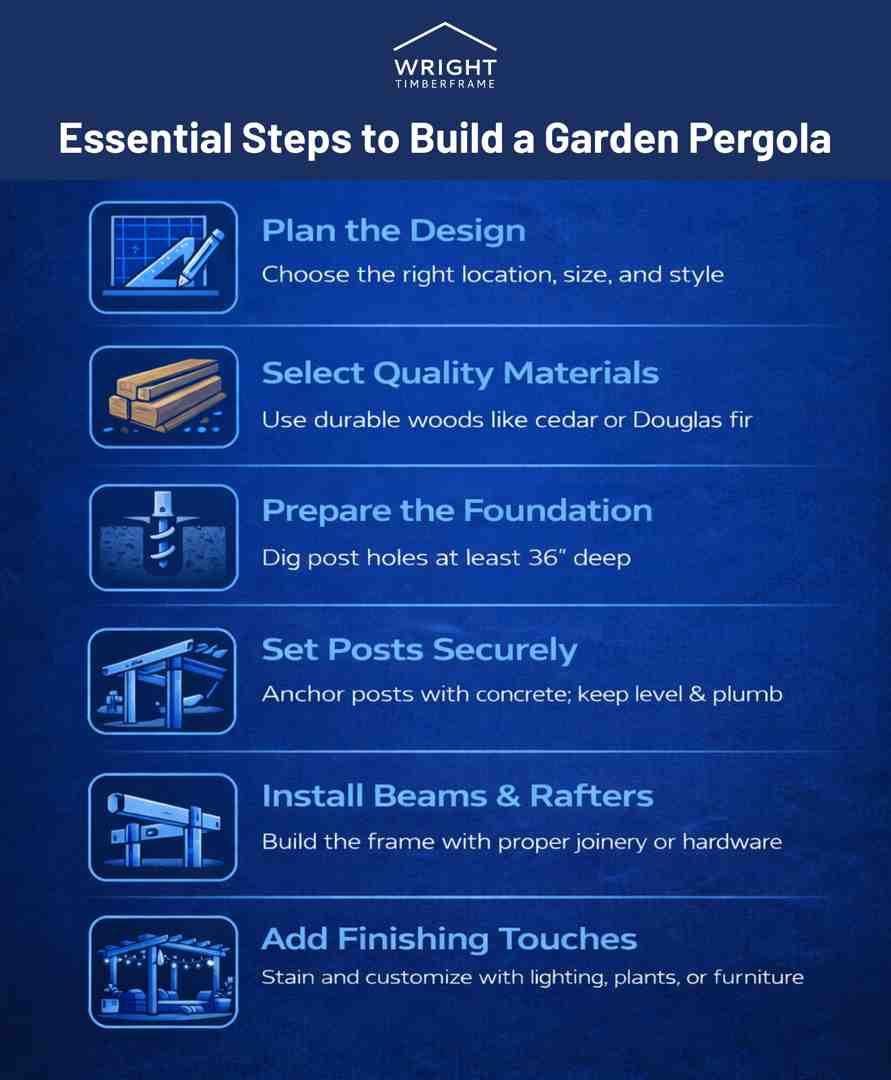
Essential Steps to Build a Garden Pergola:
- Plan the Design: Choose a location, size, and style that complement the landscape.
- Select Quality Materials: Opt for durable woods like Cedar or Douglas Fir.
- Prepare the Foundation: Dig post holes at least 36 inches deep (below the frost line in Utah).
- Set Posts Securely: Use concrete footings and ensure posts are plumb and level.
- Install Beams and Rafters: Create the frame structure with proper joinery or hardware.
- Add Finishing Touches: Apply protective stain and personalize with lighting, plants, or furniture.
A well-built pergola is a worthwhile investment that depends on design, materials, and construction method. DIY builds are achievable for homeowners with basic woodworking skills and can often be completed over a weekend. For those seeking long-term durability and refined craftsmanship, custom timber frame pergolas offer superior strength, appearance, and longevity. Pre-cut pergola kits are also an option, providing easier assembly while still delivering a polished, high-quality result.
Whether creating a shaded retreat for summer gatherings or adding architectural interest to a backyard, a garden pergola serves as both a practical structure and a beautiful statement piece. We believe the key is starting with solid planning and choosing materials that will stand up to the local climate.
At Wright Timberframe, we’ve been building custom timber structures for over 10 years, and we use traditional mortise-and-tenon joinery to ensure each project lasts for generations. Our passion for quality craftsmanship and doing things right guides every pergola we create.
Planning Your Pergola: From Vision to Materials

Careful planning is the foundation of a successful project. We’ll walk you through the essential decisions that set a pergola up for years of enjoyment.
Designing Your Ideal Garden Pergola
Before we start building a garden pergola, we establish a clear vision. We consider the purpose of the pergola; will it be a quiet reading nook or a vibrant entertainment area? This guides our decisions on size and shape. Location is key, so we observe sun exposure throughout the day to maximize shade where it’s needed most.
We think about how the pergola will integrate with the existing landscape. Will it be a freestanding structure, or will it be attached to the home? We also assess privacy needs, which can influence placement and design.
Finally, we explore different design styles, from rustic and traditional to sleek and modern, to ensure the pergola complements the home’s aesthetic. A simple sketch helps bring clarity to the layout and visualize the finished product.
Selecting Materials and Gathering Tools
Choosing the right materials is crucial for the longevity and beauty of a pergola, especially given Utah’s climate. We recommend premium woods like Cedar and Douglas Fir for their proven performance.
| Wood Type | Durability | Maintenance | Appearance |
|---|---|---|---|
| Cedar | Naturally resistant to rot, decay, and insects. | Low; weathers beautifully to a silver-gray. | Rich reddish-brown, distinct aroma, fine grain. |
| Douglas Fir | Strong and stable; good resistance to decay (if treated). | Requires sealing/staining for optimal longevity. | Warm, light color with a prominent grain pattern. |
For DIY enthusiasts, pressure-treated lumber is a common and cost-effective material. However, for a truly lasting structure, we favor the strength and beauty of natural timbers.
Gathering tools beforehand makes the building process smoother. Here’s our list of essentials:
- Circular Saw: For cutting lumber to length.
- Miter Saw: For precise angle cuts.
- Cordless Drill and Impact Driver: For drilling pilot holes and driving screws.
- Level (long and post level): Crucial for ensuring everything is plumb and straight.
- Post Hole Digger and Shovel: For excavating post holes.
- Measuring Tape: For accurate measurements.
- Wheelbarrow: For mixing concrete or moving gravel.
- Masonry Line and Line Level: For aligning posts.
- 5/8″ Auger Drill Bit: For boring through posts and beams for bolts.
We never forget essential safety gear: gloves, safety glasses, and a sturdy ladder. We also highly recommend having a helper or two, as some components can be heavy and awkward to manage alone.
Step-by-Step Guide: Building a Garden Pergola with Confidence
With the plan and materials ready, it’s time for us to bring the vision to life. We follow these steps for a pergola that’s both beautiful and built to last.
Step 1: Preparing the Site and Setting Posts
A strong foundation is paramount for any outdoor structure. First, we clear and level the area where the pergola will stand. We use stakes and string to mark the footprint and precisely locate where each post will go. Then, we call 811 to have underground utilities marked before we dig.
Next, we dig the post holes. In Utah, we need to ensure these are at least 36 inches deep to extend below the frost line. This prevents ground heaving from shifting the pergola over time.
The holes should be wide enough to accommodate the posts and concrete footings. Once dug, we pour a few inches of gravel into each hole for drainage and stability.
Now, it’s time to set the posts. We hoist each post into its hole, ensuring it is perfectly plumb and level on all sides. We use temporary bracing (like 1x4s or 2x4s staked into the ground) to hold the posts steady.
Finally, we fill the holes with concrete, working to eliminate air pockets, and allow it to cure completely, typically for at least 24 hours, before proceeding.
Step 2: Assembling the Timber Frame Structure
Once the posts are securely set, we begin to build the framework that defines the pergola. This is where the artistry of timber framing truly shines. We attach the main horizontal beams to the tops of the posts.
For maximum stability and a timeless aesthetic, we use traditional mortise and tenon joinery. This is where one piece of timber fits precisely into a corresponding cutout in another, creating a strong, interlocking connection without relying solely on metal fasteners. If we opt for decorative hardware, we ensure it’s rated for outdoor use and compatible with the chosen wood.
Next, we install the rafters. These run perpendicular to the main beams, forming the open roof structure characteristic of a pergola. We ensure they are evenly spaced for both visual appeal and consistent shade. We secure them to the beams with screws or by notching them to fit snugly.
Finally, we consider adding corner braces. These diagonal supports, typically installed between posts and beams, not only improve structural integrity but also add a classic, finished look to the pergola.
Step 3: Finishing and Customizing Your Pergola
With the structure complete, it’s time for the finishing touches that transform the pergola into a personalized outdoor oasis. To protect the investment and improve its natural beauty, we highly recommend staining or sealing the wood. This protects against Utah’s harsh sun and varying weather conditions, preventing moisture damage and UV degradation.
Regular maintenance is key to ensuring a pergola lasts for generations. We inspect it annually for any loose screws or signs of wear. We clean the wood periodically with a mild detergent and water, and reapply stain or sealant every few years as needed. We also trim any climbing plants or nearby vegetation that might put stress on the structure and check for pests.
Now for the fun part: customization! We love to personalize the space with:
- Lighting: String lights, Edison bulbs, or even a small outdoor chandelier can create a magical ambiance for evening gatherings.
- Shade Solutions: While pergolas offer dappled shade, you can add more protection with lattice panels, retractable canopies, or outdoor curtains.
- Furniture & Decor: Outfit the pergola with comfortable seating, outdoor rugs, and decorative pillows to create an inviting living space.
- Plants & Landscaping: Encourage climbing plants like wisteria or jasmine to grow over the rafters, providing natural shade and fragrance. You can also incorporate potted plants and thoughtful landscaping to seamlessly integrate the pergola into the garden.

Frequently Asked Questions about Building a Garden Pergola
Do I need a permit to build a pergola in Utah?
Permit requirements vary by city and the pergola’s size. We always recommend checking with your local building department in Murray, UT, or your specific municipality before starting your project.
What wood is best for a pergola in Utah’s climate?
We recommend Cedar or Douglas Fir for their durability and resistance to Utah’s dry conditions and temperature swings. These timbers hold up well against the elements.
How deep should I dig pergola post holes in Utah?
In Utah, we dig post holes at least 36 inches deep. This depth extends below the frost line and prevents shifting, ensuring the pergola remains stable through seasonal changes.
Building a Garden Pergola for Lasting Enjoyment
We believe building a garden pergola is a rewarding way to improve an outdoor living space. It’s a project that combines practicality with aesthetic appeal, creating a versatile area for relaxation, entertainment, and enhancing a home’s value. Whether we are creating a custom design handcrafted with traditional joinery or using a convenient DIY Pergola Kit for easier assembly, our expertise ensures the project is both beautiful and enduring.
At Wright Timberframe, we’re here to help create a stunning garden feature that brings family and friends together for years to come. Contact us to start your project today!

