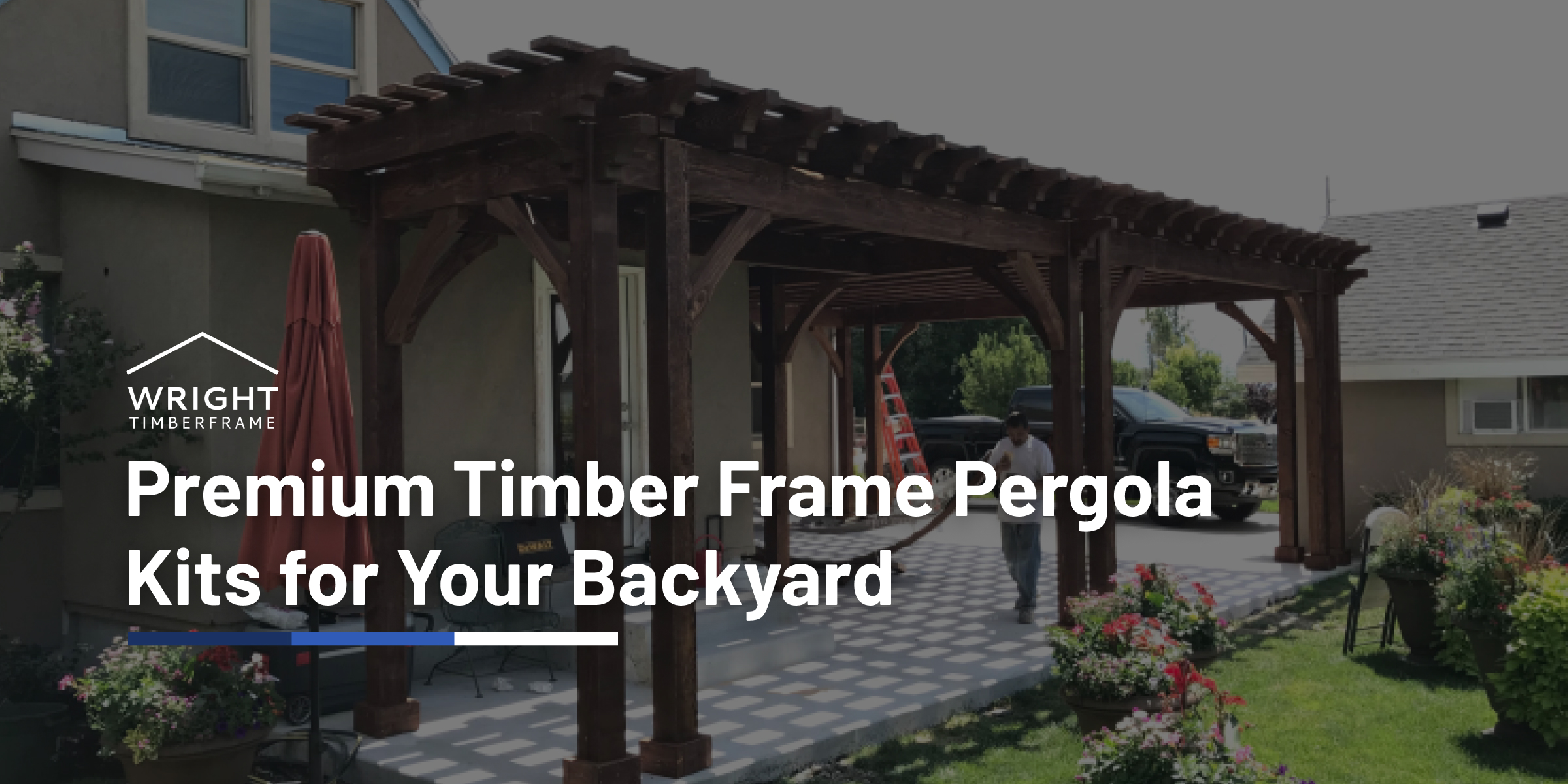

Why Your Timber Choice Makes or Breaks Your Pergola
Choosing the right timber for building apergola is the difference between enjoying a beautiful backyard retreat for decades and facing costly repairs in a few years. The wrong wood can warp, crack, or rot, while the right choice delivers lasting beauty and structural integrity with minimal maintenance. According to the U.S. Forest Products Laboratory, outdoor wood structures exposed to moisture can lose up to 50% of their service life without proper material choice and maintenance
Best Timber Options for Building a Pergola:
- Western Red Cedar – Naturally rot-resistant, dimensionally stable, beautiful reddish-brown color, lightweight and easy to work with.
- Douglas Fir – Exceptional strength for long spans, cost-effective, beautiful grain, ideal for larger structures.
- Pressure-Treated Pine – A budget option prone to warping and cracking; requires frequent maintenance and is not recommended for quality builds.
Key Decision Factors:
- Climate – Coastal areas need rot-resistant woods like Cedar; dry climates require UV-resistant finishes.
- Durability – Premium softwoods can last 25-50 years, compared to 10-15 years for treated pine.
- Maintenance – Cedar and Douglas Fir need sealing every 2-3 years; treated pine requires more frequent care.
- Cost – Cedar is premium priced, Douglas Fir offers strength at a better value, and treated pine is cheapest upfront but costlier long-term.
At Wright Timberframe, our experience building custom timber structures across Utah has taught us which timbers stand up to our demanding climate. We exclusively use premium Douglas Fir and Western Red Cedar because, combined with traditional mortise-and-tenon joinery, they create pergolas that become family heirlooms, not maintenance headaches.
Timber for Building a Pergola: Hardwood vs. Softwood
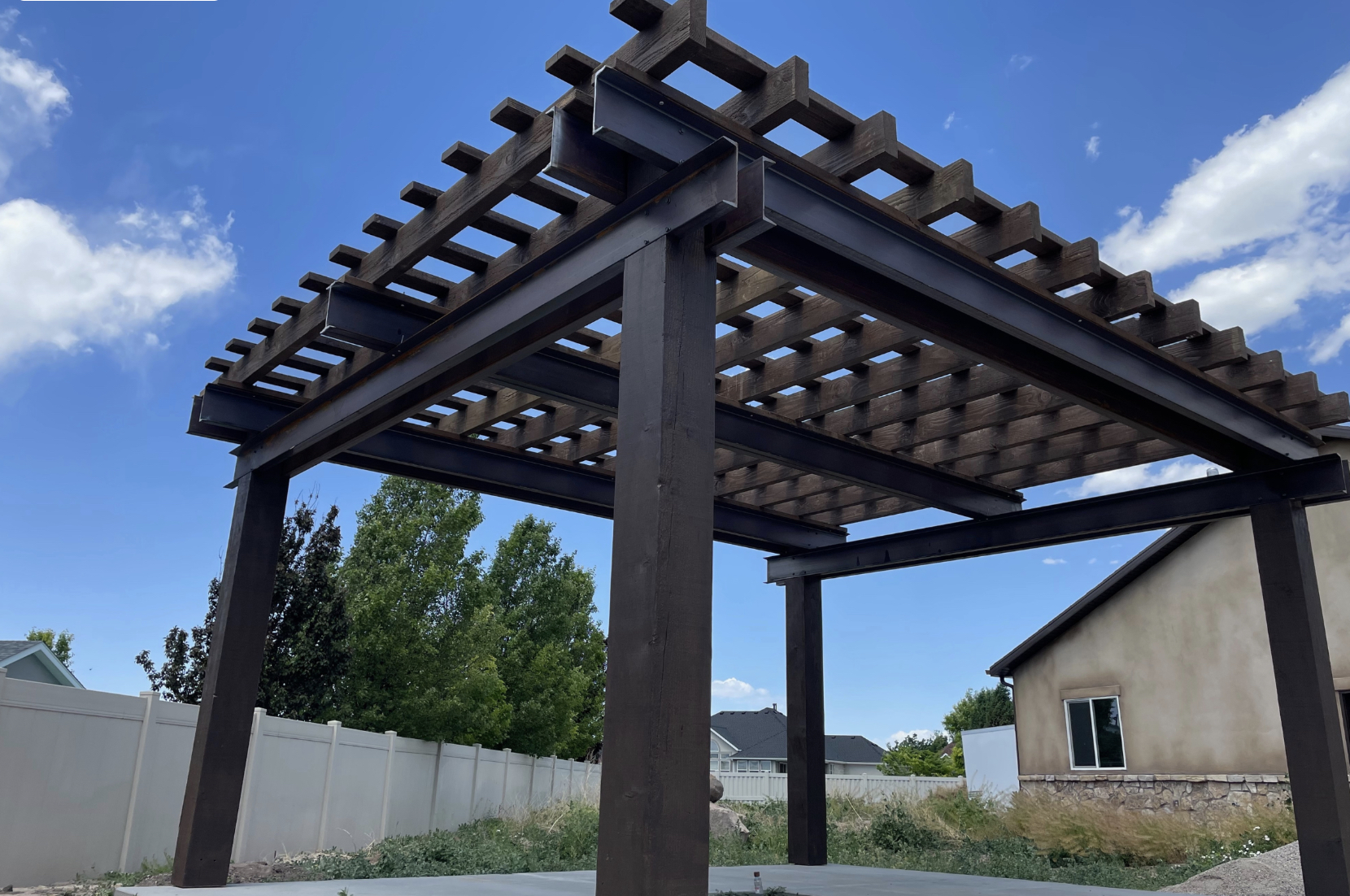
When choosing timber for building a pergola, many people debate hardwood vs. softwood. Surprisingly, premium softwoods often outperform hardwoods for outdoor structures. Through years of building in Utah’s challenging climate, we at Wright Timberframe have found that the right softwoods deliver superior performance, beauty, and value.
The difference isn’t about hardness but the tree type: hardwoods are from deciduous trees, and softwoods from conifers. For pergolas, what matters most is how the timber performs against sun, rain, and snow over time. While exotic hardwoods like ipe exist, they are often impractical for pergolas. They are significantly more expensive, heavy, difficult to source sustainably, and frequently overkill for what a well-designed structure requires.
This is where Western Red Cedar and Douglas Fir excel, hitting the sweet spot of performance, beauty, and value. These premium softwoods are naturally equipped with properties that make them exceptional for outdoor structures.
| Feature | Western Red Cedar | Douglas Fir |
|---|---|---|
| Cost | Premium | Value (more affordable than Cedar for comparable strength) |
| Durability | Excellent natural resistance to rot/insects | Excellent strength, good natural resistance |
| Maintenance | Low (sealing every 2-3 years) | Low (sealing every 2-3 years) |
| Aesthetics | Rich reddish-brown, fine grain, can weather silvery-gray | Warm, straight grain, strong character |
| Workability | Lightweight, easy to cut and shape | Heavier, strong, requires precise joinery |
Why Premium Softwoods Lead the Way
Don’t let the name fool you. Premium softwoods like Western Red Cedar and Douglas Fir are nature’s ideal pergola material.
Cedar’s natural oils and resins act as a built-in preservative, protecting the wood from moisture, decay, and insects without chemicals. The Canadian Wood Councilconfirms that Western Red Cedar contains natural compounds called thujaplicins and phenolics that inhibit fungal decay and resist insect attack
Douglas Fir delivers an impressive strength-to-weight ratio, allowing for dramatic spans and open designs without bulky beams, which is essential for supporting snow loads. Both are more cost-effective than exotic hardwoods and accept the precise Timber Framing joinery that sets our pergolas apart. We use these proven performers in all our Pergolas because they deliver real-world results in Utah’s demanding weather.
The Truth About Pressure-Treated Pine
You’ll see pressure-treated pine at big-box stores, advertised for its low price. This wood is softwood infused with chemical preservatives to resist rot and insects. While budget-friendly upfront, it has significant drawbacks.
Pressure-treated wood often warps and twists as it dries, creating an uneven appearance and compromising joints. It’s also prone to checking and cracking, which allows moisture to penetrate. The greenish chemical tint is unappealing, and staining is difficult, often requiring months of drying time first. Its typical lifespan of 10-15 years is a fraction of the 25-50 years you can expect from cedar or Douglas Fir.
When you factor in frequent maintenance and a shorter lifespan, the initial savings disappear. That’s why we don’t use it for our Timber Frame Pergolas; we build structures meant to last for decades.
Top Timber Choices for Building a Pergola
The best timber for building a pergola depends on your goals for beauty, budget, and longevity. Our experience building across Utah’s diverse climates has shown us which timbers perform and which disappoint. We’ve narrowed our selection to two exceptional choices that consistently deliver outstanding results: Western Red Cedar and Douglas Fir.
Western Red Cedar: The Gold Standard
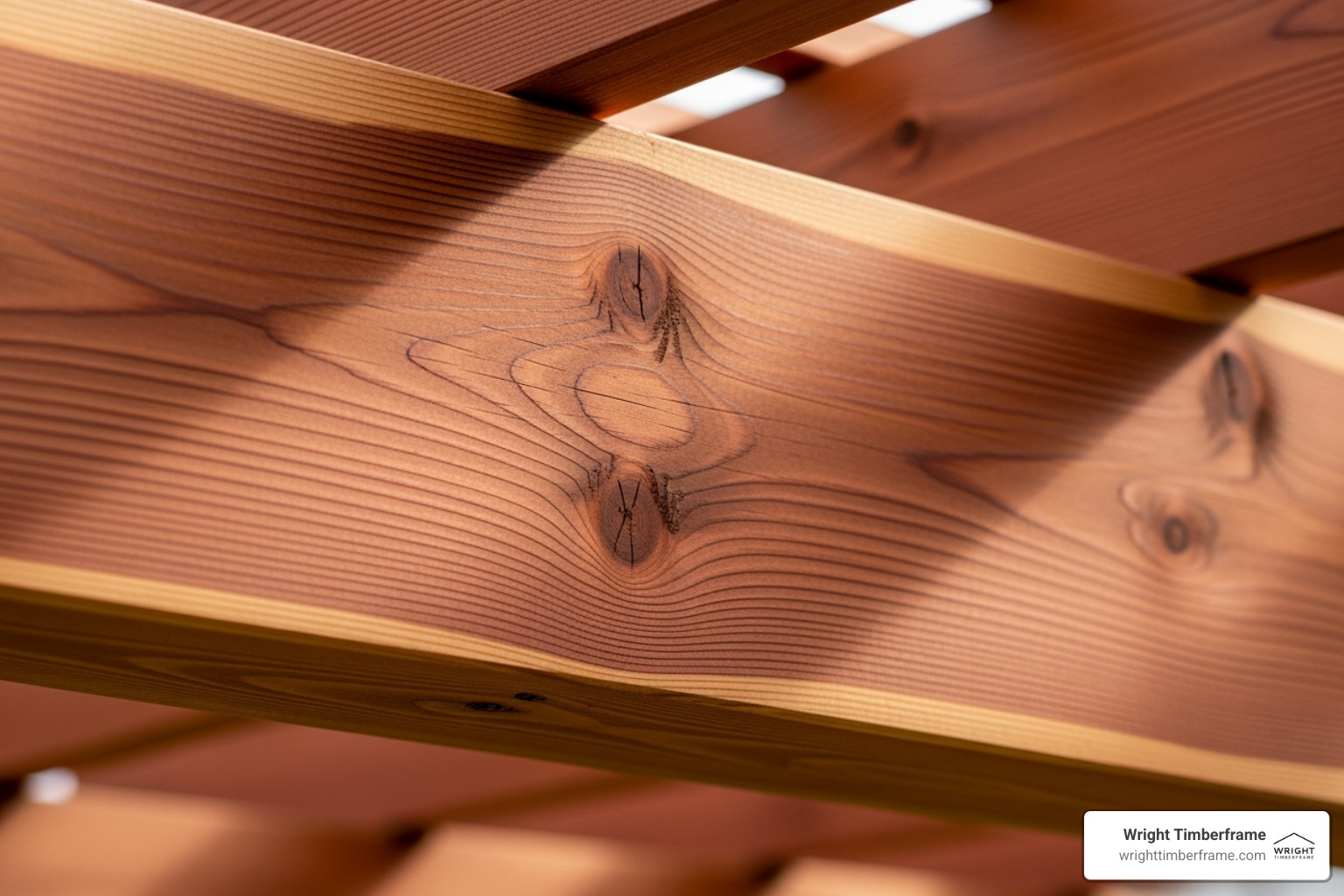
Western Red Cedar is the premier choice for pergola timber. It’s known for its natural beauty, with warm reddish-brown tones that can be sealed or left to weather to a distinguished silvery-gray patina. Its key advantage is dimensional stability; it resists the warping and twisting that plague lesser woods.
Cedar’s longevity comes from its natural oils, which create inherent resistance to rot, decay, and insects without chemical treatments. This makes it perfect for structures like Garden Pergolas. Cedar is also lightweight yet strong, making it easier to work with during construction. We source sustainably harvested Western Red Cedar, ensuring our projects are both beautiful and responsible.
Douglas Fir: Strength and Character
When a project demands exceptional strength and longer spans, we turn to Douglas Fir. This workhorse timber supports substantial loads, making it ideal for large pergolas or pavilions with impressive open spaces. Douglas Fir has one of the highest strength-to-weight ratios among softwoods, with an average bending strength of 12,400 psi and compressive strength of 7,230 psi.
It’s also more cost-effective than Cedar for its strength, making it a great value for larger structures or those in areas with heavy snow loads. Like all timbers, it can experience surface cracks or “checking” as it dries. We minimize this by using free-of-heart-center timber, which is cut from outside the tree’s core to reduce twisting and warping.
This method ensures a more stable and aesthetically pleasing finish, as explained in our guide on Understanding Cracks in the Timber.
Key Factors When Choosing Timber for Building a Pergola
Beyond wood species, several key factors guide your choice of timber for building a pergola, ensuring your structure is beautiful, strong, and easy to maintain for decades.
Timber for Building a Pergola in Your Climate
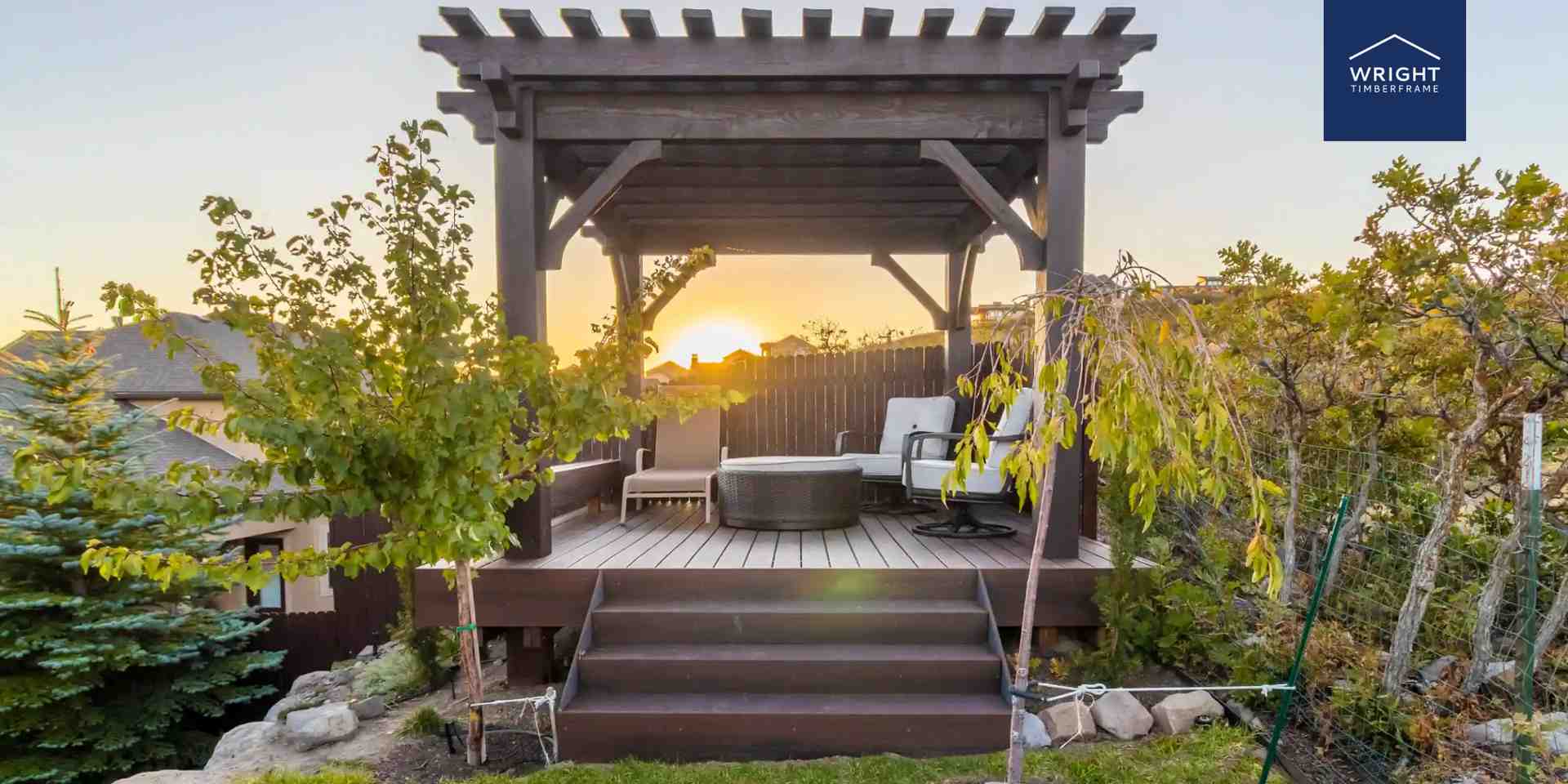
Your local climate is the most influential factor. In coastal or humid regions, timber needs to resist moisture and rot. Western Red Cedar excels here due to its natural oils. In dry, arid climates like Utah, UV radiation is the main threat. Both Cedar and Douglas Fir perform well but require UV-inhibiting sealants to prevent cracking and fading.
For regions with heavy snowfall, structural strength is paramount. Douglas Fir, with its superior strength-to-weight ratio, is our top choice for supporting heavy snow loads, a common need for our projects across Utah’s mountains. Our Traditional Timber Frame Joinery further ensures these structures stand strong in any weather.
Durability, Lifespan, and Maintenance
The investment in quality timber pays off in longevity. A pergola built with premium Douglas Fir or Western Red Cedar can last 25-50 years with proper care, while a pressure-treated pine structure typically fails in 10-15 years. Maintenance for our premium timbers is surprisingly modest: simply clean and reseal every 2-3 years with a breathable penetrating oil finish.
This protects against UV damage and moisture. Our use of traditional mortise-and-tenon and dovetail joints also improves durability, creating strong connections that allow the wood to expand and contract naturally without compromising structural integrity.
Aesthetics, Finishing, and Final Touches
The visual impact of your pergola is just as important as its structure. Western Red Cedar offers a refined, reddish-brown tone, while Douglas Fir provides a robust, classic look with a more pronounced grain. Both can be stained or left to weather to a beautiful silvery-gray.
You can also choose between dressed (smooth) or rough-sawn (rustic) lumber to match your desired aesthetic. Cedar and Douglas Fir accept stains and sealants readily, unlike pressure-treated pine, which requires a long drying period. We recommend high-quality, penetrating oil-based finishes with UV inhibitors to protect the timber and improve its natural beauty. These details, from stain color to design, are showcased in our Pergola Kits and custom projects.
Bringing Your Pergola Vision to Life: Custom Design vs. Pergola Kits
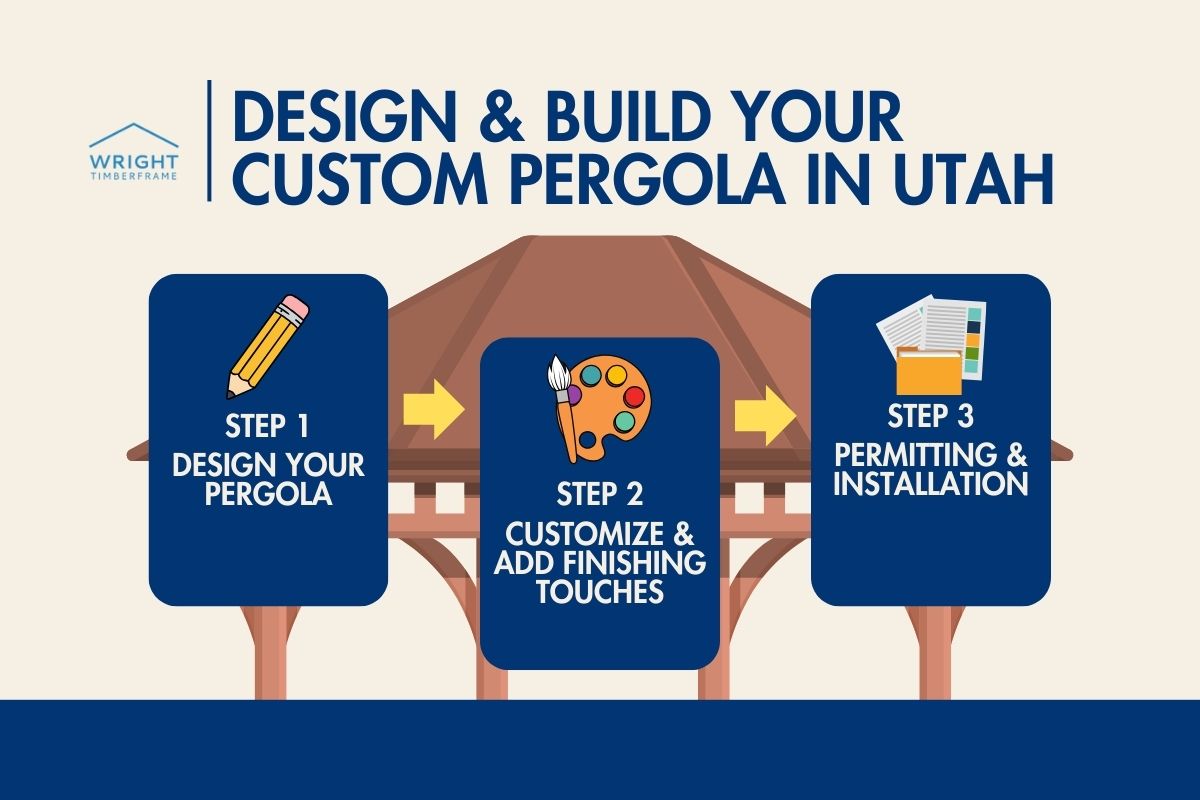
Once you understand the best timber for building a pergola, the next step is choosing between a custom design and a pre-cut kit. At Wright Timberframe, both paths use our premium Douglas Fir or Western Red Cedar and traditional joinery. The choice isn’t about quality but what best fits your project’s needs, timeline, and space.
You can explore this further in our guide, Why Choose a Custom Pergola Over Pre-Fabricated Options.
The Artistry of a Custom Build
A custom pergola is functional art, designed specifically for your space. This path is ideal for irregular layouts, integration with existing architecture, or complex designs with features like built-in seating. Our team hand-cuts traditional mortise-and-tenon and dovetail joints, which are celebrated as beautiful architectural details.
A custom build becomes a one-of-a-kind feature that improves your home’s value and reflects your personal style. Our Custom Pergola Utah: Ultimate Guide showcases the endless possibilities of custom design.
The Convenience of a High-Quality Kit
For those who want timber frame quality without a fully custom timeline, our kits are an exceptional solution. These are not flimsy, mass-produced options. Every timber arrives precisely pre-cut, pre-drilled, and test-fitted in our shop before being numbered and shipped with detailed instructions.
This simplifies assembly, allowing a project to be completed in days instead of weeks. The quality is uncompromising: our kits use the same high quality Douglas Fir and traditional joinery as our custom builds. You get a genuine Wright Timberframe structure with the convenience of a streamlined process. You can find more info about our pergola kits on our website.
Frequently Asked Questions about Timber for Building a Pergola
You’ve learned about premium softwoods, climate considerations, and finishing options, but we know you might still have some practical questions about choosing timber for building a pergola. Here are the answers to the most common questions our clients ask when planning their outdoor projects.
What is the best timber for building a pergola?
Western Red Cedar and Douglas Fir are the best choices, offering exceptional strength, natural beauty, and resistance to decay. Cedar provides dimensional stability and a rich color, while Douglas Fir delivers superior strength for longer spans and larger structures.
How does climate affect timber selection for pergolas?
Climate is a crucial factor. In humid or coastal areas, Western Red Cedar’s natural rot resistance is ideal, while in regions with heavy snowfall, Douglas Fir’s superior strength is essential for supporting winter loads.
How often should I maintain my pergola timber?
Premium timbers like Cedar and Douglas Fir require surprisingly low maintenance. We recommend a simple cleaning and resealing with a penetrating oil finish every 2-3 years to protect the wood from UV damage and moisture, preserving its beauty for decades.
Is pressure-treated pine a good choice for pergolas?
We don’t recommend pressure-treated pine for quality pergolas. While cheap upfront, it’s prone to warping, twisting, and cracking, and its shorter lifespan makes it a poor long-term investment.
Should I choose dressed or rough lumber for my pergola?
This is an aesthetic choice based on your personal style. Dressed lumber provides a smooth, refined surface for a polished, contemporary look, while rough-sawn lumber offers a rustic, textured character for a more traditional appearance.
Your Ultimate Guide to Timber for Building a Pergola
Choosing the right timber for building a pergola is an investment in your home’s beauty, your property’s value, and years of outdoor enjoyment. As we’ve explored, your timber choice impacts everything from structural integrity and maintenance to the final look of your outdoor space.
At Wright Timberframe, our experience building in Utah has proven that premium Douglas Fir and Western Red Cedar are the superior choices. When paired with traditional mortise-and-tenon joinery, these timbers create pergolas that become cherished family heirlooms.
Key Takeaways for Your Pergola Project:
- Western Red Cedar: Offers the best natural resistance to rot and insects, making it ideal for humid or coastal environments.
- Douglas Fir: Provides exceptional strength for longer spans and larger structures, perfect for handling Utah’s snow loads.
- Longevity: Both timbers last 25-50 years with simple maintenance (sealing every 2-3 years), far outperforming pressure-treated pine’s 10-15 year lifespan.
Our local expertise ensures your structure is engineered for Utah’s unique climate challenges. Every pergola we build, whether a fully custom design or one of our precision-cut kits, reflects our commitment to quality that lasts. Your backyard deserves a handcrafted timber frame pergola built with materials and techniques proven over centuries.
Ready to transform your outdoor space into a lasting retreat? Explore our gallery of Pergolas to see the difference that expert craftsmanship and the right timber selection can make. Whether you’re dreaming of a custom design or prefer the convenience of our premium kits, we’re here to help you create an outdoor living space that brings joy for decades to come. Call us!