
Why a Pavilion Attached to House Creates the Perfect Outdoor Extension
A pavilionattached to house transforms how you experience your outdoor space by creating a true extension of your home. Imagine stepping out your back door directly into a sheltered outdoor oasis, where gatherings can flow naturally from your kitchen or living room. It’s a seamless transition that fundamentally changes how you live.
Unlike a freestanding structure, an attached pavilion becomes part of your home’s architecture. This offers key benefits:
- Seamless Indoor-Outdoor Flow: Direct access from your home makes entertaining and daily use effortless.
- All-Weather Protection: A solid roof provides shelter from sun and rain, extending your outdoor season.
- Space Efficiency: By sharing a wall with your home, it requires fewer support posts, maximizing usable yard space.
- Cost Savings: Fewer materials and shared structural support can make it more affordable than a freestanding version.
An attached pavilion is more than just shade and shelter; it’s a dedicated outdoor room for making memories, from quiet morning coffees to lively summer barbecues. It’s where the comfort of home meets the beauty of nature, just a few steps from your door.
Astimber frame experts in Utah, we’ve seen how a well-designed attached pavilion improves a home. We use traditional mortise-and-tenon joinery to ensure every structure we craft will stand strong for generations. In this guide, we’ll walk you through everything you need to know to design the perfect attached pavilion for your home.
The Benefits of a Seamless Connection
Choosing to build a pavilion attached to house brings compelling benefits that lift your outdoor living experience. It’s about blurring the lines between indoor comfort and the natural beauty of your surroundings.
The seamless indoor-outdoor flow is the primary advantage. Opening your back door to a shaded, comfortable space makes it incredibly easy to move from your kitchen to an outdoor dining area. This direct access improves usability, encouraging you to spend more time outdoors.
Beyond convenience, an attached pavilion provides reliable all-weather protection. Its solid roof shields you from harsh sun, rain, and even light snow, turning a simple patio into a functional outdoor room you can enjoy for more of the year.
An attached pavilion also maximizes your backyard space. By sharing one wall with your home, it requires fewer support posts than a freestanding structure. This creates a less obstructed view and more open square footage for furniture and entertaining, which is especially beneficial in smaller yards. The reduced number of posts often translates to cost savings, as fewer materials are needed.
Finally, a thoughtfully designed attached pavilion improves your home’s architectural appeal and can increase property value. When it complements your home’s existing style, it looks like an intentional, high-end extension, signaling to potential buyers that your home offers expanded, versatile living space. Creating dedicated Outdoor Living Space connected to your home is one of the best investments you can make in your lifestyle and property.
Attached vs. Freestanding: What’s the Difference?
While both attached and freestanding pavilions create wonderful outdoor spaces, their connection to your home is the key difference.
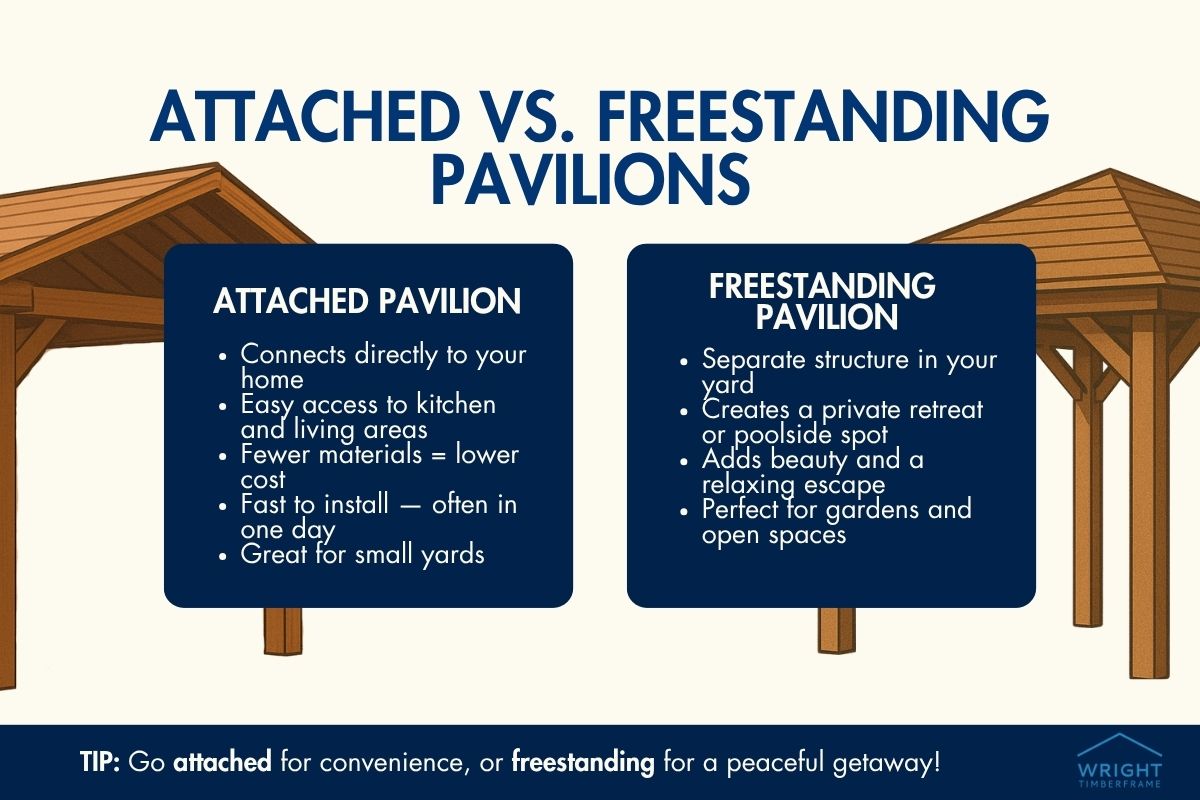
A freestanding pavilion is an independent structure that acts as a destination in your yard, a focal point by a pool or in a garden. It creates a sense of escape, a separate retreat from the main house.
In contrast, a pavilion attached to house extends your home’s footprint. It connects directly to an exterior wall, becoming an integral part of your home’s architecture. This offers unparalleled convenience. Imagine a family dining under an attached pavilion during a light rain shower, with easy access to the kitchen just steps away.
Functionally, this attachment makes a huge difference. Attached structures often cost less because they require fewer posts and beams. This not only saves on material costs but can also simplify installation. Many of our attached kits can be installed in as little as one afternoon, depending on the crew size.
Attached kits also maximize your usable area. They don’t require the same surrounding clearance as a freestanding structure, making them an ideal solution for homeowners looking to expand their living area without consuming too much of their yard.
Design and Placement: Integrating Your Attached Pavilion
When you decide to build a pavilion attached to house, you’re extending your home’s personality into the outdoors. Thoughtful design is essential to ensure your pavilion feels like it was always meant to be there, growing naturally from your home’s original architecture. The goal is a cohesive whole, where every detail, from the roofline to the foundation, works in harmony.
Key Considerations for a Pavilion Attached to a House
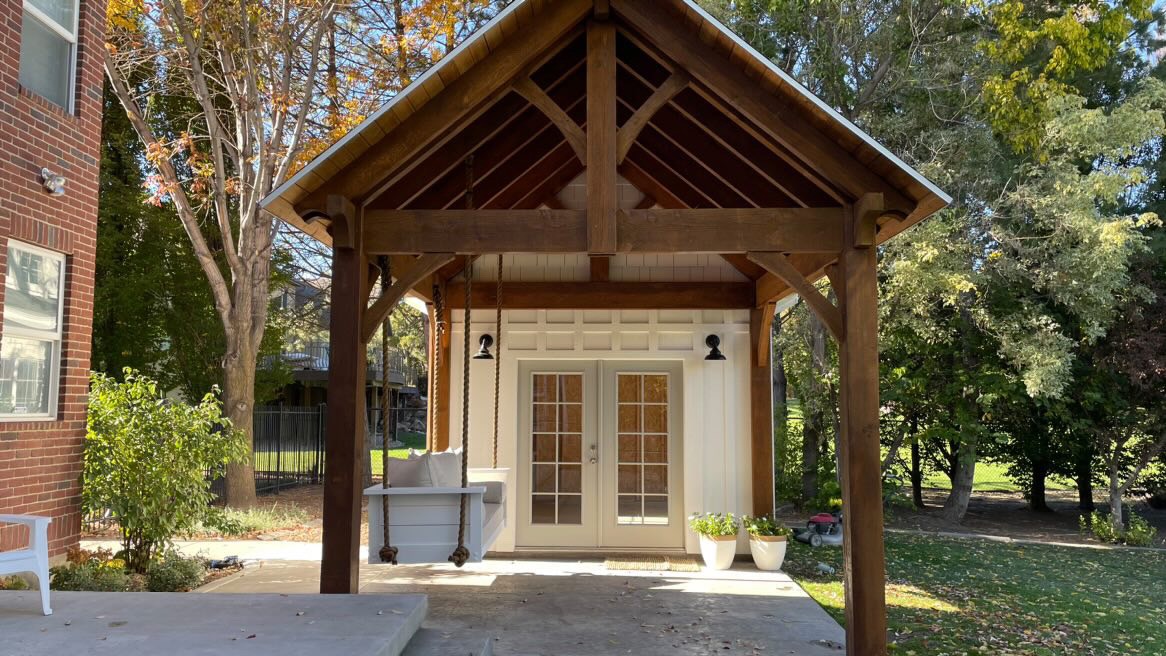
Successful design begins with architectural harmony. Your new outdoor space should speak the same visual language as your home. A modern home with clean lines calls for a pavilion with similar simplicity, while a craftsman-style house should be complemented by a pavilion that echoes its character.
This integration goes beyond general aesthetics. We focus on aligning roof pitches so the new structure flows naturally from the existing one. Siding and trim continuity is also key; carrying these details into the pavilion design creates a seamless transition. Scale and proportion are equally important. The pavilion should feel substantial and useful without overpowering your home. It’s about finding the sweet spot that maintains a pleasing balance.
Beyond looks, environmental factors shape how your pavilion functions. We study sun and wind exposure to position your structure for maximum comfort. In Utah, understanding seasonal sun angles helps us place your pavilion to avoid the harsh afternoon sun during peak entertaining hours. We also consider prevailing winds to prevent a wind-tunnel effect, ensuring a comfortable space.
Finally, we are careful about preserving key views from inside your home. A pavilion should frame beautiful vistas, not block them. Strategic placement and height ensure your new outdoor room improves your connection to the outdoors, rather than obstructing the mountain view from your kitchen window.
For more guidance on creating outdoor spaces that improve your Utah property, explore our article on how to Design the Perfect Outdoor Living Space: Timber Frame Pavilions for Utah Backyards.
Common Challenges and Structural Solutions
Building a pavilion attached to house presents unique structural challenges that demand experienced craftsmanship. These aren’t obstacles, but realities that require careful planning and the right techniques.
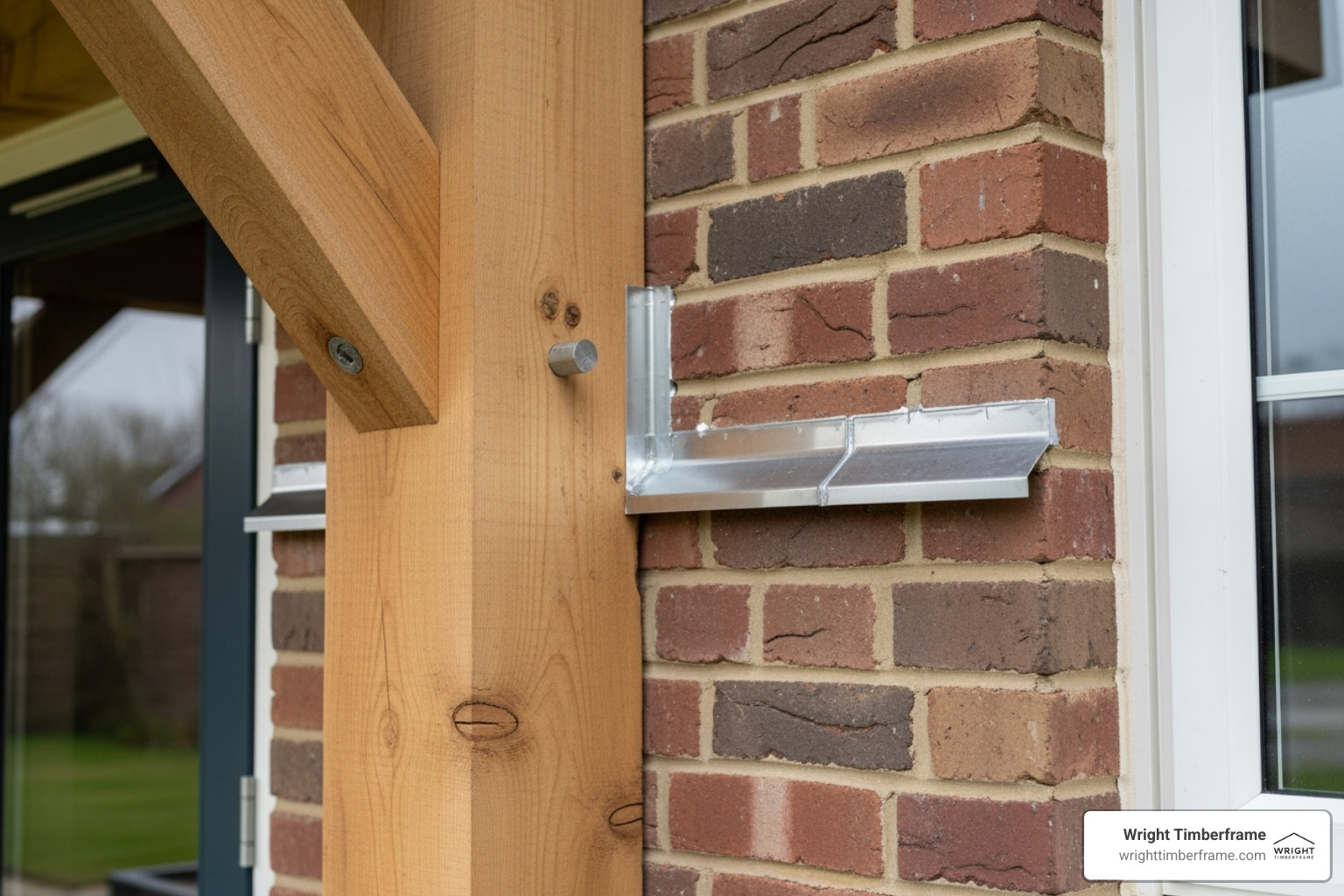
Attaching to different exteriors like brick, stucco, or siding requires specific methods to create a secure connection without damaging your home. We have experience working with all these materials across Utah, ensuring a sound and clean attachment.
Ensuring a watertight seal is perhaps the most critical step. We use ledger boards and flashing to achieve this. The ledger board bolts securely to your home’s framing, while a metal flashing system integrates with your home’s weather barrier. This channels water away from the connection point, preventing future rot, mold, and expensive repairs.
Managing water runoff from the new roof is also vital. We design integrated gutters to channel water away from both the pavilion and your home’s foundation, preventing erosion and protecting your investment.
Here in Utah, supporting heavy snow loads is non-negotiable. Our timber frame pavilions use robust Douglas Fir and Western Red Cedar timbers, engineered to carry substantial snow loads year after year. These are structural timbers doing real work.
The importance of a solid foundation with concrete footings that extend below the frost line can’t be overstated. This anchors your structure permanently, preventing any shifting as the ground freezes and thaws.
Every challenge has a solution with experienced builders who understand the craft and the local climate. As Your Local Timber Frame Experts in Utah, we bring that knowledge to every project.
The Best Materials for a Durable and Beautiful Attached Pavilion
The materials you choose define the character, strength, and longevity of your pavilion attached to house. Your pavilion will face Utah’s intense sun and heavy snow, so for a structure that is both beautiful and built to last for generations, nothing compares to the authenticity and durability of a true timber frame.
The Best Quality of Timber Framing
We craft our custom timber frame pavilions from premium timbers that have proven their worth over centuries. Our primary choices are Douglas Fir and Western Red Cedar.
Douglas Fir is the workhorse of timber framing, prized for its exceptional strength-to-weight ratio. Its straight, stable grain ensures your pavilion remains true and sturdy for decades. Beyond its strength, it offers a warm, honey-toned beauty that deepens with age.
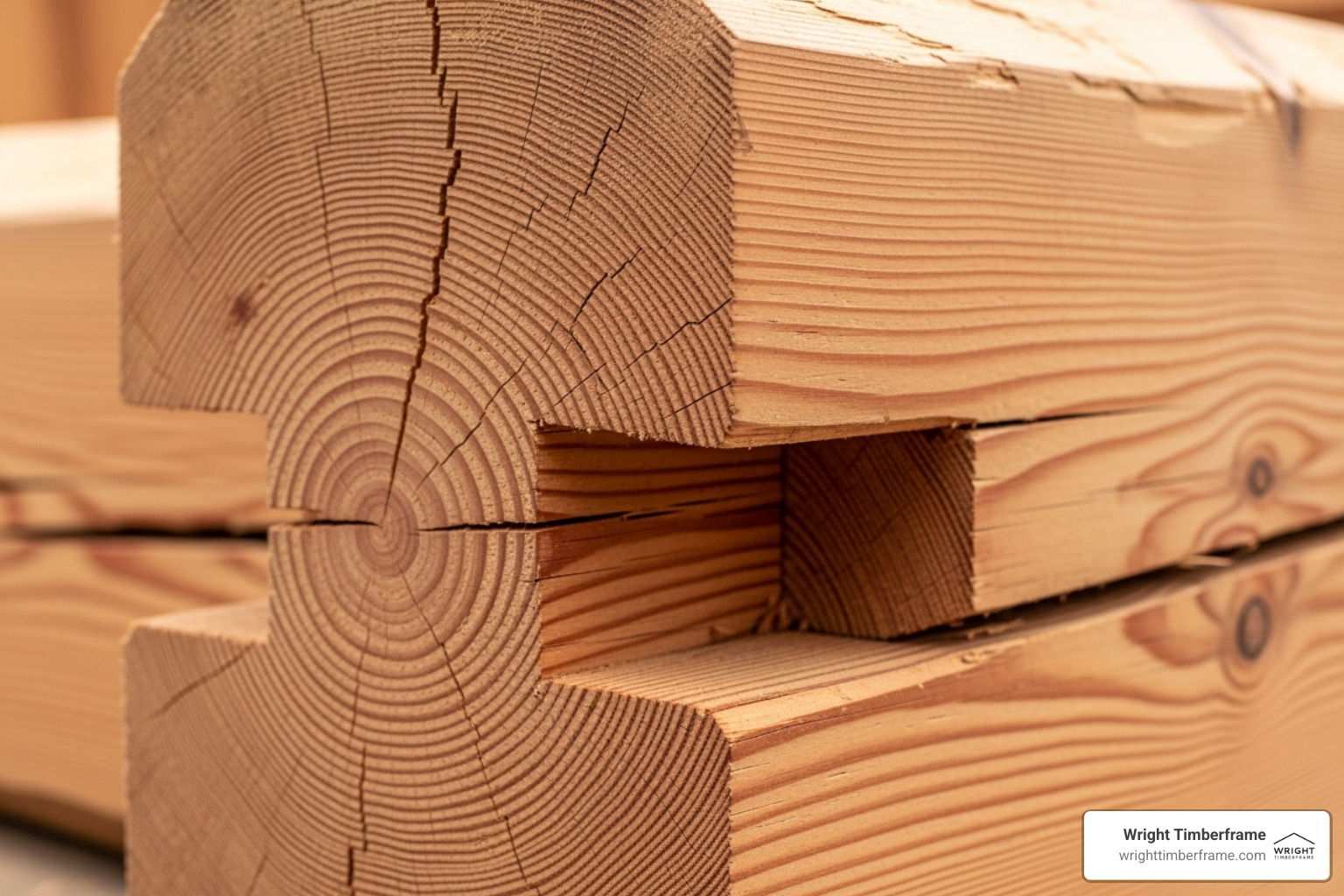
Western Red Cedar is naturally resistant to rot, decay, and insects, essential qualities for any outdoor structure. Its rich, reddish-brown hues and distinctive scent add a neat touch to your backyard. While lightweight, it delivers excellent durability and weather resistance.
With proper care, a high-quality timber structure can last for decades, becoming a beloved family gathering place that spans generations. This natural strength and beauty is what sets our timber frame pavilions apart. You can learn more about our commitment to quality timber on our Custom Timber Frame Utah page.
Traditional Joinery: The Secret to Lasting Strength
Premium timbers are just the beginning. What truly transforms these materials into a structure of exceptional strength is our commitment to traditional joinery, the same methods that have allowed timber structures to stand for centuries.
Our craftsmen use mortise and tenon joineryand dovetail joints to connect each timber. These precisely cut joints interlock like a puzzle, creating incredibly strong bonds without relying on unsightly metal plates or fasteners. The result is a clean look that showcases the natural beauty of the wood.
The strength of these joints is remarkable. Our patented Dovetail Difference® design is 500% stronger in load-carrying capacity compared to conventional metal hangers. This means your pavilion can handle heavy snow loads and strong winds without weakening.
Traditional joinery also allows the wood to breathe and settle naturally. As the wood expands and contracts with temperature changes, the joints can actually tighten, maintaining their integrity season after season. This flexibility makes timber frames remarkably resilient, which is why ancient timber structures have survived for over a thousand years. That’s the enduring power of traditional timber framing.
When you choose a pavilion attached to house from Wright Timberframe, you’re investing in time-tested craftsmanship that will stand strong for generations. This dedication to quality is exactly Why Choose a Custom Pergola Over Pre-Fabricated Options, and the same principle applies to our pavilions.
Customizing Your Pavilion Attached to a House for Ultimate Outdoor Living
Your pavilion attached to house is more than just a covered space, it’s a blank canvas for your personal outdoor sanctuary. With thoughtful customization, you can transform it into a multi-functional outdoor room that caters to every aspect of your lifestyle, from quiet mornings to lively gatherings.
Creating Functional Zones Under Your Pavilion
The beauty of an attached pavilion lies in its versatility. Because it connects directly to your home, you can create distinct functional zones that flow naturally from your indoor spaces. Consider dedicating areas for different activities:
- Outdoor Kitchen and BBQ Island: A fully equipped space with a grill, refrigerator, and prep counters makes outdoor cooking a breeze.
- Cozy Lounge Area: Arrange comfortable seating around a stone fireplace for a perfect retreat on cool Utah evenings.
- Formal Dining Space: Set a beautiful table under the stars for memorable dinner parties, protected from unpredictable weather.
- Poolside Cabana: Create a shaded retreat near your pool for swimmers to relax and escape the midday sun.
- Entertainment Hub: Install an outdoor-rated TV and sound system for game days and movie nights under the open sky.
The possibilities are endless. Our Custom Pavilion Ultimate Guide offers even more inspiration for these personalized spaces.
Must-Have Features for Your Outdoor Oasis
Once you’ve defined your functional zones, add the finishing touches that lift your pavilion from good to extraordinary.
Lighting design is one of the most impactful features. A combination of ambient lighting, like LED strips along beams, and task lighting over a grill or dining table makes the space functional and inviting after dark.
Ceiling fans are game-changers for comfort, providing a gentle breeze on warm evenings and helping to deter mosquitoes.
Built-in seating and storage keep your space organized. Custom benches with hidden storage or integrated cabinets provide convenient places to stash cushions and outdoor gear.
Outdoor-rated electrical outlets are essential for everything from string lights to speakers. Planning for them during construction ensures they are placed safely and conveniently.
Finally, privacy screens or curtains can add elegance and practicality. Retractable screens can block wind or sun, while outdoor curtains add a touch of softness and create a sense of enclosure when desired.
These features, combined with the natural beauty of our timber frame construction, create an outdoor space that feels like a natural extension of your home’s finest rooms.
The Building Process: Costs, Permits, and What to Expect
Bringing your vision of a pavilion attached to house to life is an exciting journey. Understanding the process, from budgeting and paperwork to construction, makes all the difference.
Budgeting for Your Attached Pavilion
An honest conversation about investment is the best starting point. The cost of your attached pavilion will depend on several key factors:
- Size: A larger pavilion requires more materials and labor.
- Materials: We specialize in premium Douglas Fir and Western Red Cedar, which are an investment in longevity.
- Complexity: An intricate design with custom angles will influence the cost more than a simple gable roof.
- Features: Additions like an outdoor kitchen, stone fireplace, or integrated lighting will contribute to the final budget.
A custom timber frame pavilion is a premium investment, and for good reason. You are building a legacy structure designed to stand for generations, using time-tested joinery that has proven its durability over centuries. It’s an investment in your home’s value and your family’s lifestyle.
One way to manage costs while achieving authentic timber frame quality is with our pre-cut kits. These kits feature the same premium timbers and traditional joinery but are cut in our shop for assembly on-site. This can lead to significant savings on labor. Because attached pavilions require fewer posts than freestanding ones, they often use less timber, which can also help lower overall costs. Our Attached Pergola Ultimate Guide offers more details on maximizing value.
Navigating Permits and Building Codes
Permits and building codes can seem daunting, but they exist to protect your investment and ensure safety.
If you’re building a pavilion attached to house, you will almost certainly need a permit. Because it connects to your home’s permanent structure, local building authorities must verify that it’s safe, properly engineered, and meets all codes. These codes ensure your pavilion can handle Utah’s heavy snow loads, that electrical work is safe, and that the structure won’t compromise your home’s integrity. Many U.S. municipalities adopt or adapt the International Residential Code (IRC) as the basis for structural and safety requirements, including ledger attachments, footings, and snow-load design.
The specifics vary by municipality, which is why we always recommend checking with your local city or county planning department early in the process. They can tell you exactly what’s required for your project.
Most jurisdictions require detailed structural plans showing how the pavilion connects to the home, how it’s engineered for local conditions, and where footings will be placed. This is where professional plans are invaluable.
Our team has extensive experience with this process. We can provide the detailed, engineered plans needed to satisfy permit requirements, ensuring your pavilion meets all local specifications. Navigating this step correctly from the start provides peace of mind that your beautiful new outdoor space is built to last and is fully compliant.

Frequently Asked Questions about Attached Pavilions
Over the years, we’ve answered countless questions from homeowners considering a pavilion attached to house. Here are the most common ones we hear, along with straightforward answers based on our experience building custom timber frame structures across Utah.
What’s the difference between an attached pavilion and an attached pergola?
The main difference is the roof. A pavilion has a solid, continuous roof for full protection from sun and rain. An attached pergola, on the other hand, has a slatted or lattice-style roof that offers partial shade and a more open-air feel.
Do I need a permit to build a pavilion attached to my house?
Almost always, yes. Because it connects to your home’s structure, a permit is required to ensure it’s safe and meets local codes for things like snow load and foundation requirements. We can provide the engineered plans needed for the permitting process.
How much value does an attached pavilion add to a home?
A high-quality attached pavilion adds significant value by creating a desirable outdoor living room. It expands your home’s functional square footage and boosts curb appeal, making it a major selling point that can increase your home’s market value.
Your Dream Outdoor Space: The Benefits of a Pavilion Attached to House
A pavilion attached to house is more than an outdoor structure, it’s a lifestyle upgrade. It expands your living area and connects you with the outdoors without sacrificing comfort or style. Your attached pavilion will become the backdrop for countless cherished memories, from quiet mornings to lively barbecues with family and friends.
What makes this investment truly special is the combination of superior materials and proven construction techniques. By choosing heavy timbers like Douglas Fir or Western Red Cedar, paired with traditional mortise and tenon joinery, you’re not just building a pavilion, you’re creating a timeless legacy. These structures are built to stand strong through decades of Utah winters and summer heat.
This level of craftsmanship turns a simple addition into a lasting investment in your home. A well-built timber frame pavilion improves your property’s character, increases its market value, and fundamentally changes how you experience your home every day.
As Your Local Timber Frame Experts in Utah, Wright Timberframe is dedicated to crafting exceptional outdoor structures that stand the test of time. We understand our climate and design every pavilion attached to house to thrive in it for generations.
Ready to create your own connected comfort? Explore our custom timber frame pavilion kits and start designing the outdoor living space you’ve always dreamed of. Let’s build something beautiful together.

