
Why Learning How to Make a Freestanding Pergola Transforms Your Outdoor Living
Learning how to make afreestanding pergola is the first step toward creating a stunning outdoor retreat in your own backyard. Whether you want to add shade over a patio, define a garden space, or create an inviting area for entertaining, a well-built pergola delivers lasting value and beauty. It adds architectural interest, provides comfortable shade, and creates a defined outdoor room that extends your living space.
Quick Overview: Essential Steps on How to Make a Freestanding Pergola
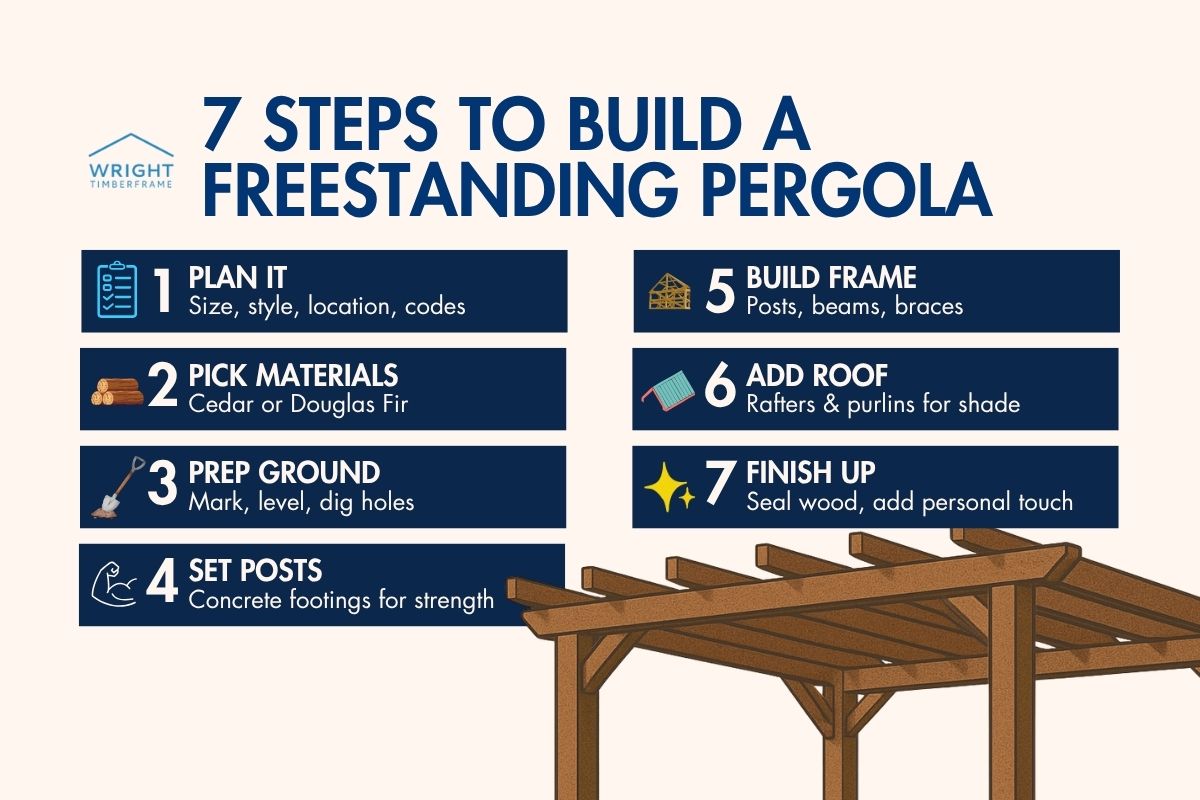
- Plan your design: Determine size, location, and style while checking local building codes.
- Choose quality materials: Select durable timber like Western Red Cedar or Douglas Fir.
- Prepare the foundation: Mark your layout, level the ground, and dig post holes.
- Anchor the posts: Set posts in concrete footings for maximum stability.
- Assemble the frame: Raise posts, attach header beams, and install corner braces.
- Add the roof structure: Install rafters and optional purlins for shade.
- Finish and customize: Apply protective finishes and add personal touches.
While building apergola requires careful attention to structural integrity, the process is more accessible than many assume. Unlike attached pergolas, freestanding designs must be properly anchored to prevent movement in high winds. This means setting posts deep enough in concrete footings and incorporating bracing for shear strength.
At Wright Timberframe, we’ve helped homeowners across Utah and beyond build pergolas that combine traditional craftsmanship with modern durability. Whether you’re building from scratch or using one of our pre-cut kits with mortise and tenon joinery, this guide will walk you through creating an outdoor space you’ll enjoy for generations.
This guide continues with detailed planning, material selection, and step-by-step instructions to help you build a pergola that stands the test of time.
Planning Your Paradise: How to Make a Freestanding Pergola with Confidence
Before you pick up a saw, a thoughtful plan is the foundation of a successful project. At Wright Timberframe, we know the most beautiful outdoor structures start with a clear vision of how you’ll use the space. Will it be a morning coffee sanctuary, a shaded dining area, or a romantic retreat with string lights? Clarity on your vision makes every decision easier.
Sizing and Use Case
Before committing to dimensions, arrange your outdoor furniture where you plan to build. This simple exercise reveals whether a 10×12 footprint feels cozy or cramped. For beginners learning how to make a freestanding pergola, a 12×12 design is a great starting point, substantial but manageable. Your use case dictates the design.
A dining pergola needs clearance for chairs, while one for a hammock requires extra-deep footings for stability. Building over an existing patio? A pergola can transform that plain slab into a defined, shaded living space. Check out our beginner-friendly pergola guide to see how different designs suit various purposes.
Checking Local Codes and Requirements
This part isn’t glamorous, but it’s essential. Before you dig, call 811 to have underground utilities marked, this free service prevents potential disasters. Next, visit your local building department to discuss permit requirements.
Building to code protects your investment and ensures your pergola is safe. Don’t forget to check with your HOA for rules on structure height, setbacks, and approved materials. Getting approval upfront saves you from costly modifications later.
Sketching and Choosing Your Style
Once you know your size and requirements, put pencil to paper. A simple sketch helps you visualize the final structure and calculate materials. Your pergola should feel like a natural extension of your home’s architecture.
- Traditional designs feature decorative rafter tails and classic proportions.
- Modern pergolas have clean lines and minimalist, square-cut ends.
- Rustic designs accept the natural beauty and grain of timbers like Western Red Cedar and Douglas Fir.
For ultimate control, a louvered roof offers adjustable shade. While not found in free plans, it’s a custom option we offer at Wright Timberframe, allowing you to manage sunlight and airflow throughout the day. A solid plan is where confidence is born, ensuring your project is one that fills you with pride.

Gathering Your High-Quality Materials and Tools
The longevity and beauty of your pergola depend entirely on the materials you choose. This is where true superior craftsmanship begins. Investing in quality timber upfront ensures your structure remains a cherished part of your home for generations.
Best Wood Choices for How to Make a Freestanding Pergola
When learning how to make a freestanding pergola, your choice of timber is paramount. We exclusively use Douglas Fir and Western Red Cedar because they simply outperform other options in outdoor structures.
- Western Red Cedar: A remarkable wood that is naturally resistant to rot, decay, and insects. If left untreated, it ages to a beautiful silver-gray patina, offering a timeless look with minimal maintenance.
- Douglas Fir: The workhorse of timber framing. It’s incredibly strong, making it ideal for spanning large distances and creating the intricate, durable connections found in traditional joinery.
- Redwood: Another excellent choice known for its deep, rich color and natural resistance to decay and insects, similar to cedar.
| Feature | Western Red Cedar | Douglas Fir | Redwood |
|---|---|---|---|
| Cost | High | Medium-High | High |
| Longevity | Excellent (natural rot/insect resistance) | Excellent (high strength, good rot resistance) | Excellent (natural rot/insect resistance) |
| Maintenance | Low (ages naturally, can be sealed) | Medium (benefits from sealing/staining) | Low (ages naturally, can be sealed) |
| Appearance | Light brown, ages to silver-gray | Straight grain, reddish-brown hues | Rich reddish-brown, ages gracefully |
At Wright Timberframe, our craftsmen are trained in traditional timber framing methods and follow structural engineering standards to ensure safety and durability.
Essential Hardware and Tools
Having the right equipment makes the building experience enjoyable. Don’t cut corners on fasteners, exterior-rated hardware is non-negotiable to prevent rust and failure. Use hot-galvanized screws for treated lumber and stainless steel for cedar or redwood.
Key Hardware & Tools:
- Fasteners: 6-inch structural lag screws and 4-inch deck screws.
- Anchors: Metal post bases and quick-setting concrete mix.
- Power Tools: Circular saw, miter saw, drill/impact driver, and a jigsaw.
- Hand Tools: 4-foot level, post level, measuring tape, chalk line, shovel, post-hole digger, framing square, and a sharp chisel.
- Safety Gear: Always wear goggles, gloves, and hearing protection.
If you’d rather skip the measuring and cutting, our pergola kits come with premium timbers pre-cut to exact specifications, with mortise and tenon joinery ready for assembly.
The Foundation of Stability: Ground Prep and Anchoring for Your Freestanding Pergola
When you’re learning how to make a freestanding pergola, the foundation is the most critical element for safety and longevity. As timber experts in Utah, we’ve seen that proper anchoring is non-negotiable. A poorly secured pergola is a hazard in high winds, a risk not worth taking. The footings are part of the structure itself, which is why our Freestanding Pergola Safety Complete Guide emphasizes these critical considerations.
Preparing the Ground: The First Step in How to Make a Freestanding Pergola
Proper ground prep creates a solid, stable base that will keep your pergola standing for decades.
- Choose the Location: Consider sun exposure, wind, and drainage. Avoid areas where water pools.
- Mark Your Layout: Drive stakes at each corner. Use the 3-4-5 triangle method to ensure perfect 90-degree corners. Measure 3 feet along one side from a corner, 4 feet along the adjacent side, and confirm the diagonal is exactly 5 feet.
- Level the Site: Remove sod and vegetation. Use a level to identify high and low spots, redistributing soil as needed. Compact the entire area thoroughly with a tamper.
- Plan for Drainage: Add a 2-3 inch layer of compacted gravel at the bottom of your post holes. This prevents moisture from wicking up into the posts, a common cause of premature rot.
How to Properly Anchor Your Pergola
Your anchoring method must be robust enough to withstand wind loads, especially if you plan to add shade canopies.
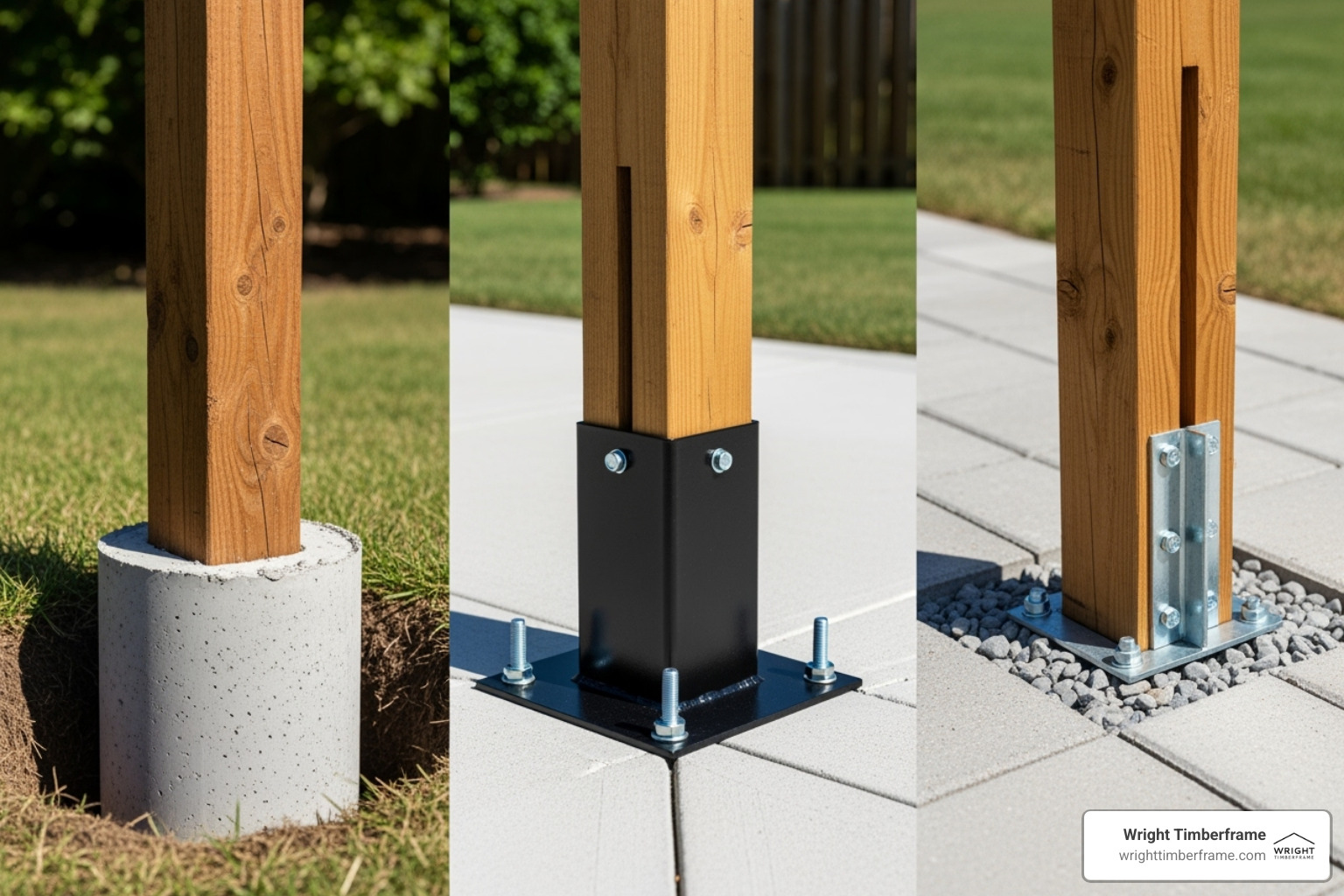
- Concrete Footings (Gold Standard): Dig post holes at least 3 feet deep (or to your local code’s frost line). The hole should be wide enough for several inches of concrete around the post. Set your post, ensure it’s plumb with a post level, brace it, and pour the concrete. Allow it to cure for at least 48 hours before continuing.
- Existing Concrete Patio: Use heavy-duty metal post bases (like the Simpson APB66) bolted securely into the slab. This keeps the wood liftd and away from moisture. Ensure your slab is at least 4-6 inches thick.
- Pavers or Gravel: Specialized post bases can work on these surfaces, but they require meticulous ground prep and often additional diagonal bracing for stability. For the most reliable, long-term performance, we always recommend deep ground anchoring with concrete.
Step-by-Step Guide: How to Make a Freestanding Pergola
With your foundation set, it’s time to bring your structure to life. This is a two-person job, so grab a helper before lifting heavy posts and beams for safety.

Cutting and Notching Your Timbers
Precision in joinery is what separates a good pergola from a great one. This is why we emphasize traditional techniques like Mortise and Tenon Dovetail Joinery.
- Cut Posts to Length: Ensure all posts are identical in length (unless building on a slope). Use a square to mark all four sides for a perfectly square cut.
- Create Notches for Joinery: Half-lap joints, where two timbers interlock, create strong connections. To cut them, set your circular saw to half the timber’s depth, make multiple passes within your marked area, and clean out the remaining wood with a chisel.
- Cut Decorative Ends: Use a jigsaw to add custom shapes to your beam and rafter tails for a polished look.
Assembling the Frame: A Key Phase in How to Make a Freestanding Pergola
Work methodically with your helper to ensure both safety and success.
- Raise and Brace Posts: Lift each post into its anchor and immediately secure it with temporary 2×4 braces running diagonally to stakes in the ground. Never leave a post unbraced.
- Plumb and Level Posts: Use a post level to ensure each post is perfectly vertical. Small deviations now will be magnified later. Once plumb, attach the posts to their anchors with structural screws.
- Install Header Beams: With your helper, lift the main horizontal beams into position. Check that they are level and secure them to the posts with multiple structural screws or bolts.
- Install Corner Braces: Fasten diagonal braces in the upper corners where posts meet beams. This is crucial for preventing racking in high winds and dramatically improves structural integrity.
Installing the Roof Structure
The roof provides shade and defines your pergola’s character.
- Mark Rafter Spacing: Mark your desired rafter spacing on the header beams. Closer spacing (e.g., 12 inches) provides more shade, while wider spacing (16-24 inches) creates a more open feel.
- Attach Rafters: Lift and place each rafter on its marks. Secure them by driving structural screws at an angle through the rafter into the beam (toe-screwing) or by fastening them from the top down.
- Add Purlins (Optional): For additional shade, install smaller timbers (purlins) across the top of the rafters. You can customize the spacing to create the perfect amount of light filtering for your space.
Our pergola kits simplify this process with pre-cut timbers and ready-made joinery, giving you the satisfaction of assembly with the confidence of professional craftsmanship.
Adding Custom Touches and Finishing Your Pergola
This is where you personalize your pergola and make it a true extension of your home’s style. A few final details can lift the structure from a simple build to a custom outdoor space that reflects your personality.
Enhancing Shade and Privacy
These finishing touches are where how to make a freestanding pergola becomes about creating your personal sanctuary.
- Shade Canopies or Sails: These flexible fabric additions offer protection from sun and light rain. They can be installed and removed seasonally, and we can help you design integrated solutions that complement your timber frame.
- Wood Slat Privacy Screens: Attaching screens made from 1×4 boards to one or more sides creates a sense of enclosure and privacy. They add a modern, custom aesthetic that makes your pergola feel more like an outdoor room.
- Climbing Plants: Wisteria, clematis, or climbing roses can create a living canopy of natural shade and fragrance. Our custom wood trellis kits can be seamlessly integrated to help you train plants exactly where you want them.
Finishing and Protection
Your finishing choices will determine how your pergola ages and how much maintenance it requires.
- Let Cedar Age Naturally: A popular, low-maintenance choice. Western Red Cedar will weather to a beautiful, soft silver-gray patina over time. No stain is needed, though a clear water repellent can add protection.
- Apply a UV-Protectant Sealer: To maintain the wood’s natural color, especially for Douglas Fir, a high-quality sealer is essential. It protects against sun and moisture damage and should be reapplied every few years.
- Add Finishing Touches: This is the final step to making the space your own. Install outdoor string lights for ambiance, add hanging planters for color, and arrange comfortable furniture to invite relaxation. These touches transform your structure into a destination.
For example, a family wanted to add shade over their poolside patio. We designed a freestanding pergola using Douglas Fir and delivered a pre-cut kit with mortise and tenon joinery. The project was completed in a day, and the clients shared that it instantly became their favorite gathering spot for summer evenings.
Frequently Asked Questions about How to Make a Freestanding Pergola
Building your own pergola is an exciting project, but it can also raise plenty of questions. Here are the answers to the most common questions we receive about how to make a freestanding pergola that will stand strong and look beautiful for decades.
How do you secure a freestanding pergola to the ground?
The most reliable method is setting posts in concrete footings that extend below the frost line. For existing patios, use heavy-duty metal post bases bolted into the concrete. These methods provide essential stability against wind and prevent rot.
Is it cheaper to build your own pergola?
Yes, a DIY build saves significantly on labor costs. Our pergola kits offer a great middle ground, providing pre-cut, professionally crafted timbers that reduce build time and complexity, ensuring a high-quality result without the cost of full installation.
What is the best wood to use for a pergola?
Western Red Cedar is a top choice for its natural resistance to rot and insects, aging to a beautiful silver patina. Douglas Fir is prized for its superior strength, making it ideal for larger structures and traditional mortise and tenon joinery.
How long does it take to build a freestanding pergola?
A standard pergola can take a DIYer a long weekend to several days to build. Using a pre-cut pergola kit can significantly speed up the process, often reducing assembly time to just a couple of days by eliminating complex cutting and joinery work.
Do I need a permit to build a pergola?
Permit requirements vary by location. Always check with your local building department and HOA before starting. It’s also mandatory to call 811 to have underground utilities marked before you dig. This ensures your project is safe and compliant.
How to Make a Freestanding Pergola a Lasting Masterpiece
You’ve just walked through the steps of how to make a freestanding pergola, from the initial idea to the final touches. Building your own pergola is more than a project; it’s an investment in your home’s beauty, your family’s comfort, and countless memories to be made under its sheltering beams.
The difference between a pergola that lasts for decades and one that becomes a headache comes down to two things: proper anchoring and quality joinery. By using deep concrete footings and embracing time-tested connection methods, you ensure your structure is safe and durable. When you choose premium materials like Western Red Cedar and Douglas Fir, you’re not just building for today, you’re creating a legacy.
As Utah’s local timber experts, we’ve helped countless homeowners transform their backyards. Some start from scratch, while others prefer the precision and convenience of our kits, where traditional joinery meets modern efficiency. Either path leads to a handcrafted outdoor space that reflects your style and stands as a testament to quality craftsmanship.
Your pergola is the backdrop for morning coffee, summer dinners, and quiet evenings under the stars. It adds measurable value to your property while creating immeasurable value in your daily life. Ready to start your journey? Explore our collection of freestanding pergolas and see what’s possible when true craftsmanship meets your vision.