
Why Permit Compliance Matters for Your Outdoor Living Project
Do you need a permit for a freestandingpergola? In most cases, the answer is yes. While some smaller pergolas may be exempt, the need for a permit depends on your local building codes, zoning laws, and the specific features of your project. Failing to secure a required permit can lead to fines, forced removal of the structure, and issues when selling your home.
Quick Answer: Key Factors That Determine If You Need a Permit
- Size: Structures over 120 square feet often require a permit.
- Height: Pergolas taller than 8-10 feet typically trigger permit requirements.
- Location: Proximity to property lines and easements is critical.
- Utilities: Adding electrical wiring or plumbing almost always requires a permit.
- Roof Type: Solid roofs change the structure’s classification and permit needs.
- HOA Rules: Homeowners associations have their own separate approval processes.
At Wright Timberframe, we’ve helped countless homeowners steer the permit process for custom timber frame structures across Utah and beyond. Understanding whether do you need a permit for a freestanding pergola is the first step toward building your dream outdoor space the right way, with traditional craftsmanship that’s both beautiful and compliant.
This guide will walk you through everything you need to know to build with confidence, from understanding local codes to avoiding costly mistakes.
What is a Freestanding Pergola?
Before we can answer the question “Do you need a permit for a freestanding pergola?”, let’s define the structure. A pergola is an outdoor feature with vertical posts supporting an open-lattice roof of crossbeams and rafters. It defines an outdoor space and provides partial shade without a solid roof or walls.
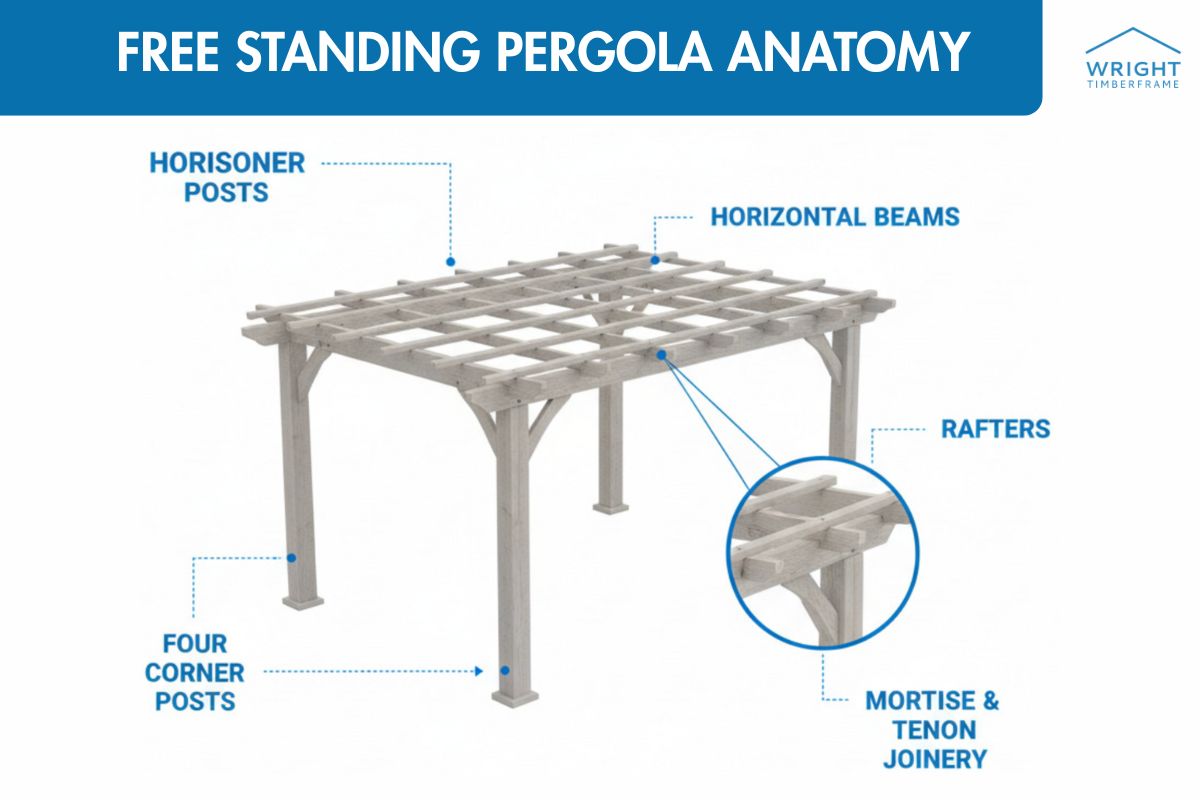
The key term here is freestanding. A freestanding pergola stands on its own, separate from your house, unlike an attached pergola that connects to an exterior wall. This independence offers incredible placement flexibility around your property.
Here’s where the permit question comes in: building departments classify most pergolas as permanent structures. Unlike a temporary canopy, a pergola is anchored to the ground with footings to withstand wind, snow, and time. This permanency is why local authorities regulate their construction.
At Wright Timberframe, our timber frame pergolas are handcrafted from premium Douglas fir or cedar using traditional mortise and tenon joinery. These are substantial, lasting structures, which means they typically fall under building code jurisdiction. Understanding this is key to answering do you need a permit for a freestanding pergola for your specific project.
When Do You Need a Permit for a Freestanding Pergola?
Asking “do you need a permit for a freestanding pergola?” rarely has a simple yes or no answer. It depends on what triggers a permit requirement in your specific location. Based on our experience helping homeowners across Utah, most substantial outdoor structures require official approval, especially if they include custom features.
Think of it as a checklist: if your pergola meets certain criteria for size, height, features, or location, you’ll likely need a permit.
Key permit triggers include:
- Size & Height: Many areas exempt structures under a certain size (e.g., 120 sq ft) and height (e.g., 10 feet). A 10×12 pergola might be on the edge, while a 12×16 structure almost certainly needs a permit. For example, a building permit is often required for a detached accessory building exceeding 120 square feet in some Utah cities.
- Utilities: Adding electrical wiring for lights and fans or plumbing for an outdoor kitchen always requires a permit, regardless of the pergola’s size. This is a non-negotiable safety issue.
- Roof Type: A traditional open-lattice roof is standard. If you add a solid or retractable roof, your structure is often reclassified as a pavilion, which almost always requires a permit.
- Location: Zoning laws dictate how far your pergola must be from property lines (setbacks) and easements. Building too close requires a permit and possibly a variance.
For custom pergolas for outdoor living with integrated features and premium timber frame construction, a permit is almost always part of the journey. The good news is that we’re here to make that process as smooth as possible.
Understanding Local Building Codes and Zoning Laws
Navigating local regulations is crucial. The two main types you’ll encounter are building codes and zoning laws.
Building codes are about safety, the how of construction. They ensure your pergola is structurally sound and can withstand local conditions like heavy snow and high winds. Codes specify foundation requirements, material strength, and beam spans.
Our use of premium Douglas fir and cedar and traditional mortise and tenon joinery helps meet these high standards, as these materials and techniques are recognized for their superior structural properties.
Zoning laws are about community standards, the where of construction. They dictate placement and use to ensure your project doesn’t negatively impact your neighbors or the community. Key zoning rules include:
- Property Line Setbacks: Minimum distances your structure must be from your property’s edge.
- Easements: Areas on your property where utility companies have access rights. You cannot build permanent structures on easements.
- Lot Coverage & Height Limits: Restrictions on the percentage of your lot covered by structures and how tall they can be, often to preserve views or neighborhood character.
- Historical Districts: Special rules on materials and design to maintain historical integrity.
As local timber experts, we work with these regulations daily on projects like a custom pergola in Utah and can guide you through the specific requirements for your area.
What Size and Height Trigger the Need for a Permit for a Freestanding Pergola?
While specific numbers vary by municipality, there are common thresholds for size and height that determine if you need a permit. Exceeding these generally moves your project from “exempt” to “permit required.”
Most jurisdictions allow small accessory structures to be built without a permit. Common exemption limits are:
- Size (Footprint): Up to 100-200 square feet. A common threshold is 120 square feet. Anything larger usually requires a permit.
- Height: Up to 8-10 feet. Structures taller than this, measured from the ground to the highest point, typically need a permit.
Here’s a quick comparison:
| Feature | Likely Permit-Exempt | Likely Permit-Required |
|---|---|---|
| Footprint | 10′ x 10′ (100 sq ft) | 12′ x 16′ (192 sq ft) |
| Height | Under 10 feet | Over 10 feet |
| Utilities | None | Electrical, Plumbing, Gas |
| Roof | Open-lattice | Solid or retractable cover |
Always confirm the exact thresholds with your local building department. When we design custom pergola designs for outdoor living, we verify these local requirements early to prevent surprises.
The Role of Your Homeowners Association (HOA)
Even if the city says you don’t need a permit, your Homeowners Association (HOA) likely has its own rules. HOA approval is a separate process focused on protecting property values and maintaining community aesthetics.
Before you build, you must submit detailed plans to your HOA’s architectural review committee. They will review dimensions, placement, materials, and colors. Many HOAs have specific guidelines on what is and isn’t allowed.
Crucially, HOA approval does not replace a city permit. If your project requires a municipal permit, you need both. In fact, many building departments require proof of HOA approval before they will accept your permit application.
The consequences of violating HOA rules can be severe, including fines and orders to remove the structure. Always read your HOA guidelines, get approval in writing first, and then proceed with any required city permits. Our handcrafted timber frames, made from premium Douglas fir and cedar, typically align well with HOA aesthetic standards, making the approval process smoother.

The Permit Process: From Application to Approval
Once you’ve determined the answer to do you need a permit for a freestanding pergola is yes, it’s time to steer the application process. While it can seem daunting, breaking it down into steps makes it manageable. At Wright Timberframe, we guide homeowners through this process to ensure it’s as smooth as possible.
Here is a step-by-step guide:
- Contact Your Local Building Department: Start with a call or visit to your city or county building office. Ask for their specific requirements for a freestanding pergola, including checklists or guides they may have available online.
- Gather Documentation: Prepare a complete application packet. This is the most critical step for avoiding delays. You will need a site plan, construction drawings, and other forms (see details below).
- Submit Your Application: Turn in your completed packet to the building department and pay the required permit fees. Fees typically range from $50 to $200 but can vary based on project value, according to HomeAdvisor.
- Plan Review: Officials will review your plans to ensure they comply with all building codes and zoning laws. This can take anywhere from a few days to several weeks.
- Schedule Inspections: Once your permit is issued, you must schedule inspections at key stages of construction (e.g., foundation, framing, and final). This is vital for ensuring pergola safety and compliance.
This process is why many homeowners choose an experienced professional. When you’re deciding how to pick the best pergola builder in Utah, ask about their experience with local permitting. We know what inspectors look for and can help prevent common delays.
DIY vs. Professional Installation: How Does It Affect Permits?
The permit requirements are the same whether you build it yourself or hire a pro, but the process is often much easier with professional help.
If you choose the DIY route, you are responsible for creating all the necessary plans, understanding complex codes, and coordinating inspections. A DIY pergola kit can simplify this, as our kits come with pre-engineered plans that can streamline the permit submission. We provide support to our kit customers to help you present the information your local building department needs.
When you hire a professional contractor like Wright Timberframe, we handle the heavy lifting. With years of experience, we can prepare the professional site plans, construction drawings, and engineering specifications that officials require. We manage the application process and coordinate inspections, ensuring everything is done correctly and on schedule. This expertise minimizes delays and stress, ensuring your project meets all pergola safety standards.
What Documentation Will I Need to Apply for a Freestanding Pergola Permit?
Submitting a complete and organized application is the key to a smooth permit process. While requirements vary slightly by location, you will generally need the following documents:
- Permit Application Form: The standard form from your local building department.
- Site Plan: A to-scale drawing of your property showing property lines, existing structures, and the exact location of the proposed pergola with setback distances marked.
- Construction Drawings: Detailed blueprints showing dimensions, materials (e.g., premium Douglas fir or cedar), foundation details, and joinery methods like our traditional mortise and tenon connections.
- Engineering Calculations: For larger structures or in areas with high wind or snow loads, stamped engineering documents may be required to prove structural integrity. We can provide this for our timber frame designs.
- HOA Approval Letter: If you live in an HOA community, you’ll need written approval before the city will process your permit.
Having this documentation prepared correctly from the start will save you time and headaches, moving you closer to enjoying your new outdoor space.
The Risks of Skipping the Permit
It can be tempting to bypass the permit process to save time and money. However, our experience shows that the risks of building without a required permit far outweigh any short-term benefits. Answering do you need a permit for a freestanding pergola correctly is about protecting your investment, safety, and property value.
Here are the potential consequences of skipping a permit:
- Financial Penalties: Fines for unpermitted work can range from hundreds to thousands of dollars. Some jurisdictions also charge double or triple the original permit fee for retroactive applications.
- Stop-Work Orders: If you’re caught mid-construction, officials can issue a stop-work order, halting your project indefinitely until you obtain a proper permit. This causes significant delays and added costs.
- Forced Removal: In the worst-case scenario, you could be ordered to tear down your new pergola entirely if it violates codes or zoning laws in a way that cannot be corrected.
- Insurance Complications: Homeowner’s insurance policies may not cover damages or injuries related to an unpermitted structure. If your pergola collapses or causes a fire, your claim could be denied, leaving you personally liable.
- Problems Selling Your Home: Unpermitted structures are a red flag for home inspectors and buyers. It can delay or even kill a sale, and you may be forced to remove the structure or lower your asking price.
- Safety Hazards: Building codes exist to ensure your structure is safe. An unpermitted pergola may lack adequate footings or proper bracing, creating a real danger. Our focus on freestanding pergola safety is why we always advocate for a fully compliant process.
The typical permit costs between $50 and $200, a small price for peace of mind. Doing it right from the start is always the best investment.
Frequently Asked Questions about Freestanding Pergola Permits
When homeowners ask, do you need a permit for a freestanding pergola, several common questions arise. Here are clear, straightforward answers based on our experience as timber frame experts.
Are pergolas considered permanent structures?
Yes, most freestanding pergolas with concrete footings are classified as permanent or semi-permanent structures by building authorities. This permanency is why they are subject to building codes and often require permits to ensure they are safe and structurally sound.
How much does a pergola permit cost?
Permit costs vary by location but typically range from $50 to $200 for a standard residential project, according to HomeAdvisor. The fee is often based on the project’s value and can be higher for complex designs, but it’s a small investment compared to the cost of non-compliance.
Can I get a permit after building my pergola?
While sometimes possible, obtaining a retroactive permit is far more expensive and stressful than getting one beforehand. You will likely face fines, and inspectors may require partial deconstruction to verify that hidden elements like footings meet code.
What materials are best for a code-compliant pergola?
Douglas fir and cedar are premier choices for a code-compliant pergola due to their exceptional strength and natural durability. Building departments recognize these materials for their structural integrity, making them ideal for creating a safe and long-lasting structure.
Does Wright Timberframe help with the permit process?
Absolutely. We have extensive experience with local building codes, especially in Utah. We provide the engineered drawings and detailed documentation needed to streamline your permit application, whether for a custom project or a DIY pergola kit.
Conclusion: Do You Need a Permit for a Freestanding Pergola?
So, what’s the final verdict on do you need a permit for a freestanding pergola? The most accurate answer is: it depends, but you should always check with your local building department before starting. While small, simple pergolas may be exempt, projects involving significant size, height, utilities, or a solid roof almost certainly require a permit.
We’ve covered the key factors: structure size and height, location on your property, the addition of utilities, and roof type. We also highlighted the difference between building codes and zoning laws and the separate but crucial role of your HOA.
At Wright Timberframe, we’ve spent years helping homeowners across Utah and beyond steer these exact challenges. Our local timber experts understand regional codes and can guide you through the application process. Our commitment to premium Douglas fir or cedar and traditional mortise and tenon and dovetail joinery means our structures are engineered to meet the high standards that building departments respect.
The risks of skipping a permit – fines, forced removal, and insurance issues – are too significant to ignore. The permit fee, typically $50 to $200, is a small price for the peace of mind that comes from knowing your investment is safe, compliant, and built to last.
Building your dream outdoor space should be an exciting journey. Whether you’re planning a small retreat or an expansive custom timber frame project, we’re here to help you do it the right way.
Ready to build with confidence? Explore our handcrafted freestanding pergolas and let our team help you create a beautiful, lasting addition to your home.
For more information on building codes, visit the International Code Council. For data on residential construction trends, the U.S. Census Bureau is a valuable resource.