
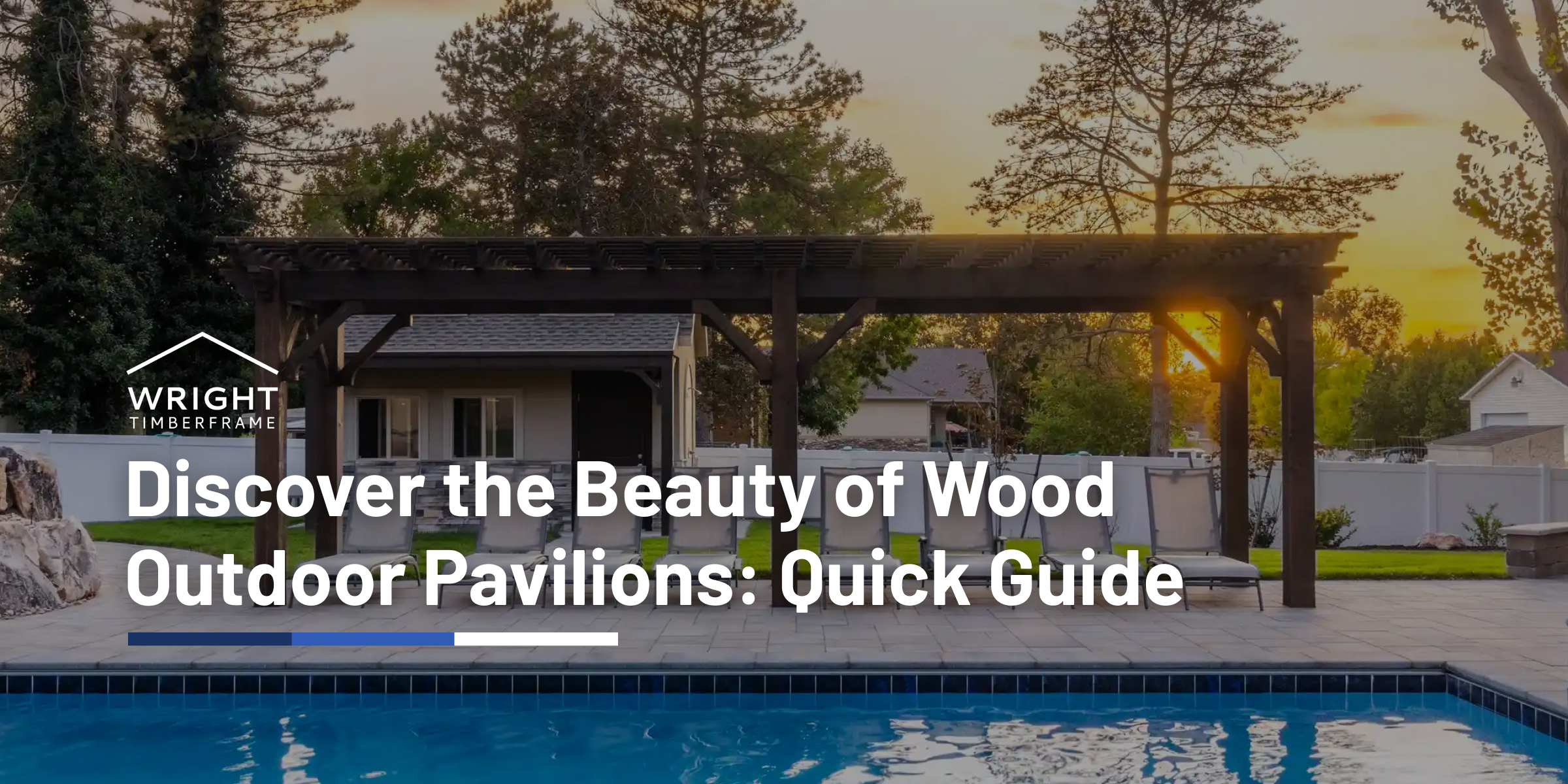
Why a Wood Outdoor Pavilion is the Ultimate Backyard Upgrade
A wood outdoor pavilion is one of the most effective ways to turn a basic yard into a true outdoor living room. As timber frame specialists, we often design and build these freestanding, roofed structures to create protected gathering spaces that are custom to a property and its climate.
Unlike pergolas with open slat roofs, pavilions use a fully covered roof supported by posts. This design gives complete protection from sun, rain, and snow, defining a comfortable outdoor room for dining, entertaining, cooking, or quiet relaxation.
We often focus on traditional timber frame construction with mortise and tenon joinery. This time-tested method provides lasting strength, significant architectural character, and the ability to span larger distances with fewer posts, creating a more open and inviting space.
Key Features of Wood Outdoor Pavilions:
- A wood outdoor pavilion provides full shade and weather protection for year-round outdoor living.
- Timber frame construction with mortise and tenon joinery delivers strength, beauty, and long term durability.
- Cedar and Douglas Fir are leading choices for structure and appearance, especially in harsh or variable climates.
- Design decisions such as size, roof type, and layout should follow how you plan to use the space day to day.
- Pre cut pavilion kits can simplify installation while still providing premium timber frame quality.
We see pavilions used as outdoor kitchens, poolside shelters, covered seating areas, hot tub enclosures, or multi-use entertainment zones. Because the structure is permanent and engineered, it often becomes a central architectural element of the property.
The outdoor furniture and structures market continues to grow, with projections reaching $81.44 billion by 2032, reflecting stronger demand for quality outdoor living spaces. Homeowners consistently choose wood for its natural warmth, versatility, and ability to age gracefully.
We have designed and crafted custom wood outdoor pavilions across various regions using mortise and tenon joinery. Our process combines traditional craftsmanship with modern engineering to create pavilions that feel solid, look timeless, and function well in demanding climates.
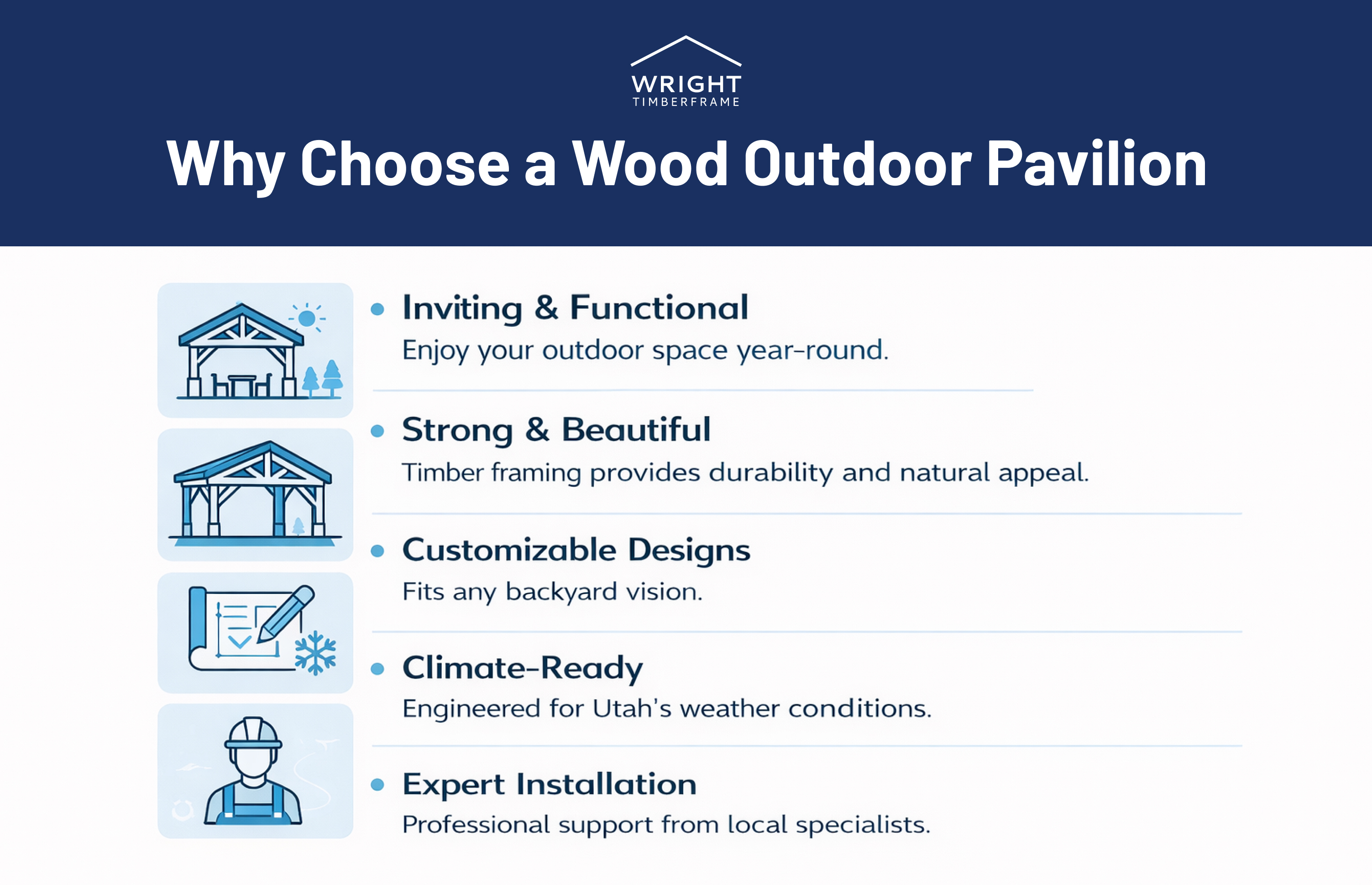
Essential Design Elements for Your Wood Outdoor Pavilion
Designing your ideal wood outdoor pavilion starts with understanding how you want to live outside. We walk clients through size, layout, style, structure, and amenities so the pavilion works well from the first day.
When planning, size is usually the first decision. Ask questions like:
- Will this be primarily for dining or lounge seating?
- Do you want to include a grill, pizza oven, or full outdoor kitchen?
- Do you plan to host large gatherings or keep it intimate?
A 12×12 foot pavilion can comfortably house a small dining set for four, while a 16×20 foot space can accommodate a larger seating area with a sofa, chairs, and a fire pit.
We often help clients visualize the footprint using cones, flags, or tape on the lawn or patio. This simple step clarifies traffic flow, furniture clearance, and views before construction starts.
Our pavilions can be customized with lengths and widths ranging from 12 to 30 feet. For most backyards, a 14×14 or 16×16 structure works well for a dining table or seating area.
Choosing an Architectural Style
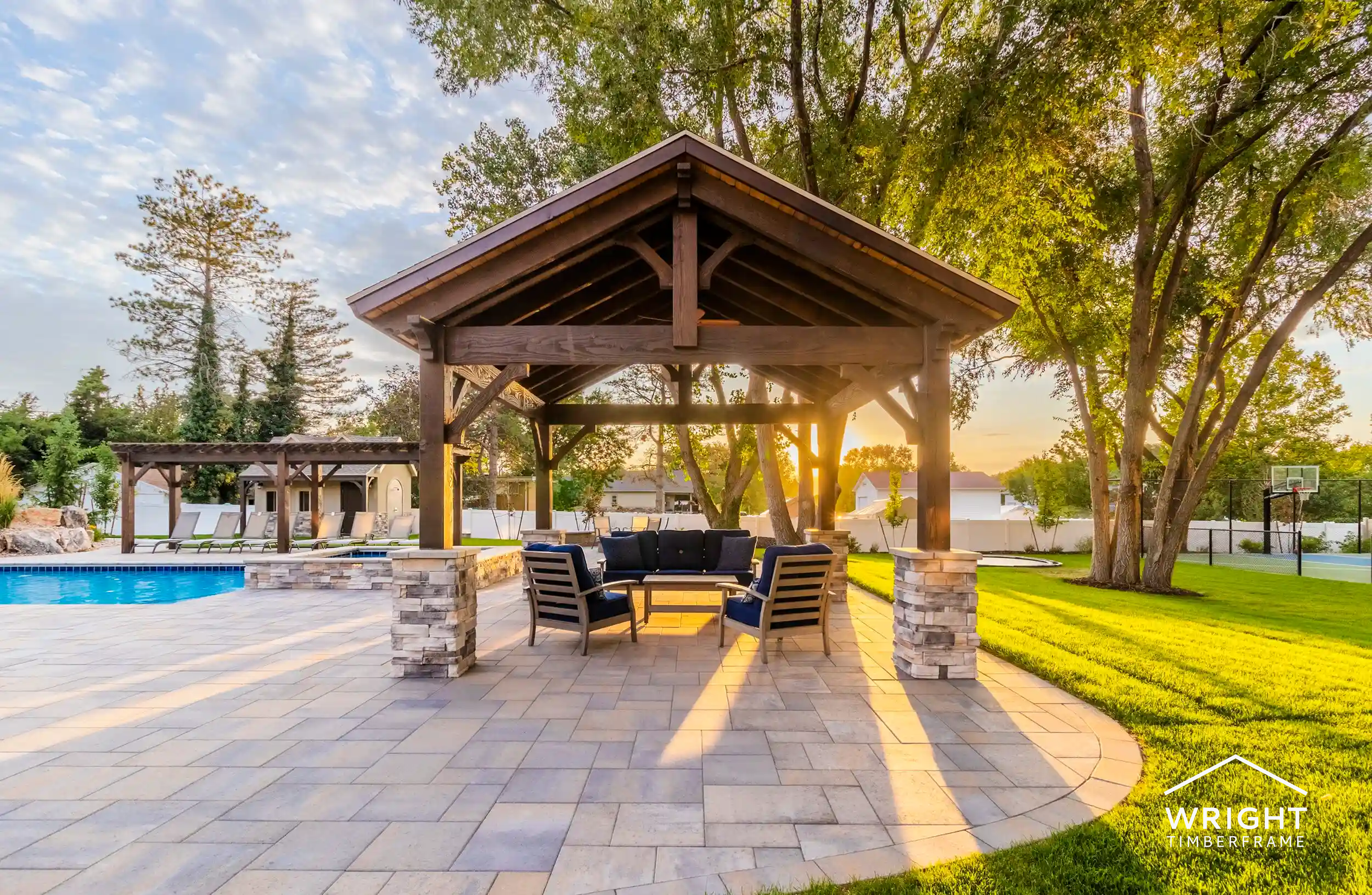
The style of your pavilion sets the tone for the entire outdoor space. We typically guide homeowners toward one of several design families:
- Traditional: Influenced by European and Early American architecture with pronounced beams, classic proportions, and decorative knee braces.
- Contemporary: Clean lines, simplified joinery expression, and minimal ornament for a modern look that emphasizes form and material.
- Southwest: Heavier timbers, grounded forms, and a connection to desert or mountain landscapes, often featuring low-pitched roofs.
- Tuscany: Softer lines and warmer finishes that pair well with stucco, stone, and Mediterranean plantings, often incorporating arched braces and decorative corbels.
We recommend considering your existing home first. Matching roof pitch, trim colors, and materials often creates the most cohesive result.
Roof Form and Material Choices
The roof is a major visual element and also drives performance in sun, rain, and snow. Common roof forms include gable roofs with classic triangular profiles and hip roofs where all sides slope down.
In snowy or mountainous regions, a steeper pitch such as 7:12 or 6:12 helps shed snow effectively. For roofing material, we typically see two reliable choices:
- Metal roofing: Often rated for around 40 years, highly durable, and excellent for shedding snow and rain. It comes in various profiles, from standing seam to corrugated panels, and offers a wide range of colors.
- Asphalt shingles: A familiar look, typically rated for around 30 years, and easier to match to an existing home. While cost-effective, they may be more susceptible to wind uplift and moss growth in damp climates compared to metal.
Pavilion vs Pergola: Functional Differences
While both structures define outdoor space, they perform very differently. Pavilions provide full roof coverage, better shade and rain protection, greater year round usability, and higher structural demands. Pergolas provide open slat roofs for filtered light, seasonal comfort in milder conditions, and lower material cost.
If you want reliable shelter from intense sun, summer storms, and winter snow, a wood outdoor pavilion is typically the better fit.
Planning Amenities and Utilities
A pavilion can be a simple covered space or a fully equipped outdoor room. In our designs we commonly plan for grills, smokers, pizza ovens, countertops, dining tables, lighting, ceiling fans, and integrated heaters.
Our timber frames can be engineered to handle substantial loads, often in the range of 50 pounds per square foot or more. This allows for heavier roofing, snow loads, or hanging features like swings or large light fixtures when properly planned.
Many homeowners also add fireplaces, privacy screens, or partial walls to define the space and extend the shoulder seasons. A carefully planned wood outdoor pavilion can increase curb appeal and perceived home value.
Selecting the Best Wood for Your Outdoor Pavilion
Wood selection has a major impact on how your pavilion looks, how it ages, and how it responds to weather. We typically design around three wood categories and help clients weigh cost, performance, and appearance.
Cedar: Natural Durability and Character
Cedar is a leading choice for wood outdoor pavilions when natural resistance to decay and insects is a priority. Its natural oils, or extractives, make it resistant to moisture and insects. Its rich color and distinctive grain give warmth to a structure and can weather to a soft, beautiful silver over time if left unstained.
We often use rough sawn Western Red Cedar, which is known for stability and reduced checking (cracking) compared to some other species. Cedar usually carries a higher material cost than some softwoods but provides improved resistance to moisture related issues.
Douglas Fir: Structural Strength and Timeless Look
Douglas Fir is another premium timber we use widely, especially where strength and longer spans are required. Properly engineered Douglas Fir frames can handle strong winds and significant snow loads. It is known for its straight, consistent grain and reddish-brown hue, which lends itself to both traditional and contemporary designs.
For outdoor performance, we often recommend factory stained timbers with strong UV protection or a carefully planned on site staining schedule to protect it from the elements.
Pressure Treated Pine: Budget Oriented Option
Pressure treated pine is commonly used in outdoor structures because chemical treatment improves resistance to rot and insects. However, we find that pressure treated lumber often lacks the refined appearance of cedar or Douglas Fir and can be more prone to warping, twisting, and checking as it dries.
For homeowners who prioritize longevity, structural integrity, and visual impact, cedar or Douglas Fir are typically the better long term value.

Pre-Cut Pavilion Kits: Streamlined Building for Your Backyard
Not every project requires a fully custom build on site. For many homeowners, a pre cut timber frame pavilion kit provides a practical path to a high quality wood outdoor pavilion without the complexity of starting from scratch.
What Comes in a Pre Cut Pavilion Kit
A typical kit includes precut and trial fitted timber frame members, labeled components for straightforward assembly, wooden pegs and specialty connectors, anchors and fasteners sized to the design, and optional tongue and groove roof decking.
Because members are cut to size and test fitted before shipping, on site adjustments are usually minimal. This can save both time and frustration during installation. Many timber frame companies offer detailed kit overviews on their websites.
Installation and Skill Level
We create detailed instructions, timber frame shop drawings, and post placement plans to guide assembly. Many kits can be erected over a weekend by an experienced DIYer with basic tools and one or two helpers.
That said, we encourage realistic evaluation of comfort with reading plans, experience handling larger timbers, and ability to safely work from ladders or scaffolding. If those factors are a concern, partnering with a local contractor is often the best route.
Ordering Process and Engineering Support
Once a client requests an estimate and approves a design, we prepare shop drawings and layout plans for review. Fabrication begins only after these are approved.
For projects that require permits or engineering sign off, we can coordinate engineered drawings as needed. This is particularly relevant for cities that regulate roofed structures by size, height, and snow load.
Kits vs Custom Pavilion Construction
| Feature | Pre Cut Kits | Custom Pavilion Construction |
|---|---|---|
| Cost | Generally lower due to reduced on-site labor | Higher, reflecting bespoke design and labor |
| Timeline | Faster assembly and quicker completion | Longer design and build process |
| Customization | Good, with defined sizes and options | Broad, with nearly unlimited design choices |
| Skill Level | DIY friendly with clear instructions | Requires professional builders and expertise |

Frequently Asked Questions About Wood Outdoor Pavilions
Do I need a permit for a wood outdoor pavilion?
In many areas, a permit is required for roofed structures, especially when they exceed a certain size (like 120 or 200 square feet) or height. It’s essential to check with your local building department before you start. They can provide specific information on requirements, including setback rules. These rules dictate how close the structure can be to property lines, other buildings, or septic systems.
How should I prepare a foundation for a pavilion?
We usually recommend concrete piers that extend below the local frost line. This prevents the structure from heaving or shifting during freeze-thaw cycles, which could cause structural damage. On an existing paver patio, you can remove pavers where the posts will land, pour the concrete piers, and then reinstall the pavers around post standoff brackets. These brackets are critical as they keep the wood posts elevated and out of contact with standing water, which prevents rot.
What is the best way to maintain a wood pavilion in a harsh climate?
Proper maintenance is key to longevity. We advise applying a high quality exterior stain or sealer with strong UV protection as soon as the structure is built. Start by gently cleaning the wood surface to remove any dirt or pollen. Once dry, apply the stain according to the manufacturer’s directions. Plan on re-staining every 2-5 years, depending on the product used and the structure’s exposure to sun and moisture. This regular care keeps the wood protected from drying, cracking, and water damage.
How does snow load affect pavilion design?
Snow load is a critical safety factor that influences timber sizes, the spacing of rafters, and the roof pitch. Local building departments publish design load values, typically in pounds per square foot (PSF). For example, a rating of 50 PSF means the roof is engineered to support 50 pounds of weight on every square foot of its surface. We engineer our pavilion frames to meet or exceed these local requirements to ensure the structure can safely handle the weight of heavy, wet snow.
Can I attach a wood outdoor pavilion to my existing patio?
Yes, many pavilions are built on existing concrete patios. The key is verifying that the concrete slab is suitable. We check that the slab is thick enough (typically at least 4 inches) and in good condition to support the structure’s weight and secure the post anchors. If the slab is too thin or cracked, it’s better to cut out sections and pour separate, deeper concrete footings for each post. This ensures the loads are transferred to stable ground, not the weaker patio surface.
Planning Your Wood Outdoor Pavilion
A wood outdoor pavilion can fundamentally transform how you use your property, but thoughtful planning and sound construction make the real difference. When the size, layout, structure, and wood species work together in harmony, the result is a comfortable, durable, and beautiful outdoor room that perfectly fits your climate and lifestyle.
We believe the process should be as intentional as the final product. By guiding homeowners through critical design choices, structural considerations, and material selection, the finished pavilion feels like a natural extension of the home, not an afterthought. Drawing on proven timber framing techniques, such as mortise and tenon joinery, and climate-aware detailing ensures long term performance as much as it does a stunning first impression.
Studying examples of timber frame pavilions and kits from various builders can provide valuable inspiration for your own project. For additional background on protecting outdoor wood, resources such as Extreme How To provide useful maintenance guidance.
With a clear plan and the right structure, your wood outdoor pavilion can become the cherished setting for everyday meals, quiet mornings, and memorable gatherings for many years to come.
Ready to design a wood outdoor pavilion that feels purposeful, lasting, and truly connected to your home? Talk with Wright Timberframe to explore custom designs, wood options, and proven timber framing methods tailored to your space, climate, and lifestyle.

