Why Pavilion Construction Mistakes Can Cost You Time, Money, and Peace of Mind
Pavilion construction mistakes can turn your dream outdoor retreat into a costly nightmare, but most are entirely preventable with the right knowledge. Homeowners often underestimate the planning required, choose the wrong materials for their climate, skip critical foundation steps, or attempt complex builds without the proper skills or tools. These missteps lead to structural issues, premature deterioration, budget overruns, and structures that don’t meet local building codes.
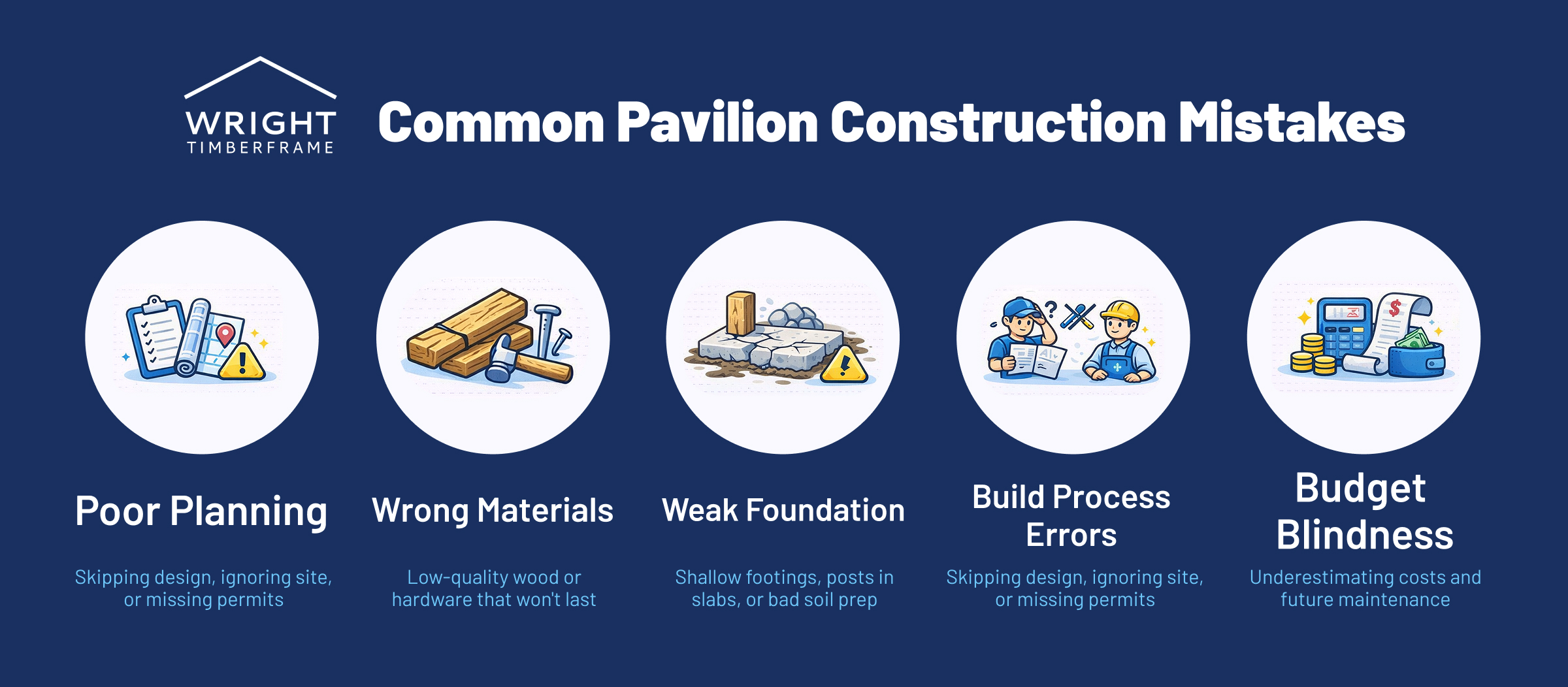
The Most Common Pavilion Construction Mistakes:
- Poor Planning – Skipping the design phase, ignoring site conditions, and forgetting permits
- Wrong Materials – Choosing low-quality wood or hardware that can’t withstand weather
- Weak Foundation – Installing posts directly in slabs, shallow footings, or ignoring soil conditions
- Build Process Errors – DIY overreach, miscommunication with contractors, or poor joinery
- Budget Blindness – Underestimating costs and overlooking long-term maintenance needs
We’ve seen these mistakes across countless projects, and we know the frustration they cause. Building a pavilion should improve your outdoor living space, not create years of headaches. As Utah’s local timber experts, we’ve spent years helping homeowners avoid these very pavilion construction mistakes.
We specialize in building custom timber structures using traditional mortise-and-tenon joinery, creating pavilions that are built to last. Whether you’re planning a DIY project or hiring a builder, understanding these common pitfalls will save you from costly do-overs and ensure your pavilion stands strong for generations.
Mistake #1: Rushing the Planning and Design Phase
One of the most frequent pavilionconstruction mistakes we encounter is homeowners rushing through the initial planning and design phases. They get excited about the idea of a beautiful outdoor structure and jump straight into construction without adequate thought.
This often leads to a pavilion that doesn’t quite fit their needs, their property, or even local regulations. Poor planning and design is one of the most common mistakes in residential construction, and pavilions are no exception.
Forgetting to Define the Pavilion’s Purpose
Before any timber is cut or ground is broken, we always emphasize the importance of defining your pavilion’s purpose. What do you envision doing in this space? Will it be an outdoor kitchen for lively family barbecues, a serene poolside lounge for quiet afternoons, a grand dining area for entertaining guests, or a versatile entertainment space?
Knowing the primary function of your pavilion is crucial because it dictates everything from its size and layout to the specific features you’ll need. For instance, a dining area will require enough space for a large table and chairs, ensuring comfortable traffic flow. A lounge might prioritize built-in seating and a cozy fireplace.
If you plan to host larger gatherings, consider how many people you need to accommodate and how they will move through the space. Without a clear purpose, you risk building a pavilion that is either too small, too large, or simply not functional for your lifestyle. We’ve seen pavilions that look beautiful but are rarely used because they don’t serve their intended purpose effectively.
Ignoring Site Selection and Local Codes
Another significant oversight in pavilion planning is ignoring crucial site considerations and local building codes. You can have the most beautiful design, but if it’s not placed correctly or violates local ordinances, it can lead to costly rework or even demolition.
When selecting a spot for your pavilion, we advise you to think about:
- Sun Exposure: How does the sun move across your yard throughout the day and year? You’ll want optimal shade when it’s hot and perhaps some warmth during cooler seasons.
- Wind Patterns: Are there strong winds that could affect comfort or even structural integrity?
- Proximity to Your Home: How close should it be for convenience? For example, a pavilion with an outdoor kitchen might need to be closer to your indoor kitchen for easy serving.
- Property Lines and Setbacks: This is where local codes come into play. Many municipalities in Utah, like Murray, have specific regulations regarding how close a structure can be to property lines and other buildings.
Crucially, you must check with your local building department in Murray, Utah, or your specific municipality before breaking ground. Most substantial pavilions require a permit, especially if they exceed a certain square footage (often around 200 sq. ft.) or height. Neglecting to contact the city for regulations can lead to non-compliance, fines, and forced changes. This includes understanding zoning regulations for setbacks from property lines and height restrictions.
Furthermore, ignoring site and soil conditions can cause foundation problems or structural instability. Before any digging, we always recommend having buried utilities marked to prevent major problems. Proper drainage is also essential; you don’t want water pooling around your pavilion’s foundation, which can lead to rot and structural issues over time.
Mistake #2: Choosing the Wrong Foundation and Materials
Once the planning is solid, the next hurdle where many encounter pavilion construction mistakes is in selecting the right foundation and materials. Low-quality materials and an inadequate foundation are recipes for a short-lived and problematic structure.

Critical Pavilion Construction Mistakes: A Poor Foundation
The foundation is literally the bedrock of your pavilion’s stability and longevity. Ignoring site and soil conditions can cause significant problems. For example, choosing a foundation that will settle unevenly can cause structural issues down the road, especially with Utah’s freeze-thaw cycles.
For pavilion foundations, you generally have a few solid choices:
- Full Concrete Slab: This offers maximum stability and a finished floor. However, for pavilions, it can be problematic if the posts are directly embedded. Pavilions are more exposed to weather and lack the rigidity of walled buildings, making them prone to shifting with temperature and moisture changes. Installing posts directly into a slab can cause the concrete to crack as the posts expand and contract.
- Individual Concrete Footers: For most timber frame pavilions, we recommend individual concrete footers for each post. This method gives each post its own foundation below the frost line, uses less concrete, and allows for more flexibility. We ensure post anchors are used to secure the posts to the concrete, preventing moisture-related rot at the base.
- Site Preparation: Proper site preparation is non-negotiable. This involves clearing and leveling the area, and possibly compacting the soil to ensure a stable base. Digging post holes below your local frost line (which is typically 30+ inches in Utah) is critical to prevent shifting due to freezing and thawing ground.
By starting with a robust and appropriate foundation, you mitigate the risk of structural instability and ensure your pavilion stands strong for decades.
Selecting the Wrong Wood and Hardware for Durability
The materials you choose directly impact your pavilion’s longevity, maintenance, and aesthetic appeal. Selecting low-quality material will not withstand the weather elements or may break easily. This is a common pavilion construction mistake.
At Wright Timberframe, we specialize in premium timbers like:
- Douglas Fir: Known for its exceptional strength-to-weight ratio, Douglas Fir is a robust choice that accepts stains beautifully and provides incredible structural integrity.
- Western Red Cedar: Naturally resistant to rot, decay, and insect infestations, Cedar weathers gracefully and is an excellent choice for outdoor structures, especially in areas where moisture is a concern.
The choice of wood significantly impacts the longevity and maintenance of an outdoor pavilion. Untreated wood, especially if installed too close to the ground, will likely rot. We avoid this by using treated wood where necessary and ensuring our timbers are installed with proper post anchors to keep them off direct ground contact. It’s also important to understand the difference between sapwood and heartwood; heartwood (especially in white oak, though we primarily use Douglas Fir and Cedar for pavilions) tends to be more rot-resistant.
Beyond the wood itself, the hardware you use is equally important. We insist on galvanized structural screws and heavy-duty bolts to resist corrosion and provide maximum strength, ensuring the integrity of our traditional joinery. This attention to detail in material selection is what sets a long-lasting, beautiful pavilion apart from one that quickly deteriorates.
For More info about our timber frame pavilions, you can explore our website.
Mistake #3: Underestimating the Build Process
Many homeowners, eager to save costs or accept a DIY spirit, underestimate the complexities of pavilion construction. This can lead to significant pavilion construction mistakes, from structural failures to frustrating delays and compromised aesthetics.
The DIY vs. Professional Dilemma
While building a shed might seem straightforward, a pavilion is a more substantial structure requiring precision, engineering, and specialized skills. The “DIY vs. professional” dilemma is a real one. While building from scratch offers total control and customization, it demands advanced carpentry skills, especially for cutting precise mortise and tenon joints.
- Required Skills: Pavilion construction involves complex geometry, structural understanding, and proficiency with various tools. For instance, building your own doors can lead to warping and sagging if not done correctly, unlike a prehung steel door.
- Time Commitment: DIY projects often take significantly longer than anticipated. Weather delays, unexpected issues, and the physical strain of the work can stretch a project from weeks to months. We’ve seen homeowners underestimate time and regret it.
- Tool Requirements: You’ll need a range of essential tools, from circular saws and levels to power drills and specialized timber framing tools. Renting or purchasing these can add up.
- Safety Risks: Working with heavy timbers and at heights carries inherent safety risks. Professionals have the experience and equipment to mitigate these.
- Ensuring Structural Integrity: This is paramount. A poorly constructed pavilion can be dangerous, especially in areas like Utah prone to heavy snow loads and high winds. Professionals ensure the structure meets engineering standards and local building codes.
Hiring the wrong contractor can also lead to problems. Miscommunication with your contractor or builder can lead to delays, substandard finishing, or safety issues. We emphasize clear communication, documented expectations, and a thorough vetting process when choosing a professional.
The Advantage of Pre-Cut Timber Frame Kits
For those who want the beauty and strength of a timber frame pavilion without the complexities of building from scratch, ourpre-cut timber frame kits offer a compelling solution. This approach directly addresses many common pavilion construction mistakes associated with DIY or less experienced builders.
Our kits leverage:
- Precision Cutting: Every piece is pre-cut, pre-drilled, and often pre-stained in our Utah workshop, ensuring perfect fits and reducing on-site errors. This eliminates the entire step of cutting complex joinery, which is where many mistakes can happen.
- Traditional Joinery: We use time-honored techniques like mortise and tenon and dovetail joints. These are pre-cut and test-fit in our shop, saving you hours of difficult layout and cutting in the field. This traditional joinery creates strong bonds that tighten over time, a testament to lasting strength.
- Reduced Build Time: With pre-cut, labeled pieces and step-by-step instructions, our kits shorten build times dramatically. While building from scratch can take months, our Utah installs typically take one to two days on site, and many homeowners with basic skills raise our kits in a single weekend.
- Less Waste: Pre-cutting in a controlled environment minimizes material waste, which is not only environmentally friendly but also cost-effective.
- Step-by-Step Instructions: We provide clear, comprehensive guides that make assembly feel like building with “Lincoln Logs” or “Legos,” even for complex structures.
By choosing a pre-cut kit, you gain the benefits of traditional timber framing, timeless design and lasting strength, while avoiding the pitfalls of extensive DIY carpentry.
Mistake #4: Overlooking the Finishing Touches and Future Care
Even after construction, pavilion construction mistakes can continue to crop up if homeowners overlook critical finishing touches and long-term maintenance. These oversights often lead to unexpected costs and a reduced lifespan for your beautiful outdoor structure.
One of the Biggest Pavilion Construction Mistakes: Failing to Plan a Realistic Budget
Many homeowners start their pavilion project with an estimated cost for the basic structure, but they often go over budget without realizing it until after installation. This is a common residential construction mistake. An unrealistic budget fails to account for a myriad of hidden costs that can quickly derail a project.
When planning your budget, we encourage you to consider:
- Hidden Costs: These can include permit fees, site preparation (leveling, drainage work), material delivery charges, and even unforeseen soil conditions.
- Material Price Fluctuations: The cost of timber and other materials can change, so it’s wise to factor in a buffer.
- Labor Expenses: If you’re hiring a contractor, ensure their quote is comprehensive and includes all labor for construction, installation, and cleanup.
- Finishing Features: Don’t forget the costs of features that improve functionality and enjoyment, such as integrated lighting, ceiling fans, outdoor speakers, or even a built-in fireplace or kitchen elements. These are often added later, at greater expense, if not planned for upfront.
- Landscaping Costs: How will the pavilion integrate with your existing landscaping? You might need to budget for new pathways, planting, or grading.
- Creating a Contingency Fund: We always recommend setting aside 10-15% of your total budget for unexpected expenses. This buffer can save you a lot of stress if issues arise.
A comprehensive budget plan that covers design, materials, installation, and all parts is key to avoiding financial surprises.
Neglecting Finishes and Long-Term Maintenance
Once your pavilion is built, the work isn’t entirely done. Neglecting finishes and long-term maintenance is another significant pavilion construction mistake that can lead to costly repairs and reduced home value down the line.
- Wood Preservation: For timber frames, proper wood preservation is essential. This includes high-quality staining and sealing to guard against UV damage, moisture absorption, and general wear and tear. Our timber frame kits, for example, often come pre-stained with premium, UV-protective finishes that require only touch-ups every 3-5 years, depending on sun exposure. This is much less frequent than annual deck maintenance.
- Regular Cleaning: Simple, regular cleaning helps maintain the pavilion’s appearance and prevents grime buildup that can degrade finishes.
- Electrical Planning: We often see homeowners forget about power. Planning for electrical needs, such as integrated lighting, ceiling fans, or outdoor outlets for charging devices, should happen during the design phase. It’s much easier and more cost-effective to run wiring during construction than to retrofit it later. Working with a licensed electrician for any electrical installations is crucial for safety and compliance.
- Planning for Future Repairs: While our timber frames are built to last, all outdoor structures benefit from occasional inspections for wear and tear. Promptly addressing minor issues like loose screws or damaged finishes can prevent them from becoming major, expensive problems.
By considering these finishing touches and committing to a maintenance schedule, you ensure your pavilion remains a beautiful, functional, and enjoyable outdoor oasis for many years to come.

Frequently Asked Questions about Pavilion Construction
Do I need a permit to build a pavilion?
Yes, most substantial pavilions require a permit. The specifics depend entirely on your local building department in Utah. Many municipalities have a size threshold (often around 200 sq. ft.) under which a permit may not be needed for an accessory structure.
However, you will still need to comply with zoning regulations for setbacks from property lines and height restrictions. Always check with your local building department before breaking ground.
What is the best wood for an outdoor pavilion?
For durability and beauty, we recommend premium timbers like Douglas Fir and Western Red Cedar. Douglas Fir offers incredible strength and stability, making it ideal for structural components. Cedar is naturally resistant to rot, decay, and insect infestations, and it weathers gracefully. The right choice depends on your specific climate, budget, and desired aesthetic.
How can I ensure my pavilion withstands local weather?
To ensure your pavilion withstands local weather conditions, especially the heavy snow loads and occasional high winds common in Utah, it must be engineered correctly. This involves a proper foundation (such as individual concrete footers below the frost line), strong materials like our premium timbers, and proven construction techniques. Our traditional timber frame joinery, including mortise and tenon and dovetail joints, creates a robust, interlocking structure that is inherently resilient against extreme weather.
Avoid These Pavilion Construction Mistakes for a Lasting Retreat
Building a pavilion is a significant investment, and avoiding common pavilion construction mistakes is key to protecting it. By focusing on thorough planning, selecting high-quality materials, choosing the right build method, and budgeting for the entire project, you can create a beautiful and durable outdoor space. Poor planning, inadequate foundations, using subpar materials, underestimating the build process, and neglecting future care are all pitfalls that can be easily avoided.
As Utah’s local timber experts, the team at Wright Timberframe has seen how quality craftsmanship and traditional joinery result in structures that last for generations. Our commitment to precision, premium materials, and time-tested construction methods means your pavilion will not only improve your home’s aesthetics but also provide a functional, lasting retreat for years to come. If you’re ready to build your dream backyard retreat the right way, we’re here to help.
Contact us to start planning your project.